

Just ahead of the New Year, Israeli Prime Minister Benjamin Netanyahu is set to visit President Donald Trump in Florida today, no doubt with a wish list for 2026. Already there have been reports that he will ask Trump to help attack Iran’s nuclear program, again.
Meanwhile, despite the media narrative, the war in Gaza is not over, and more specifically, it has not ended in a clear victory for Netanyahu’s IDF forces. Nor has the New Year brought solace to the Palestinians — at least 71,000 have been killed since October 2023. But there have been a number of important dynamics and developments in 2025 that will affect not only Netanyahu’s “asks” but the future of security in Israel and the region.
Here are four major takeaways from 2025 which will no doubt impact all sides of the conflict, including the U.S., in 2026.
Israel’s war on Gaza is continuing in all but name
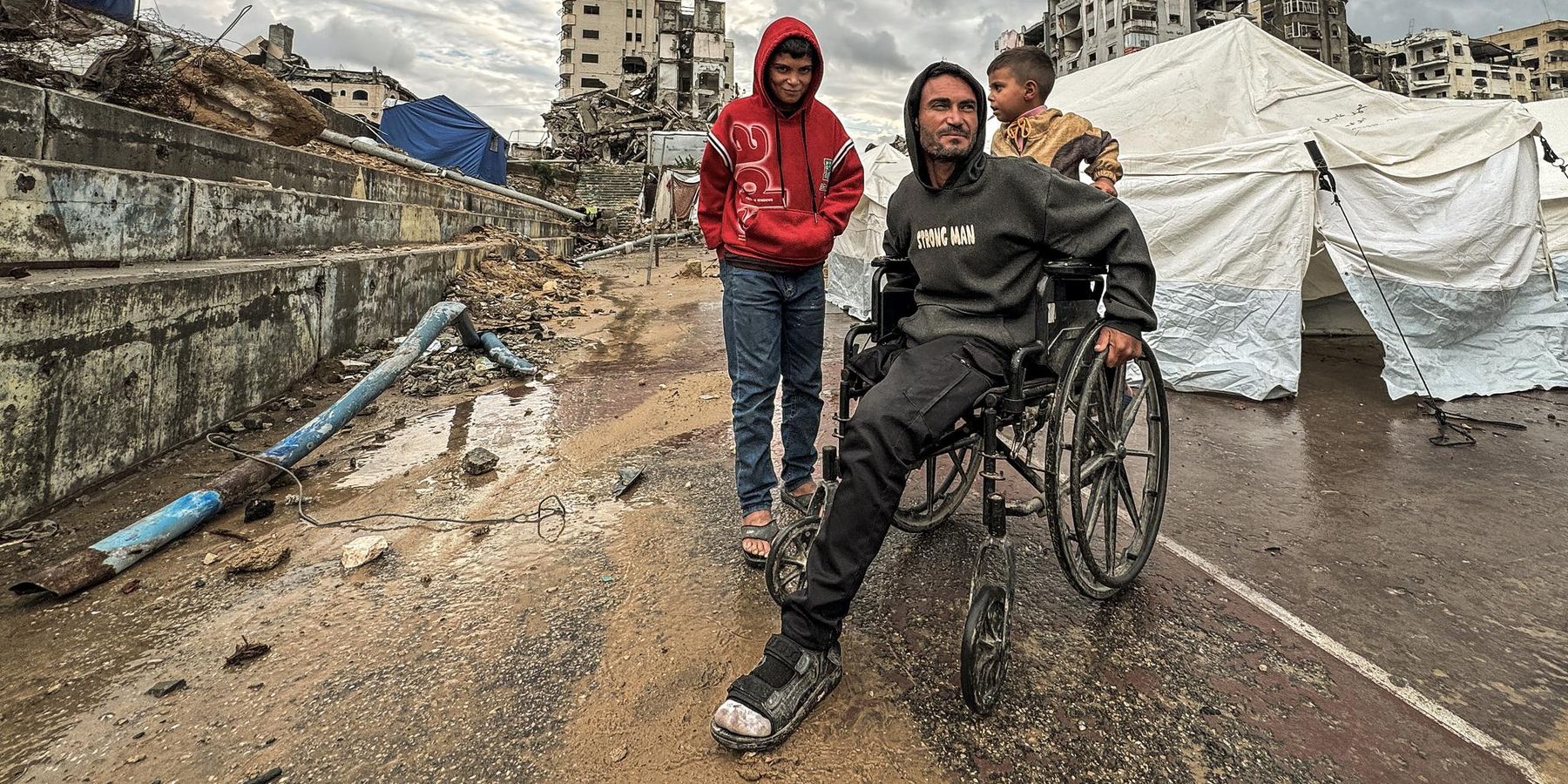
Following the announcement of Trump’s 20-point plan for Gaza in October, which included a ceasefire and hostage/prisoner release, the world breathed a collective sigh of relief. Israel’s apocalyptic assault on Gaza has killed at least 71,000 Palestinians, including some 20,000 children, displaced nearly all of Gaza’s 2.3 million inhabitants, and wiped out most of its infrastructure, including more than 90 percent of its housing stock—a war that a UN Commission of Inquiry, along with a growing chorus of human rights groups and scholars, describe as a genocide.
Since the ceasefire officially went into effect on October 10, however, Israel has continued to carry out deadly airstrikes and other military operations killing more than 400 Palestinians in that time. Despite the ceasefire agreement, Israel continues to restrict humanitarian aid, including shelter materials and other essential items, so children are freezing to death. Meanwhile, the Gaza Strip has been effectively partitioned between an Israeli-controlled eastern zone and a narrow — and ever-shrinking — coastal strip where Hamas still operates and where the vast majority of Gaza’s 2 million residents are concentrated in what is now less than 40% of its territory.
Israel’s systematic destruction of Gaza’s infrastructure has also continued, including the demolition of 1,500 buildings since the start of the ceasefire. In addition to prolonging the suffering of people in Gaza, Israel’s continued attacks and ceasefire violations in Gaza threaten a wider explosion and the eventual collapse of the ceasefire itself. Netanyahu, who only reluctantly signed onto the ceasefire deal, may be trying to bait Hamas into a military response as a pretext for relaunching full-scale war on Gaza. Israel’s assassination of senior Hamas commander Raad Saad on December 13 has further shaken the already precarious truce and raised alarm bells within the administration, with Trump privately worrying that Netanyahu was derailing his peace plan.
The Trump plan risks turning the U.S. into a co-occupier of Gaza
The plan calls for the creation of an international Board of Peace (BoP) to run Gaza’s internal affairs, including future governance and reconstruction, and to be chaired by President Trump, as well as an International Stabilization Force (ISF) to oversee security in the Gaza Strip.
Palestinians, who were not consulted in the plan’s development, are afforded a more limited role in governing Gaza via a technocratic committee that reports directly to the BoP. Meanwhile, the United States and Israel have established a joint civil military coordination center (CMCC), located in southern Israel near the Gaza border, to oversee aid distribution and implementation of the ceasefire in the interim.
In addition, Trump has announced plans to appoint a two-star general to lead the ISF in Gaza. Despite Trump’s pledge not to put boots on the ground, with Americans in control of both the administrative and security arrangements in Gaza, there is a real risk of the U.S. becoming a co-occupier of Gaza alongside Israel. Such a scenario would further erode America’s international standing and could potentially subject U.S. personnel and assets to direct attacks in the region and beyond.The price for supporting Palestine went up in 2025
To be clear, Americans that publicly expressed support for Palestinians’ human rights often paid a price under Biden, from losing jobs to facing physical violence. Yet under Trump, that price rose significantly.
Mahmoud Khalil was one of several activists targeted for deportation solely due to their advocacy for Palestine. Although some have been released, Leqaa Kordia, Ya’akub Vijandre, and others remain in detention. Similar to Biden, the Trump administration has sought to conflate criticism of Israel with antisemitism, but has intensified the resulting legal repercussions: the administration launched an Antisemitism Task Force, froze funding to universities, and carried out politically motivated “civil rights” investigations based on flimsy evidence.
A report produced by the American Association of University Professors and the Middle East Studies Association on the weaponization of civil rights law to repress campus speech stated that “Palestine is less an exception to academic freedom than it is a pretext for erasing the norm altogether.” Yet free speech is more than a norm, it is a Constitutional right enshrined in the First Amendment.
Unfortunately, the administration may soon undermine other fundamental freedoms: following the decisions by Texas and Florida governors to designate the Council on American-Islamic Relations (CAIR) a terrorist group — it is a domestic U.S. Muslim civil rights organization — many fear the administration may follow suit, fundamentally attacking the freedom of association. While such efforts have begun by targeting advocates for the rights of Palestinians and Muslims, they are unlikely to end there, with implications for Americans’ most basic liberties.
And yet support for Israel continues to fall
Despite the intensified repression of pro-Palestine speech, combined with concerted efforts by Israel’s supporters to suppress information about the daily horrors inflicted on Gaza, Israel continued to hemorrhage popular support in the U.S. A majority of Americans (53%) held a negative view of Israel as of April.
A poll in August found that 60% of voters disapproved of sending additional military aid to Israel. This shift is especially dramatic on the left, where 7 in 10 Democrats said that Israel has “gone too far” in its military operations in Gaza, yet even a majority of Republicans under age 45 say they would prefer a 2028 presidential candidate who would reduce U.S. security assistance to Israel.
Notably, 39% of American Jews describe Israel’s actions as “genocide.”
Meanwhile, candidates for the 2026 midterms running for both parties have refused to take money from the American Israel Public Affairs Committee (AIPAC). This reflects a split in Trump’s coalition, where many are increasingly questioning how his administration can claim the mantle of “America First” when Israel’s preferences clearly dictate U.S. foreign policy towards the Middle East.
Despite their best efforts, Israel and its supporters have lost control of the narrative: soon after October 7, American billionaires coordinated with the Netanyahu government to spread pro-Israel messaging. As the carnage in Gaza continued unabated, Israel targeted journalists in an effort to staunch the flow of information. Yet even liberal darlings like Obama speechwriter Sarah Hurwitz acknowledged that when she tries to advocate on behalf of Israel, she is “talking through a wall of dead babies.”
Efforts by billionaires like Larry Ellison to purchase TikTok and by Meta to censor information about Palestine have been unsuccessful, so far, in turning the tide of public opinion.
It seems unlikely that the shattered myth of American and Israeli interests as indistinguishable will re-emerge, at least in full, in 2026.
- $21.7 billion in US military aid has fueled Israel's war on Gaza ›
- As expected, Netanyahu back demanding more war with Iran ›