

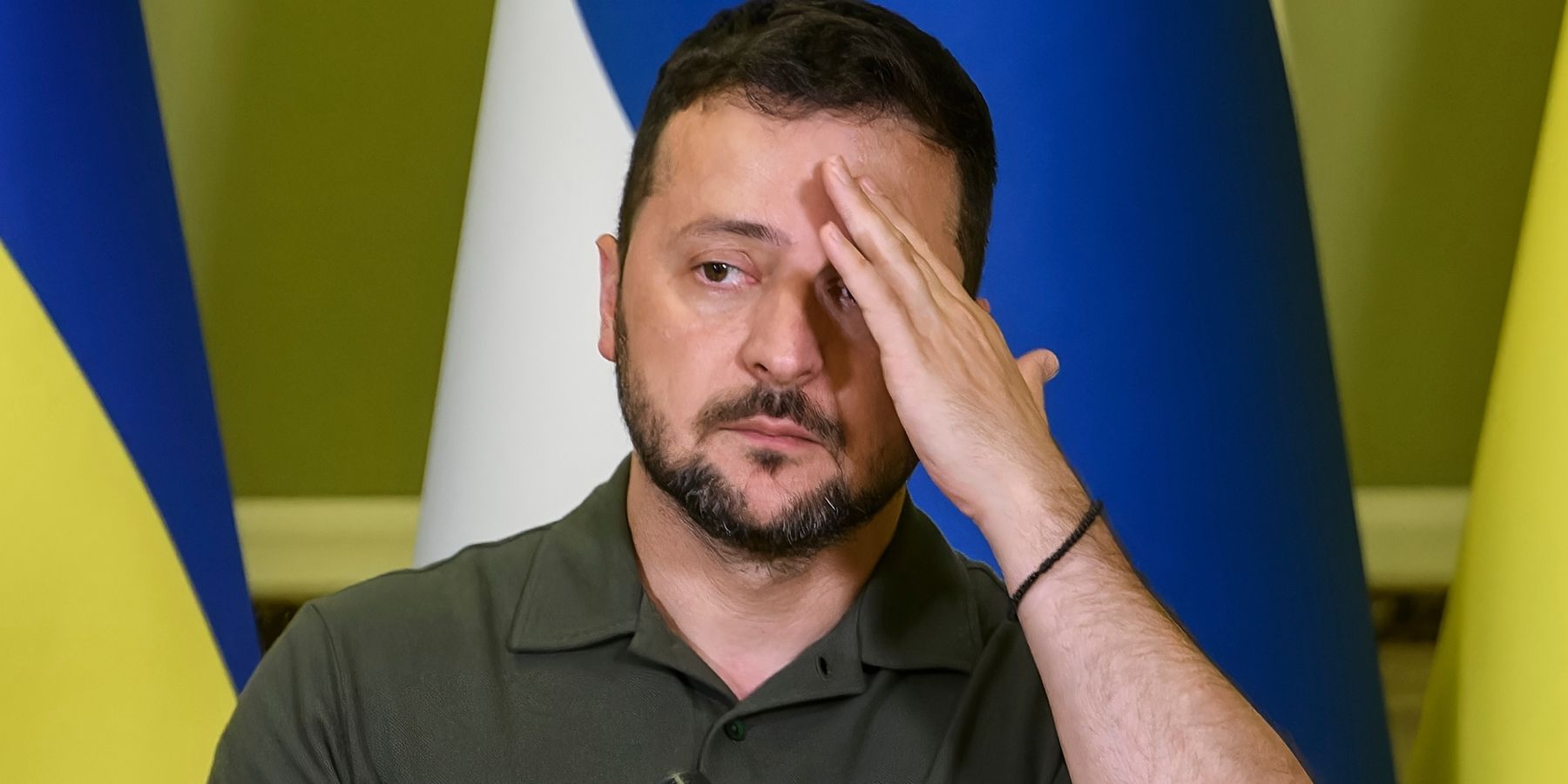
The $100 million corruption scandal around Ukraine’s energy system that broke this past week is critical to ordinary Ukrainians for its timing. Russia has been bombarding the country’s energy infrastructure on a daily basis to deny ordinary citizens heat and electricity during the cold and dark winter months.
In November 2024, a separate scandal broke that $1.6 billion set aside to build protective bunkers around electricity sub-stations had not led to any being built.
With this in mind, many have responded that the highly publicized nature of this latest scandal, which resulted in the resignations of both the energy and justice ministers, offers visible proof that progress is being made in tackling corruption in Ukraine. The National Anti-Corruption Bureau (NABU) of Ukraine, which is often at the spearhead of such investigations, was first established by Presidential Decree in April 2015. That it continues to function is indeed a positive sign.
It's not possible, however, to claim that corruption has emerged as a specifically wartime phenomena. This energy scandal is hardly a one-off. In September 2021, with Zelensky having already been in power for two and a half years, the European Court of Auditors reported that state corruption and capture were still widespread in Ukraine. It pointed out that “tens of billions of Euros are lost annually as a result of corruption,” and that EU support delivered over 20 years had not delivered the desired results.
Since Russia invaded in 2022, Ukraine has been flooded with hundreds of billions of dollars of aid, of a much greater value than its yearly economic output. The United States has been unable to accurately account for the billions it has sent there. No country at this point would be able to assure itself that its funds have been spent well.
The scale of each new corruption scandal has seemingly grown over time. In August 2023, Zelensky sacked all the heads of the regional military recruitment offices following widespread complaints about kick-backs, often bribes to let potential recruits escape military service. In September 2023, Ukraine’s Defense Minister, Oleksii Reznikov, resigned following a procurement scandal related to the marking up the cost of purchased body armour and helmets by 4-5 times. In January 2024, Ukrainian defense officials were arrested over the theft of $40 million, related to an order for 100,000 artillery shells that were never delivered.
To date, President Volodymyr Zelensky has been able to keep Western donors off his back through a sacking here or a prosecution there. What has changed this year is that the erstwhile NABU investigators have been gradually nudging closer to his inner circle.
In July of this year, as the noose was closing around his close ally former Deputy Prime Minister Oleksiy Chernyshov because of a large-scale property fraud, Zelensky made a failed attempt to hobble NABU and bring it under his personal control. As it turns out, Chernyshov has also been implicated in the current $100m energy scandal, with NABU detectives documenting the transfer of an estimated $1.3 million in cash to him and an associate. On 14 November, NABU sought an order for pre-trial detention of Chernyshov.
Timur Mindich, the man at the centre of the current scandal, is a close ally of Zelensky and co-founded the TV company ‘Kvartal 95’ with him. He was allowed to flee the country before the NABU raids, which discovered duffel bags stuffed with cash and a golden toilet. It hasn’t been lost on some commentators that, in 2014, the ousted President Yanukovych was also alleged to have possessed a toilet made of gold.
Which provides another reminder that, stepping back from the canvas, not much has really changed in Ukraine over the past decade. I first met an anti-corruption activist in Kyiv in late 2015, at the foot of the postcard perfect Andriivsky descent in the quaint Lviv Handmade Chocolate Café. Approaching two years after the ouster of Yanukovych, she was visibly distressed that little progress had been made in tackling corruption. Within weeks, the government of Arseny Yatseniuk faced a no-confidence vote over a slew of corruption scandals involving figures close to him that led, ultimately, to his resignation in February 2016.
In the midst of that scandal, Vice President Joe Biden visited Kyiv in a bid to shore up the government, anxious that Ukraine might not be able to form a better coalition than the one in power. “Corruption siphons away resources from the people. It blunts economic growth, and it affronts human dignity. We know that. You know that. The Ukrainian people know that,” Biden said.
For many ordinary Ukrainians, who protested peacefully in the Maidan in late 2013, rooting out corruption was at the core of the so-called “revolution of dignity.” Biden’s 2015 visit was an attempt to paper over the cracks, and close down moves to unsettle the pro-western government. Yet the endemic corruption carried on.
When it released its recent report on EU accession states, the European Commission noted Ukraine’s remarkable commitment to its EU path. However, it downgraded its assessment to B grade, expressing concern about progress in tackling corruption. As with the 2015 Biden visit it was, I fear, another example of papering over the cracks of a much bigger problem.
The vertical of power in Ukraine, in which a small number of oligarchs possess outsized power in all spheres of business and politics, remains largely unchanged to this day. Zelensky has emerged as a creature of that system, having both clashed and aligned himself with different oligarchs at different times. With presidential elections paused, there are fewer constitutional checks and balances on his power than before the war. And for all its excellent work, NABU is not yet powerful enough to break the system.
There is a persuasive case to make that ending the war and turning off the gravy train would make it easier for Ukraine’s future leaders to refocus on the path to European membership. This would require real and measurable reform. It’s possibly for this reason that public support for an end to the war continues to grow along with outrage at every new case of graft by cronies close to Zelensky. But it may also help to explain why he is in no hurry to see the war end.
- Hawley amendment to create special watchdog for Ukraine aid rejected ›
- Zelensky firings raise concern about corruption, Russian moles ›