

The Trump administration’s announcements about the Gaza Strip would lead one to believe that implementation of President Trump’s 20-point peace plan, later largely incorporated into a United Nations Security Council resolution, is progressing quite smoothly.
As such, Trump’s special envoy Steve Witkoff announced this month on social media the “launch of Phase Two” of the plan, “moving from ceasefire to demilitarization, technocratic governance, and reconstruction.” But examination of even just a couple of Witkoff’s assertions in his announcement shows that "smooth" or even "implementation" are bitter overstatements.
Witkoff said that Phase One has “maintained the ceasefire.” No, it has not. Israel has continued daily attacks against the Gaza Strip ever since the ceasefire was supposed to go into effect last October. As usual with unobserved ceasefires, both sides accuse the other of violations. The casualty count, however, reveals which side lethal violations are coming from. According to the Palestinian Ministry of Health, Israeli attacks since the start of the supposed ceasefire have killed at least 451 Palestinians and injured 1,251. As was true of Israeli attacks during the previous three years, many of the victims have been civilians. On the other side, the Israeli military states that three of its soldiers were killed in combat during the first few days of the ceasefire in October 2025.
Witkoff also said that “Phase One delivered historic humanitarian aid” to Gaza. What he did not say is that continued Israeli rejections of requests to deliver aid to the Strip have made the flow of aid much less than what was agreed to and far less than what is needed. As of mid-January, 24,611 aid trucks have entered Gaza since the ceasefire agreement—fewer than half of the 57,000 that Israel should have allowed in under the agreed allocation.
Phase Two thus is being announced without anything close to full implementation of Phase One.
The administration has announced some, though not all, members of the “Board of Peace,” headed by Trump, that is supposed to function as an international board of directors overseeing implementation of the rest of the plan. Recruitment of a full slate of members evidently has been difficult. Hesitation by many governments to participate is perhaps understandable, given the uncertainties about implementation so far and the nature of the overall project as one that Trump has directed in coordination with Israel.
Recruitment will not be made any easier by the administration requiring a $1 billion cash contribution from any government wanting extended membership on the board.
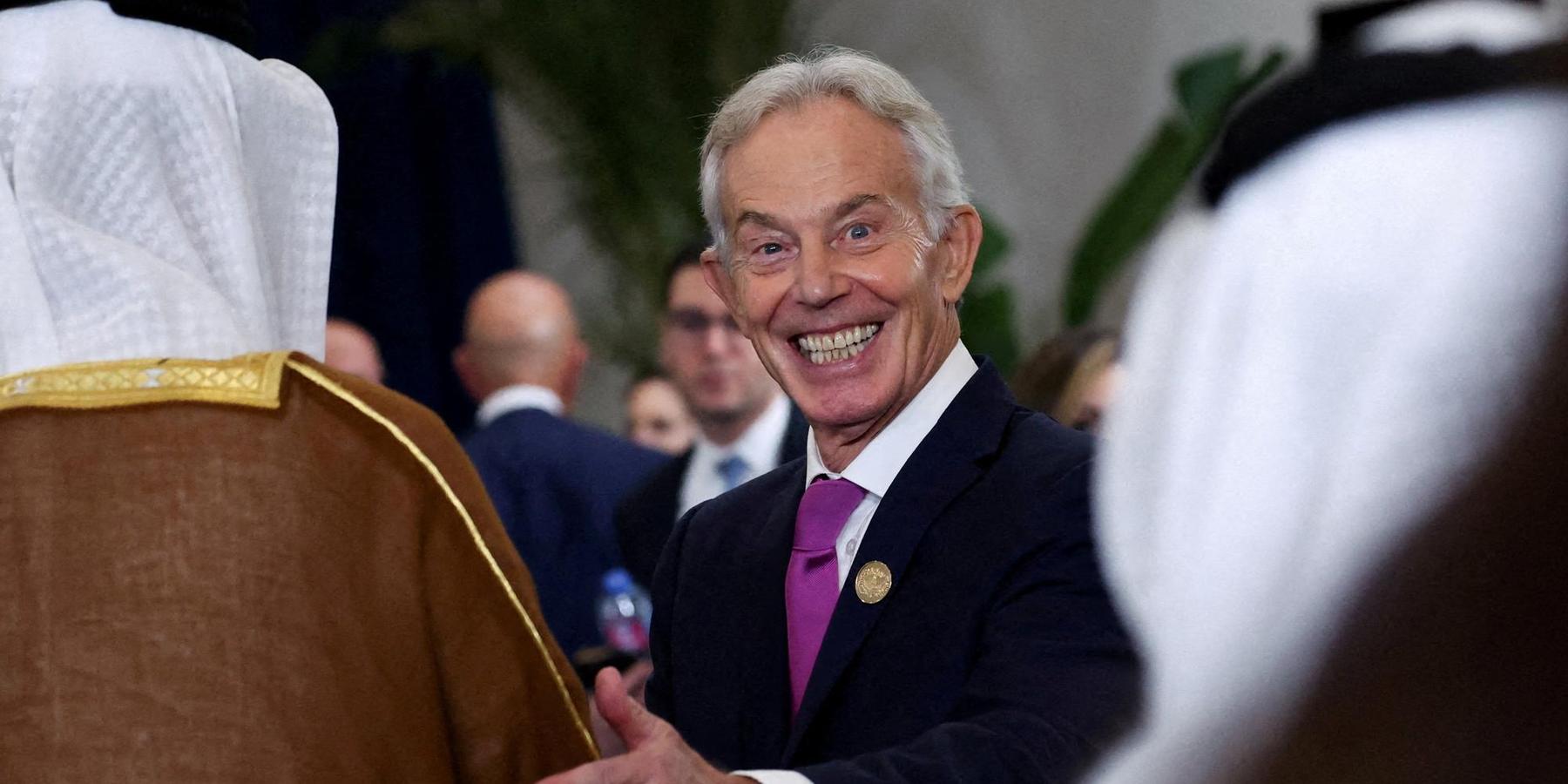
The personnel announcements made so far are sufficient to displease each side in this conflict. The Board of Peace includes, among others, Witkoff, Trump’s son-in-law Jared Kushner, and former British prime minister Tony Blair. Arab governments and many others in the Muslim world distrust Blair because of his role in the Iraq War and his perceived pro-Israel bias when he was an international envoy addressing the Israeli-Palestinian conflict.
Israel has been quick to object to the membership of a “Gaza Executive Board,” which the White House also announced and will have a vaguely defined relationship with the other bodies involved in Gaza. This board will include — besides Blair, Kushner, Witkoff, and others — the Turkish foreign minister and a senior Qatari official. The office of Israeli Prime Minister Benjamin Netanyahu stated that the Gaza Executive Board as constituted is “at odds with Israeli policy.” The statement evidently reflects Israel’s sour relations with Türkiye and Qatar, largely because of the relations of those two governments with Hamas.
The Israeli objections will provide Netanyahu’s government with an additional rationale for overturning the whole diplomatic process whenever it chooses to do so. It is not just the government, but also the Israeli opposition that is making an issue of the Executive Board membership. Opposition leader Yair Lapid called the inclusion of Türkiye a “grave diplomatic failure.” Itamar Ben Gvir, the extreme right-winger who is minister of national security, called for the Israeli military “to return to war with tremendous force in the Strip.”
Meanwhile, some apparent organizational progress has taken place in Cairo, with the first meeting of the National Committee for the Administration of the Gaza Strip (NCAG), a group of 15 Palestinian technocrats who are supposed to function as an interim administration under the supervision of the Board of Peace. The committee met with Bulgarian diplomat Nickolay Mladenov, who has been named “director-general” of the Board of Peace. Members of the NCAG have not been announced apart from the committee’s head, a civil engineer and former deputy minister of transportation in the Palestinian Authority named Ali Shaath.
In his announcement about Phase Two, Witkoff said nothing about the prospective International Stabilization Force (ISF), which is supposed to play a major security role during the interim administration and reconstruction of the Gaza Strip. Recruiting participants in the ISF has been even more difficult than recruiting members of the Board of Peace. Governments do not want their troops to get involved in an active combat situation, as the Israeli attacks continue. They especially do not want to be involved in a mission of disarming Hamas, an objective that Israel was unable to achieve through three years of unrestricted warfare.
Amid frequent mention by Witkoff and others about Hamas needing to live up to its obligations, it is important to remember that Hamas never signed up to Trump’s 20-point plan. What Hamas has agreed to, going back to a framework agreement in 2024, has been a complete ceasefire, release of all hostages in exchange for release of an agreed number of Palestinian prisoners, and return of remains of the deceased, amid an ending of the siege of the Gaza Strip and the beginning of internationally supervised reconstruction of the territory.
Hamas also has made clear it is willing to cede governance of the Gaza Strip to independent Palestinian technocrats. In this regard, Hamas publicly welcomed as an “important positive development” the establishment and initial meeting of NCAG. Hamas also accepts in principle the presence in Gaza of a neutral international peacekeeping force.
As for disarmament, the conditions matter. Hamas has offered to bury its weapons as part of the long-term truce or hudna that it has long offered Israel. But it would completely surrender its weapons only to a genuine Palestinian government.
What Hamas will not do is unilateral disarmament as Israel continues to occupy Palestinian territory and to kill Palestinian citizens. It is unrealistic and unreasonable to expect that, especially in view of the slaughter in Gaza of the past three years.
The technocrats on NCAG have an enormous task, and they face it with major handicaps. Perhaps symbolic of the handicaps is how Shaath, to get to the Cairo meeting from where he has been living in the West Bank, had to travel through Jordan and was detained by Israeli authorities for six hours at the Allenby crossing. A Palestinian official commented that this incident demonstrates an Israel intention to sabotage the committee’s work.
An Arab diplomat observed that a committee of 15 members cannot administer the Gaza Strip without large numbers of civil servants. But Israel is blocking the participation of not only anyone on Hamas’s payroll but also anyone on the Palestinian Authority’s payroll.
In his initial public comments after being named chairman of NCAG, Shaath talked about the huge task of clearing the rubble, which could take three years while overall reconstruction would take about seven years. The situation could become even worse. Israel is continuing to create still more rubble by methodically demolishing buildings in the half of the Gaza Strip that it still occupies.
Neither Trump’s plan nor any other peace plan will be able to bring anything close to peace, security, and prosperity to Gaza as long as Israel is the controlling power on the ground and is determined to oppose anything that looks like Palestinian self-governance.
- Congress, you have a chance to implement Trump Gaza plan right ›
- 'In Trump we trust': Arab states frustrated with stalled Gaza plan ›
- How Trump's Board of Peace is set up for a multibillion dollar fail | Responsible Statecraft ›
- Board of Peace will be a bonanza for wealthy board members ›
- Is Board of Peace handing Gaza over to private contractors? | Responsible Statecraft ›