

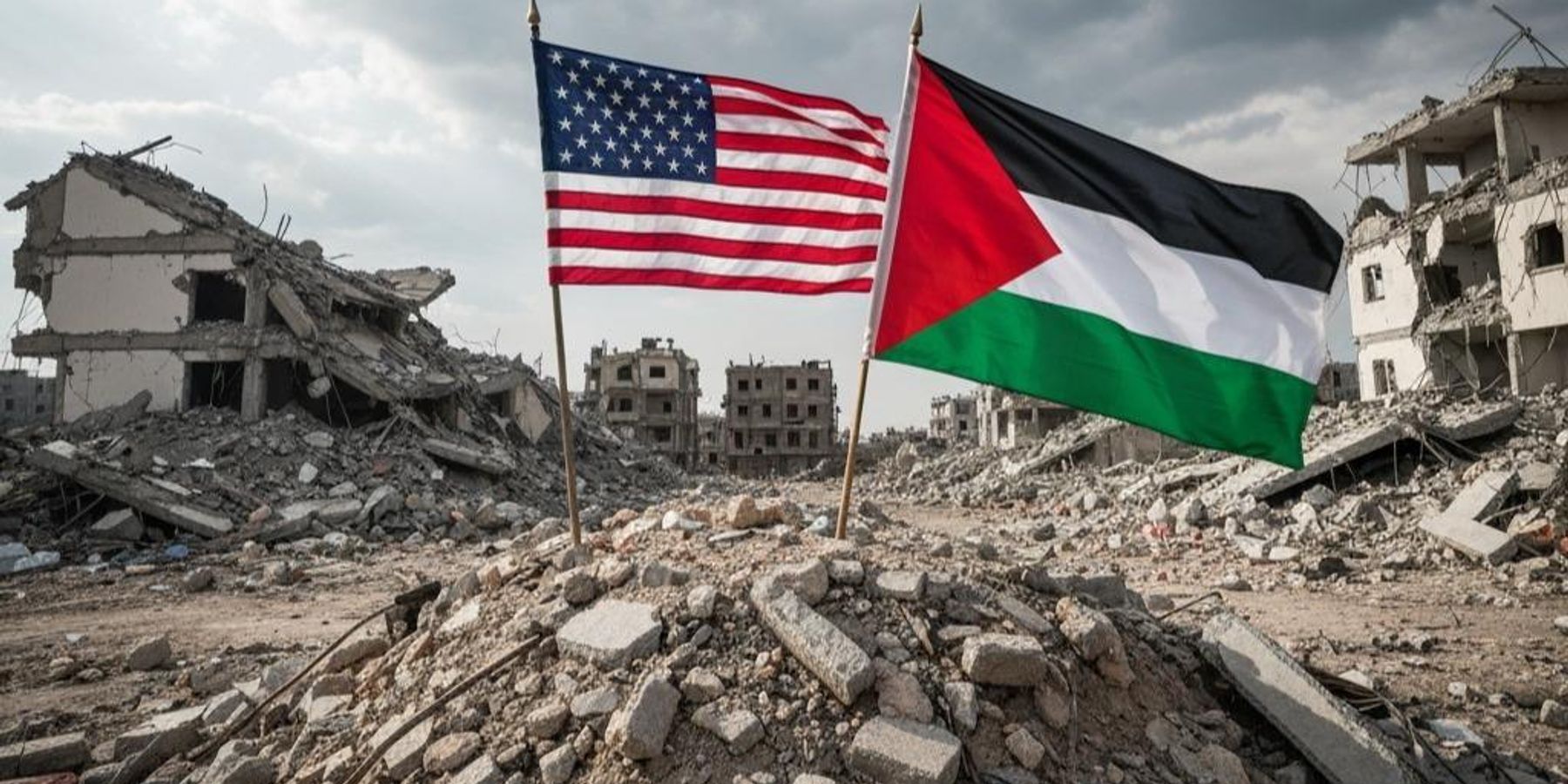
Weeks have passed since the UN Security Council adopted Resolution 2803, endorsing a U.S.-backed plan that creates a “Board of Peace” to run Gaza for at least two years and authorizes a new International Stabilization Force (ISF) to secure the territory after a ceasefire.
Supporters call it a diplomatic breakthrough. For many Palestinians, it looks like something else: Oslo with helmets, heavy on security, light on rights, and controlled from outside.
This isn’t happening in a vacuum. In September, the UN’s Independent International Commission of Inquiry reported that Israeli forces have committed genocide in Gaza, citing “direct evidence of genocidal intent,” and urging states to halt arms transfers and support accountability.
A UN Special Rapporteur, in a report to the General Assembly titled Gaza Genocide: A Collective Crime has likewise described the ongoing destruction as genocide sustained by the complicity of powerful states.
None of this will be easy. For decades, members of Congress who tried to place concrete conditions on U.S. policy toward Israel or on security assistance have faced concentrated pushback - from the Israeli government itself, its diplomatic outreach on the Hill, and a dense ecosystem of advocacy groups, donors, and lobbyists that track these issues closely.
Lawmakers know that even modest efforts to introduce guardrails can trigger campaigns, fundraising threats, and primary challenges. That history has produced a strong incentive structure: defer to the executive branch, avoid anything that can be framed as “pressure on Israel,” and support security-first approaches with few explicit constraints.
Recognizing those dynamics does not weaken the case for conditioning U.S. participation in implementing 2803; it clarifies how far current practice falls short of what is needed to prevent this mission from sliding into a de facto protectorate, the political doorway to a U.S.-run occupation.
If Congress moves now and addresses four key areas, they can still shape how 2803 is implemented.
First, Congress should condition U.S. participation on Palestinian co-ownership, not passive consultation. Resolution 2803 welcomes the Board of Peace as a transitional authority with sweeping control over Gaza’s reconstruction, borders, and security, and the ISF operates under that umbrella. Palestinians are promised a possible “executive committee,” but the resolution does not guarantee them any real share of power in this structure. Congress should draw a red line: no U.S. political or financial support without Palestinian co-ownership on paper and in practice.
That means Palestinians holding at least half of the voting seats on the Board of Peace, with those seats including representatives from Gaza’s municipalities, professional unions, civil society, and women’s networks, not only from the Palestinian Authority. Any Palestinian governance body under 2803 must be chosen by Palestinians, anchored in PA/PLO institutions, and include independent Gaza-based actors so it supports unified governance between the West Bank and Gaza.
Second, Congress should make the sunset real and tie any extension to Palestinian consent and a clear political horizon. Both the Board of Peace and the ISF are meant to end by 2027, for now they exist mainly on paper; their composition and mandate are still being negotiated. In practice, Resolution 2803 leaves space for renewals if “conditions” are not met, the same loophole that turned Oslo’s interim phase into decades of drift.
Congress has leverage here. It can make U.S. participation contingent on a public sunset clause for U.S. involvement, and on a rule that any extension requires explicit Palestinian consent, expressed through elections or another representative mechanism, not just a deal between Washington and a narrow leadership circle.
It can also insist on a clear political horizon, including possible U.S. recognition of a Palestinian state once agreed benchmarks are met. Congress can require timelines for governance and reforms, so benchmarks cannot be stretched indefinitely to justify prolonging the mission. If this is a transition, it needs an exit based on time, consent, and direction.
Third, Congress should tie all U.S. funding and support to genocide-prevention and accountability. Taken together, the Commission of Inquiry, the Special Rapporteur, and Human Rights Watch have urged states to halt weapons transfers and other assistance that risk enabling further genocidal acts, to support international prosecutions, and to stop contributing to what Human Rights Watch describes as the crimes against humanity of extermination in Gaza. They warn that third states risk complicity if they continue with business as usual in the face of these findings.
Congress can and should write those concerns directly into U.S. policy on 2803 by requiring the administration to certify that the U.S. role in the Board of Peace and ISF does not obstruct UN investigations, the International Court of Justice, or the International Criminal Court; that no U.S. personnel, contractors, or funds are used to shield suspects from accountability; and that any military or security assistance linked to Gaza complies with genocide-prevention obligations. If lawmakers ignore those warnings, the United States will be seen, accurately, as helping to manage the aftermath of atrocities it was warned about in advance.
Fourth, Congress should make protection of civilians central, not an afterthought to “security.” Resolution 2803 focuses on demilitarization, border control, and training Palestinian police. A stabilization plan that is only about security will be experienced by Palestinians as policing, not safety. Congress should require a protection system centered on civilians, not only an ISF focused on armed actors.
That means building in a civilian protection portfolio within the Board of Peace with real authority and resources, and creating Palestinian-led, unarmed protection teams in communities across Gaza, including women’s groups, youth networks, and civil society, to monitor violations, accompany those at risk, and feed into accessible complaint mechanisms.
Congress cannot amend Resolution 2803, but it controls the funding, oversight, and political authorization that determine how the United States is implicated in its outcome. If lawmakers use that leverage now, they can help ensure that 2803 stabilizes Gaza in a way that reduces long-term risks, prevents further atrocities, and supports a credible path toward political resolution.
That is squarely in the U.S. interest. If Congress stays passive, it will also share the costs and the consequences when the mission fails.