

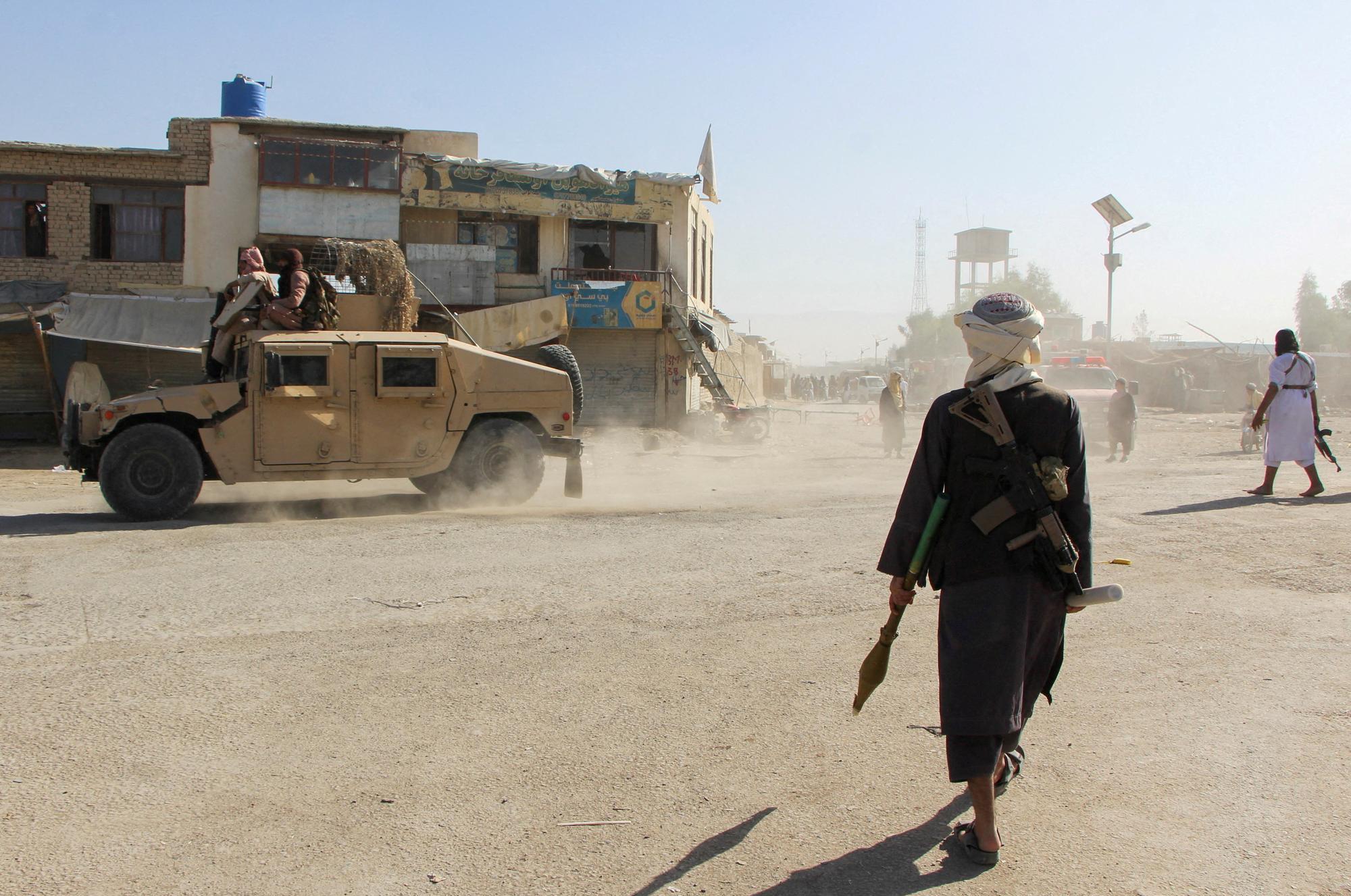
Pakistan’s airstrikes on Kabul and Kandahar over the last 24 hours are nothing new. Islamabad has carried out strikes inside Afghanistan several times since the Taliban’s return to power. Pakistan claimed that the Afghan Taliban used drones to conduct strikes in Pakistan.
What distinguishes this latest episode is the rhetorical escalation, with Pakistani officials openly referring to the action as “open war.” While the language grabbed international headlines, it is best understood as part of a managed escalation designed to signal resolve without crossing red lines that would make de-escalation impossible.
An all-out war with Afghanistan would severely drain Pakistan’s military resources without achieving its core security objective of stopping attacks by Tehrik-e-Taliban Pakistan (TTP), sometimes referred to as the Pakistani Taliban. This is because the TTP is already operating inside Pakistan and its attacks against Pakistani military and police forces have reached casualty levels comparable to, or worse than, those sustained by the United States at the height of its surge in Afghanistan. Pakistan hopes that by inflicting material costs that embarrass the Afghan Taliban, it might pressure them to reconsider their relationship with the TTP, and to demonstrate strength and resolve to Pakistan’s domestic audience.
From the Taliban’s perspective, even limited Pakistani strikes create a serious political dilemma. The movement’s senior leadership, particularly the Kandahar-based inner circle around the Emir, is unwilling to appear weak in the face of Pakistani pressure. Anti-Pakistan sentiment runs deep in Afghan society and the Taliban’s legitimacy rests heavily on projecting sovereignty and resistance to external coercion. Publicly backing down after airstrikes would undermine the carefully cultivated image of the Emirate as a victorious Islamic movement that expelled foreign forces and restored Afghan independence.
The Emir and his inner circle appear willing to pay an extraordinarily high price to preserve the movement’s core principles, including their refusal to abandon the Pakistani Taliban. Severing ties with the TTP would not be seen internally as a tactical compromise, but as a betrayal of jihadist credentials and a violation of Pashtunwali, the tribal code emphasizing loyalty and hospitality. Both norms underpin the Taliban’s internal cohesion. More pragmatic Taliban leaders in Kabul may feel frustrated by the Emir’s stubbornness but lack the power to meaningfully challenge him. As a result, Pakistan’s central demand is precisely the one Kabul is least able to meet.
The most likely outcome is a prolonged cycle of intensifying clashes punctuated by mediation. Short bursts of violence and rhetorical escalation will likely be followed by diplomatic efforts to prevent further escalation. Neither side appears eager for sustained war, but both face domestic and ideological pressures that make meaningful compromise elusive. Pakistan has already dispatched a revolving door of official and informal emissaries to engage the Taliban, including Fazlur Rehman, a prominent Pakistani Islamist politician with longstanding ties to Afghan religious networks, and Mufti Taqi Usmani, an influential Islamic scholar whose involvement signals an attempt to frame compromise in religious rather than purely political terms.
The Trump administration and the broader U.S. security establishment, meanwhile, appear to view the crisis primarily as a Pakistani problem to manage. With little appetite for reengagement in Afghanistan and limited leverage over the Taliban, Washington is unlikely to play a role. Pakistan now finds itself alone with an intransigent Afghan Taliban that it helped empower.