

The House plans to vote on releasing the Epstein files on Tuesday after a long and winding journey in which many have tried to prevent this from happening, with the Trump administration topping that list. This week the president reversed course and urged House Republicans to pass it and has vowed to sign if passed.
The more politicians have tried to block any new information from coming to light about the late, politically-connected convicted sex offender Jeffrey Epstein, the more questions there have been about what powerful people seem to be so afraid of.
Some have speculated that Epstein had ties to the intelligence communities of various countries. On Sunday, Republican Congresswoman Marjorie Taylor Greene (Ga.), one of the few Republicans leading the charge to release the files, wondered in an interview with CNN if Epstein was working for Israel’s government.
Greene did not claim to have evidence of this but raised the question as new reporting suggests that at the very least Epstein was serving as an advisor or “fixer” for former Israeli prime minister Ehud Barak and had ties to the Israeli intelligence community.
This runs parallel with longtime speculation that Epstein cultivated a “list” of high profile clientele who often joined him on his island and escapades involving young women to later black mail them. (The Department of Justice has denied that such a list exists.)
A lack of transparency has served to unleash a number of conspiracy theories on these subjects, but the congresswoman merely wondered whether foreign governments were also pressuring against the release of the files due to their potentially embarrassing nature.
Recent reports based on leaked emails and documents now being released by the Democrats on the House Oversight Committee of an alleged relationship between Epstein and Barak (taking place after Epstein became a convicted sex offender) certainly hint at that possibility.
Here’s just a taste from Drop Site’s Murtaza Hussain and Ryan Grim’s ongoing coverage of the Epstein-Israel thread::
Jeffrey Epstein and Ehud Barak were specialists in war profiteering. At the end of his tenure as Israel’s defense minister and after his supposed “retirement,” Barak embraced a role as a salesman of Israeli security services to embattled governments, opening the door for Israeli intelligence leaders to shape the security apparatuses of several African nations, including the country of Côte d’Ivoire.
Quietly facilitating these efforts was Jeffrey Epstein, who died in jail in 2019. Epstein wrote at one point to Barak: “with civil unrest exploding [...] and the desperation of those in power, isn’t this perfect for you.” Barak replied:, “You’re right [in] a way. But not simple to transform it into a cash flow.” Transforming unrest into cash flow, in the case of Côte d’Ivoire, involved brokering deals between the Israeli state and the embattled West African nation.
This of course is an interesting turn in a brewing controversy that has focused primarily on Epstein’s relationships with powerful elites in the U.S., including Donald Trump, who had claimed to have broken ties with Epstein before he was convicted in 2008 of soliciting a child for prostitution.
In light of the Drop Site report, Greene appeared to raise the question of whether the Israel was keen on keeping the files from seeing the light of day.
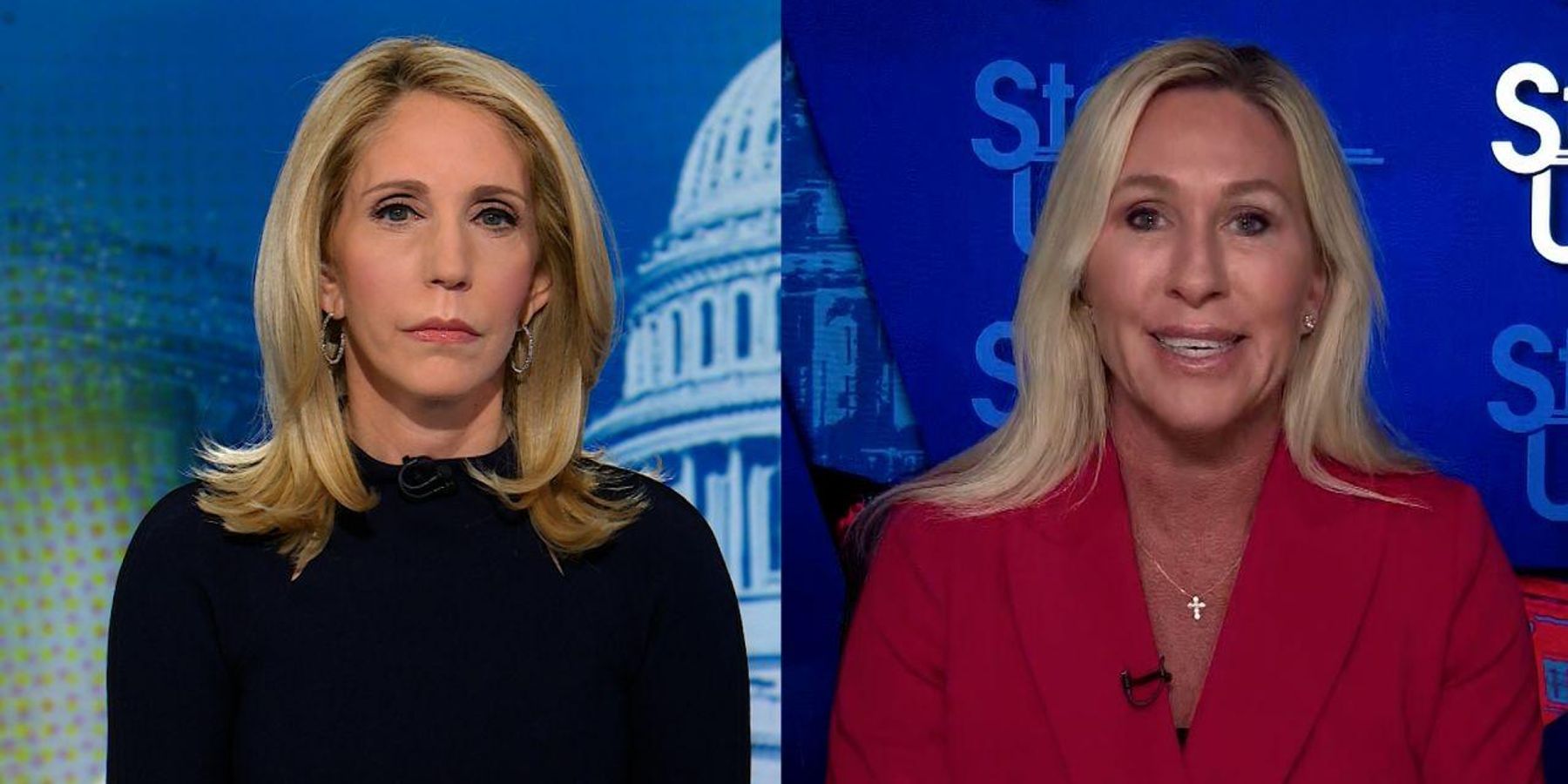
CNN’s Dana Bash asked Greene, “You questioned who and what country is putting so much pressure on Trump to keep the Epstein files hidden. And you included a picture about donations from pro-Israel lobbying group at AIPAC.”
Rep. Greene says she has become a target of AIPAC after openly criticizing the Israeli government actions in Gaza.
Greene replied, seemingly citing Drop Site, “We saw Jeffrey Epstein with ties to [former Israeli Prime Minister] Ehud Barak. We saw him making business deals with them, also business deals that involved the Israeli government, and seems to have led into their intel agencies.”
“And I think the right question is, to ask is, was Jeffrey Epstein working for Israel?” Greene wondered.
Bash shot back, “Are you saying Israel is pushing the president of the United States to cover up the Epstein files? And what evidence do you have that that is the case?”
Greene responded, “No, I simply — no, I simply asked. No, I simply just asked out loud, is there a foreign government? It could be any foreign government.”
The exchange felt intense. Some thought Bash looked angry.
Grim, who has written multiple stories about potential ties between Epstein and Israeli officials, said that Greene’s question only sounded strange in a news environment where stories like this are never reported.
“Here (Rep. Marjorie Taylor Greene) tells (Dana Bash) about the reporting we’ve done on Epstein’s links to Israel,” Grim shared on X. “If you only get your news from CNN, you’d have no idea what she’s talking about. They refuse to cover it and then treat her like she’s nuts for bringing it up.”
Grim has a point. Greene isn’t the only one with questions — reasonable questions — about what was really going on with Epstein that are rarely explored in mainstream legacy media. Now that a story is being slowly pieced together with the aid of the released files, the questions cannot be ignored for long. See what is happening to Larry Summers today at Harvard. He’s been forced to drop his public commitments and ties to Washington think tanks due to his close relationship with Epstein.
Expect there to be more, so “let all the poisons that lurk in the mud hatch out.” And if foreign governments, including Israel, have to answer for their intimate ties to the man, we will all be the better for knowing it.