

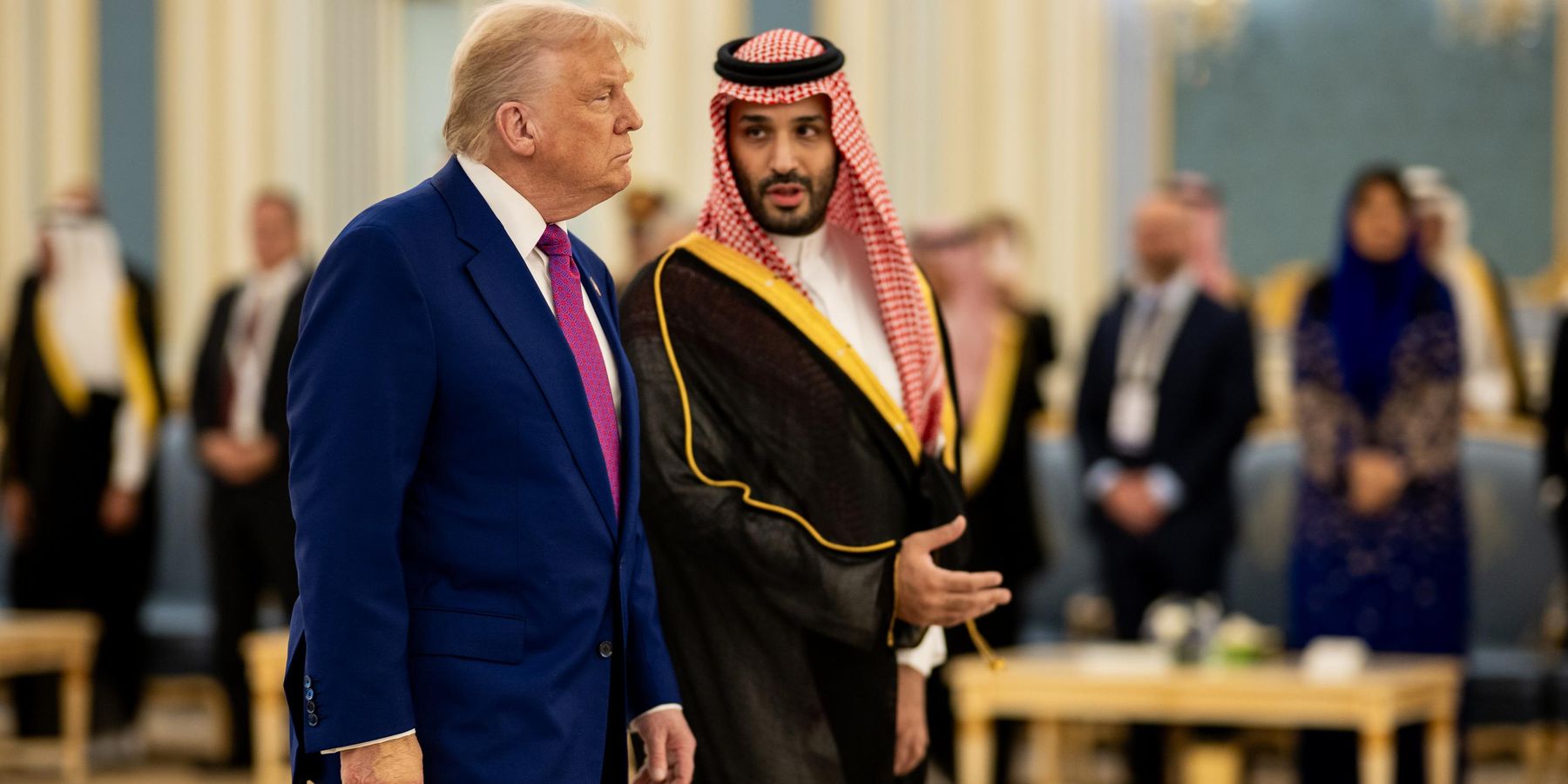
As Washington prepares for a visit this week to the White House by Saudi Arabia’s de facto leader, Crown Prince Mohammed Bin Salman (MBS), reports indicate that it could be the occasion for the announcement of a U.S.-Saudi security pact, along the lines of a recent security commitment announced by President Trump for Saudi Arabia’s one-time regional rival, Qatar.
The Qatar agreement commits the United States to take “all lawful and appropriate measures — including diplomatic, economic, and, if necessary, military — to defend the interests of the United States and of the State of Qatar and to restore peace and stability.”
Although this kind of deal would not be the Senate-confirmed legally binding treaty that MBS had previously wanted, if extended to Saudi Arabia, it would still be a uniquely bad idea. Given MBS’s history of reckless behavior — for example violations of the laws of war and systematic human rights abuses — a pact committing Washington to come to Riyadh’s defense would be bad for U.S. interests, regional security, and the people of Saudi Arabia.
From his leadership of Saudi Arabia’s brutal intervention in Yemen, which left nearly 400,000 people dead through direct and indirect means, to his kidnapping of the prime minister of Lebanon, his years-long blockade of Qatar, and his directing the murder of U.S.-resident and Washington Post columnist Jamal Khashoggi, MBS has been a force for instability and rights abuses, and will not be a reliable partner.
Although Saudi Arabia is not currently engaged in an active conflict outside of its borders, thanks in large part to U.S. pressure, that may be temporary. In fact, providing such a security guarantee risks emboldening MBS to resume his foreign policy recklessness, just as former President Biden’s visit to Saudi Arabia in 2022 emboldened MBS’s resurgent domestic repression.
Following Biden’s visit, MBS’s regime went on an unprecedented campaign of handing down decades-long sentences to Saudis merely for expressing their views, including a woman who was sentenced to 45-years in prison and a subsequent 45-year travel ban.
Saudi security forces have also carried out mass killings of migrants at its southern border. And for the second straight year, the Saudi government has executed more than 300 people and is on pace to break the record number of executions it set last year. These include journalist Turki al-Jasser, two individuals convicted of crimes committed when they were children, nearly half convicted of non-violent drug offenses, and 56% who are foreigners.
In his first term, Donald Trump chose to make his first official visit to Saudi Arabia, where he announced an enormous $110 billion arms sales package. The size of the deal was inflated for publicity purposes, but it served its purpose, allowing Trump to tout his skills as a master deal maker. Similarly, his first trip abroad in his second term was to Saudi Arabia, and the administration claimed to secure $600 billion in investment commitments from the Kingdom, including $142 billion in undisclosed arms sales. Recent reporting indicates that the F-35 combat aircraft may be a part of this deal. So far F-35s have not been sold to any country in the region other than Israel.
Trump protected MBS for his role in Khashoggi’s murder during his first term, including refusing to release a congressionally mandated intelligence report assessing the crown prince’s responsibility, stating that he didn’t want to lose business for “our great defense contractors.” This narrow definition of U.S. interests is precisely the kind of logic that has tied the United States to repressive regimes that entangle Washington in unnecessary wars.
The economic ties between Trump’s family and the Saudi regime raise even more questions about Trump’s potential decision to extend a security pact to Saudi Arabia. The crown prince’s sovereign wealth fund provided $2 billion for Trump son-in-law Jared Kushner’s investment firm at the end of the first term, over the objections of the fund’s board members. And other deals are in the works, including possibly a Trump Tower and a golf course in Saudi Arabia, LIV Golf tournaments at Trump properties, and a partnership for the largest buyout ever of EA Sports for $55 billion.
Instead of tying the United States to the fate of the current Saudi government, President Trump should press MBS to release all political prisoners and make the necessary rights reforms that help Americans, including reuniting American families with their loved ones wrongfully detained in Saudi Arabia, such as Saad Almadi, Abdulrahman al-Sadhan, Salman al-Odah, and Sarah and Omar al-Jabri.
The last thing the United States needs is another commitment that could lead to the U.S. being dragged into yet another war in the Middle East. Doing business with Saudi Arabia is one thing. Committing to defend it is another. It’s time for Congress to speak out against a possible new security pact with Saudi Arabia, and to scrutinize any proposed arms sales to Riyadh.
Uncritically continuing to uplift MBS will only embolden the crown prince’s recklessness and repression and risk perpetuating conflict in the region instead of bringing the peace Trump claims to want. It’s the wrong deal at the wrong time.
- No Joke: US considering nuclear power for Saudi in grand bargain ›
- Trump doesn't need to buy Saudi loyalty with a security pact ›
- Lobby Horse: Trump’s ‘trillion dollar' visit to Saudi Arabia ›
- Weapons industry cheers as Trump inks Saudi $142B arms deal ›
- Trump lauds Saudi crown prince, slams Khashoggi as 'controversial' | Responsible Statecraft ›