

This evening, the Senate narrowly voted down a War Powers Resolution that would have blocked the U.S. from attacking Venezuela without congressional approval amid fears the Trump administration’s ongoing campaign against so-called “narco-terrorists” might escalate into a greater conflict with the South American country.
Senators largely voted along party lines to block the resolution, led by Sen. Tim Kaine (D-Va.), and co-sponsored by 15 other senators, including one Republican, Sen. Rand Paul (R.-Ky.), which ultimately failed in a 49-51 vote. Paul and Sen. Lisa Murkowski (R.-Ala.) were the lone Republicans to vote for the resolution, just as they were the only Republicans to support a previous War Powers Resolution barring unauthorized strikes on boats purportedly carrying illegal drugs in the Caribbean, which also failed.
All Democratic senators voted for the measure, including Sen. John Fetterman (D-Pa.), the only Democrat to vote against the failed resolution that aimed to block the boat strikes last month.
In the days leading up to the vote, Republican senators, including Todd Young (R-Ind.), Susan Collins (R-Maine), and Mike Rounds (R.-S.D.) had said they were still reviewing the Trump administration’s legal rationale for its attacks — signaling concerns about the administration’s approach. Despite previously wavering, these Senators held the party line.
The Trump administration asserts its ongoing strikes are legal because the boats it is targeting are smuggling illegal drugs into the U.S., and that the people operating them are terrorists. But the White House does not currently believe it has the legal authority to conduct strikes within Venezuela, according to a new report from CNN.
Lawmakers from both parties contend the Trump administration has not given them enough information about its attacks and their legality. On the Senate floor leading up to the vote, resolution supporters stressed that any future hostilities in the region — against these boats or Venezuela itself — must first receive explicit congressional approval.
"There is no more important thing for this Congress to do, than to reassert its responsibility — to accept our responsibility for the powers that were delegated to the United States Congress — particularly about whether we do or don't go to war," Sen. Peter Welch (D-Vt.) said this afternoon.
Many warned that the ongoing boat strikes could easily escalate into a full-blown war.
"These operations risk destabilizing the region and provoking direct confrontation with Venezuela. We could be stumbling into another open ended conflict without purpose or plan if the administration intends to escalate towards conflict with Venezuela,” Sen. Jack Reed (D- R.I). stressed. “Congress has a constitutional duty to declare and authorize such action.”
“We cannot sleepwalk into another war through incremental escalation while being kept in the dark,” he said.
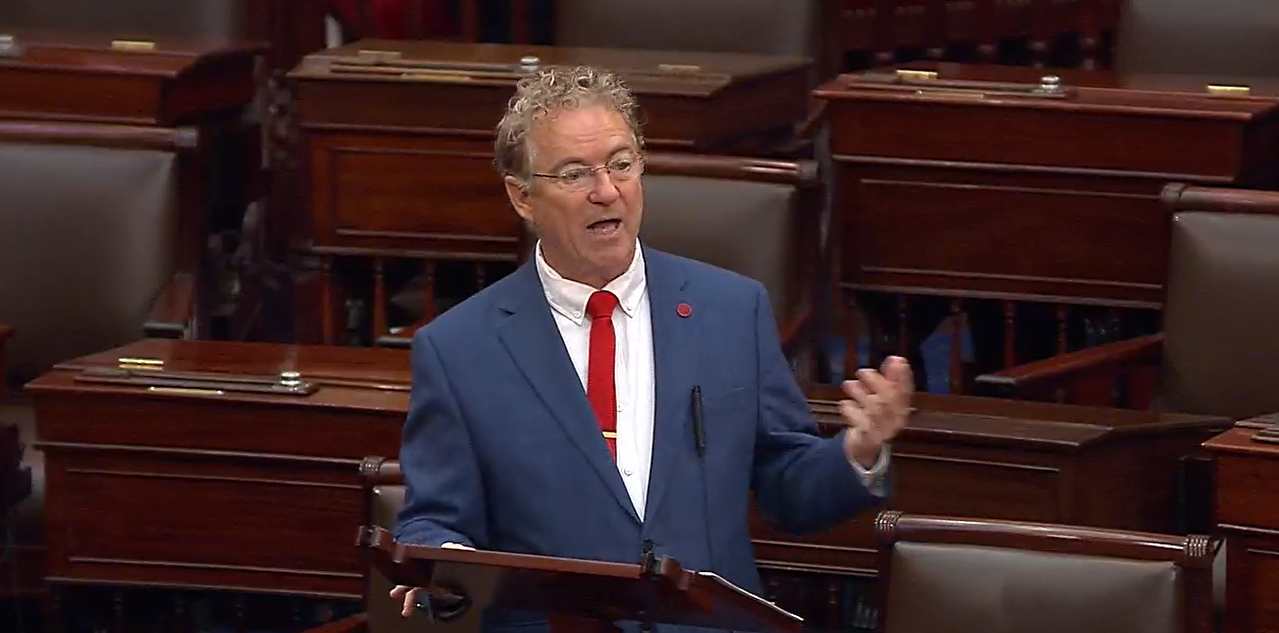
And resolution co-sponsor Sen. Rand Paul (R-Ky.) stressed service members’ lives were at risk, for a possible conflict he deemed “unnecessary.”
"We owe it to our service members to only send them into harm's way when vital American interests are at stake. Who is in charge of Venezuela does not constitute such an interest,” Sen. Paul said. "President Trump, do not allow the warmongers in Washington to drag you into an unnecessary war of choice."
Although they did not rule out possible future actions, Trump officials told lawmakers Wednesday it does not plan to strike Venezuela currently, and that it does not have a legal justification for attacks against land targets there. Trump has also reportedly expressed concerns about whether striking Venezuela will compel its leader, Nicolas Maduro, to step down.
Connor Echols contributed additional reporting.