Follow us on social

google cta
Biden greenlit Israel’s strikes in Lebanon, says former Israeli diplomat

Biden greenlit Israel’s strikes in Lebanon, says former Israeli diplomat

The former ambassador said his government reached 'side understandings' with Washington to continue bombing Hezbollah

Reporting | QiOSK
google cta
google cta

The Biden administration reached “side understandings” to allow Israel to continue bombing targets in Lebanon despite a ceasefire reached late last year, according to Michael Herzog, who was then serving as Israel’s ambassador to the U.S.

Herzog revealed the handshake deal, which had not previously been confirmed, during a Friday panel at the Washington Institute for Near East Policy. One key result of the agreement, which Herzog helped negotiate, was maintaining Israel’s “freedom of action against threats” when other parties are “unwilling or incapable” of containing them, he said. “That was achieved through side understandings with the government of the United States,” Herzog said. “And it’s been implemented in Lebanon.”

The revelation helps explain why the U.S. has stayed relatively quiet over the last year about alleged Israeli ceasefire violations, including near daily airstrikes and commando raids against what Israel claims are Hezbollah-related sites in southern Lebanon. These attacks, which have killed at least 100 Lebanese civilians, seem to represent a far cry from the “permanent cessation of hostilities” that President Joe Biden claimed would follow the ceasefire.

Rumors of such a deal have circulated over the past year following Israeli media reports about the existence of a “side letter” allowing Israel to “defend itself” against threats in Lebanon provided that Israeli forces notify the U.S. in advance. But Herzog’s comments appear to represent the first official confirmation of the secret agreement — and the clearest indication yet that Israel views the side deal as giving it carte blanche to continue its unilateral air campaign against Hezbollah.

Herzog did not explicitly say whether these “side understandings” remain in place under the Trump administration, which, like the Biden administration, has largely ignored alleged Israeli violations of the ceasefire.

Herzog’s comments also provide fresh insights ahead of the visit of Syrian President Ahmed al-Sharaa to Washington next week, when he will meet with President Donald Trump and discuss, among other things, the possibility of a Syria-Israel security agreement. Israel would “like to apply” a similar side agreement to any deal with Syria, according to the former Israeli ambassador. “It’s important for Israelis to know that they can maintain freedom of action,” Herzog said.
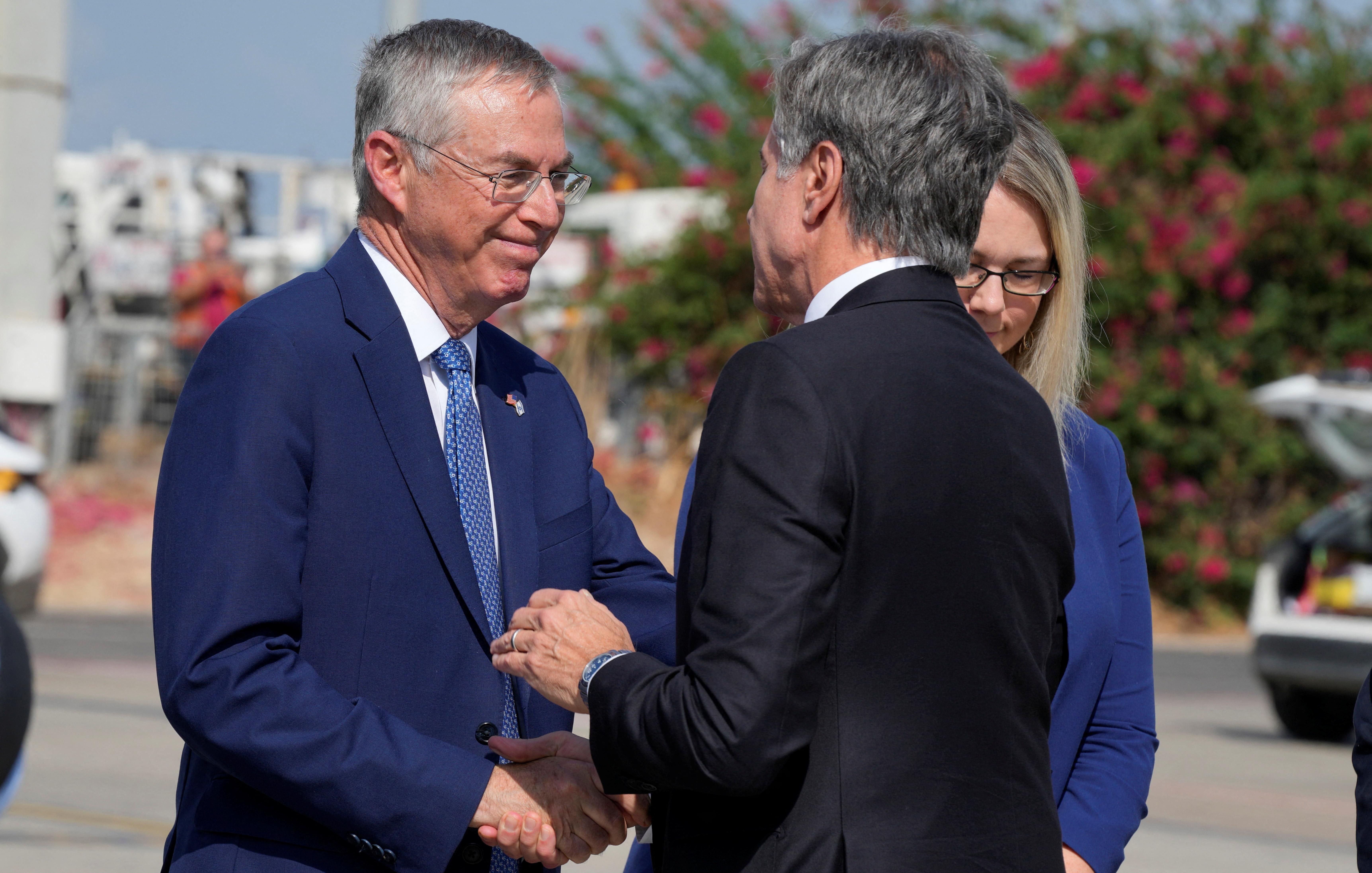
Top image credit: Ambassador to U.S. Michael Herzog welcomes Secretary of State Antony Blinken upon his arrival at Ben Gurion Airport in Tel Aviv, Israel, Thursday Oct. 12, 2023. President Joe Biden is dispatching his top diplomat to Israel on an urgent mission to show U.S. support after the unprecedented attack by Hamas militants. Jacquelyn Martin/Pool via REUTERS
google cta
Reporting | QiOSK
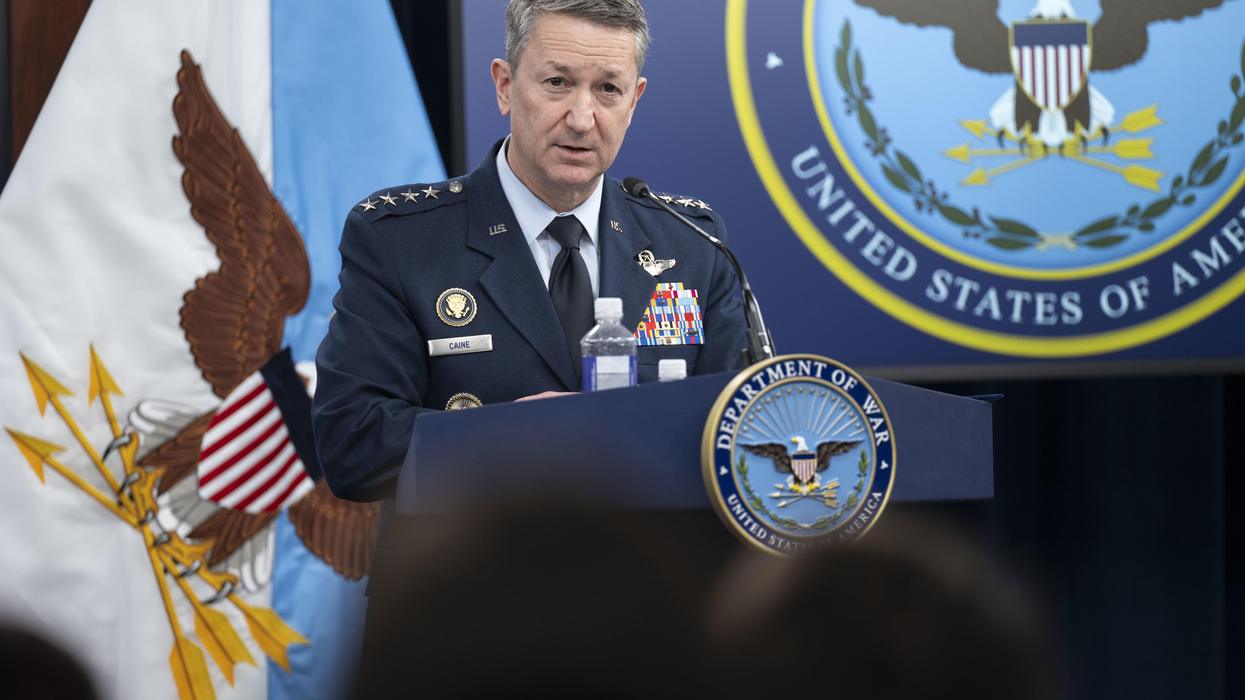
Dan Caine
Top photo credit: Secretary of War Pete Hegseth and Chairman of the Joint Chiefs of Staff U.S. Air Force Gen. Dan Caine conduct a press briefing on Operation Epic Fury at the Pentagon, Washington, D.C., March 4, 2026. (DoW photo by U.S. Navy Petty Officer 1st Class Alexander Kubitza)

Did Caine just announce the Morgenthau option for Iran?

QiOSK

Gen. Dan Caine’s formulation of American war aims in Iran is remarkable not because it is bellicose, but because it is strategically incoherent.

In a press conference Tuesday morning, the chairman of the Joint Chiefs of Staff did not describe a limited campaign to suppress missile fire, blunt Iran’s naval threat, or even impose a severe but bounded setback on Tehran’s coercive instruments. He described a campaign against Iran’s “military and industrial base” designed to prevent the regime from attacking Americans, U.S. interests, and regional partners “for years to come.” In an earlier briefing he put the objective similarly: to prevent Iran from projecting power outside its borders. Rather than the language of a discrete coercive operation, this describes a war against a state’s capacity to regenerate power.

keep readingShow less
Mbs-mbz-scaled
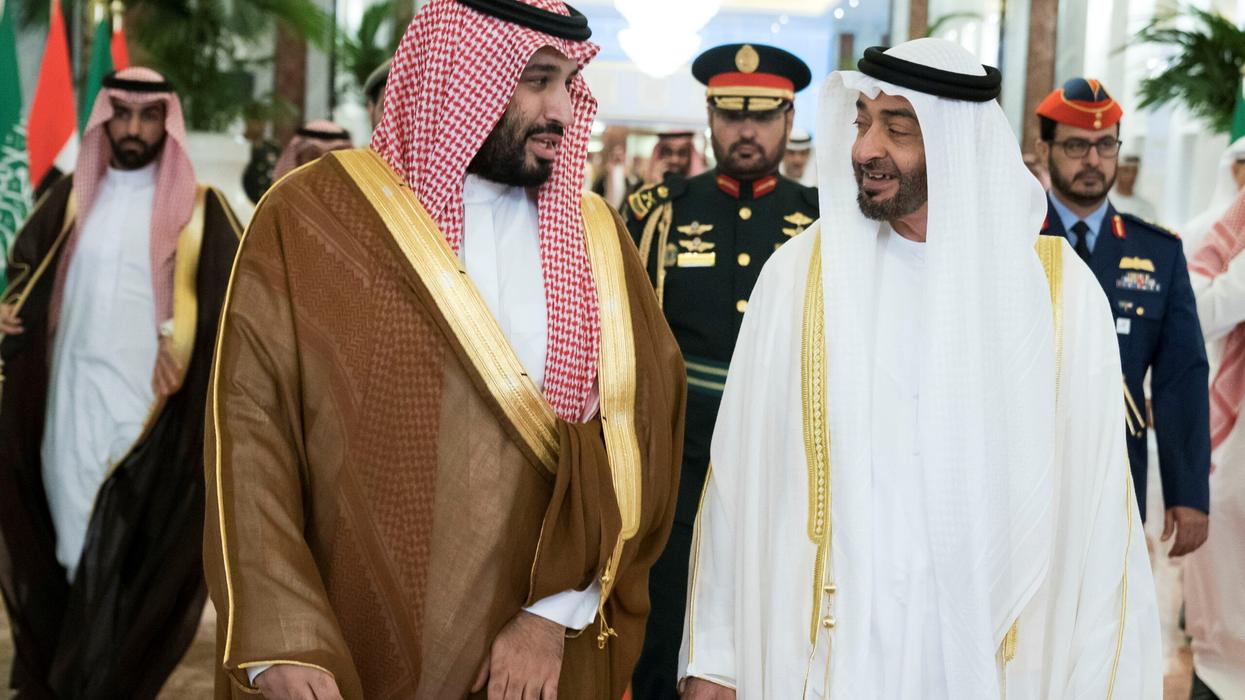
UAE President Sheikh Mohammed bin Zayed al-Nahyan receives Saudi Crown Prince Mohammed bin Salman at the Presidential Airport in Abu Dhabi, United Arab Emirates November 27, 2019. WAM/Handout via REUTERS

Is the US goading Arab states to join war against Iran?

QiOSK

On Sunday, U.S. Ambassador to the U.N. Mike Waltz told ABC News that Arab Gulf states may soon step up their involvement in the U.S.-Israeli war on Iran. “I expect that you'll see additional diplomatic and possibly military action from them in the coming days and weeks,” Waltz said.

Then, on Monday morning, Sen. Lindsey Graham (R-S.C.) slammed Saudi Arabia for staying out of the war even as “Americans are dying and the U.S. is spending billions” of dollars to conduct regime change in Iran. “If you are not willing to use your military now, when are you willing to use it?” Graham asked. “Hopefully this changes soon. If not, consequences will follow.”

keep readingShow less
Why Tehran may have time on its side
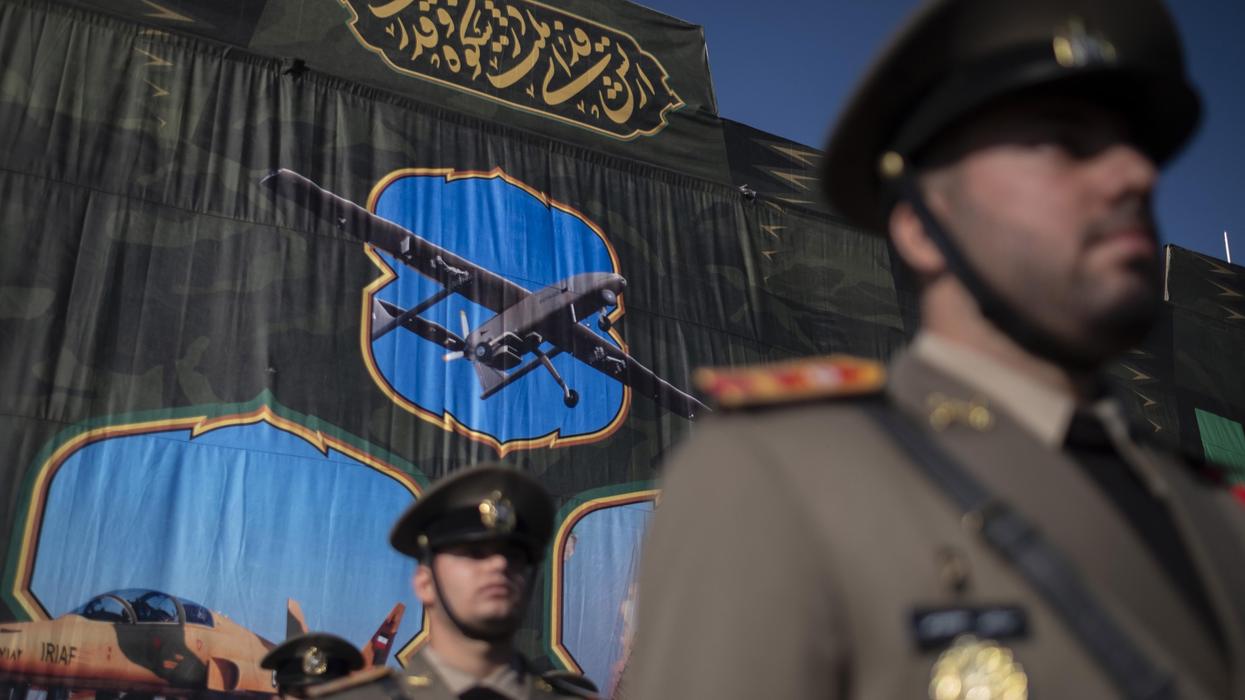
Top image credit: Iranian army military personnel stand at attention under a banner featuring an image of an Iranian-made unmanned aerial vehicle (UAV) during a military parade commemorating the anniversary of Army Day outside the Shrine of Iran's late leader Ayatollah Ruhollah Khomeini in the south of Tehran, Iran, on April 18, 2025. (Photo by Morteza Nikoubazl/NurPhoto)

Why Tehran may have time on its side

QiOSK

A provocative calculus by Anusar Farrouqui (“policytensor”) has been circulating on X and in more exhaustive form on the author’s Substack. It purports to demonstrate a sobering reality: in a high-intensity U.S.-Iran conflict, the United States may be unable to suppress Iranian drone production quickly enough to prevent a strategically consequential period of regional devastation.

The argument is framed through a quantitative lens, carrying the seductive appeal of mathematical precision. It arranges variables—such as U.S. sortie rates and degradation efficiency against Iranian repair cycles and rebuild speeds—to suggest a "sustainable firing rate." The implication is that Iran could maintain a persistent strike capability long enough to exhaust American political patience, forcing Washington toward a premature declaration of success or an unfavorable ceasefire.

keep readingShow less
google cta
Want more of our stories on Google?
Click here to make us a Preferred Source.

LATEST

QIOSK

Newsletter

Subscribe now to our weekly round-up and don't miss a beat with your favorite RS contributors and reporters, as well as staff analysis, opinion, and news promoting a positive, non-partisan vision of U.S. foreign policy.