

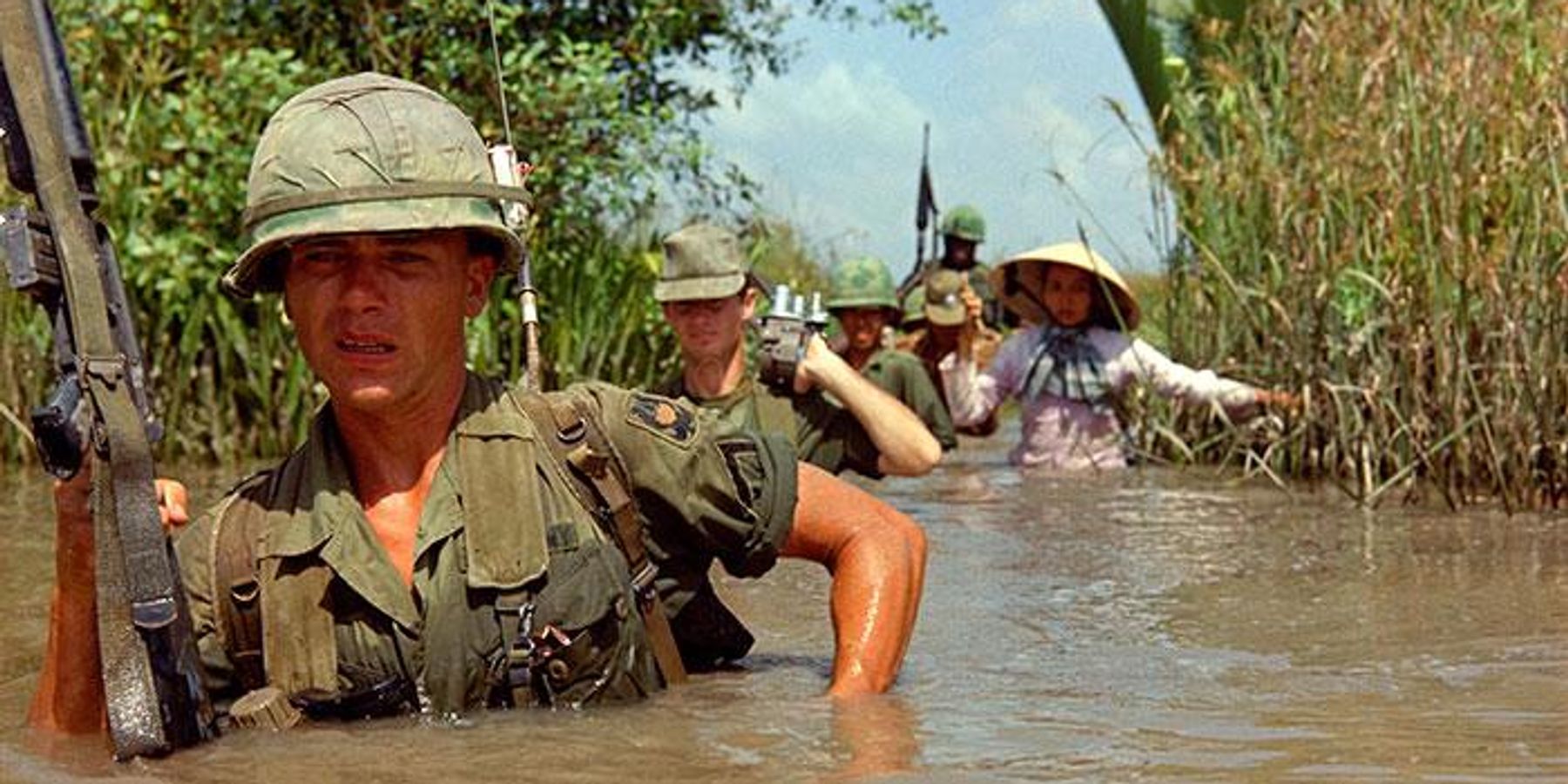
November 30 marks the International Day of Remembrance for all Victims of Chemical Warfare. Established by the United Nations in 2015, the day honors those who have suffered from chemical weapons and reaffirms our collective commitment to ensure these horrors never happen again.
Since the Chemical Weapons Convention (CWC) entered into force in 1997, 197 nations have ratified it.Israel signed but never ratified; Egypt, North Korea, and South Sudan have not signed. The Organization for the Prohibition of Chemical Weapons (OPCW) announced in July 2023 that all chemical weapons stockpiles reported by member nations, including those in the United States, have been destroyed. It is one of the greatest disarmament achievements in modern history.
And yet, for many, the scars of chemical warfare are still fresh.
When most people think of chemical weapons, they recall images of gas masks, sarin attacks, or mustard gas — tools of modern barbarity. For countless families in the United States, Vietnam, Laos, and Cambodia, the legacy of chemical warfare is bound to a different name: Agent Orange.
Between 1961 and 1971, the U.S. military sprayed an estimated 20 million gallons of herbicides over southern Vietnam, along the Ho Chi Minh Trail in Laos, and parts of Cambodia. Nearly two-thirds was Agent Orange, later discovered to be contaminated with 2,3,7,8-Tetrachlorodibenzo-p-dioxin (TCDD) — a potent, long-lasting dioxin. TCDD is a known human carcinogen and an endocrine disruptor, linked to cancers, reproductive disorders, and birth defects that can span generations.
By the letter of the CWC, Agent Orange is not classified as a “chemical weapon.” If you ask a Vietnam veteran suffering from Parkinson’s, cancer, heart disease, or any of the 19 types of conditions the Department of Veterans Affairs (VA) associates with Agent Orange exposure, you’ll hear a very different story. To them, it was every bit a weapon designed to destroy life and health.
The numbers tell a sobering tale. The 1991 Agent Orange Act allowed the VA to presume that all veterans who served in Vietnam were exposed, qualifying them for care and compensation. A 2018 Government Accountability Office report found that over 757,000 veterans — about one in four who served — were receiving benefits linked to Agent Orange.
The 2022 PACT Act broadened that circle to veterans who served in other areas where Agent Orange was used. By 2024, more than 84,000 new Vietnam-era veterans were granted compensation, many due to exposure. However, the VA still excludes most of their children from benefits for birth defects or disabilities — unless their mother, not their father, served in Vietnam. This injustice persists even as evidence grows of intergenerational impacts.
For years, the U.S. government avoided addressing the damage overseas as well. It wasn’t until the mid-2000s that the United States and Vietnam began working together to clean up the lingering dioxin contamination. Thanks largely to the tireless advocacy of former Senator Patrick Leahy (D-Vt.) and his team, the U.S. has since provided over $333 million for environmental cleanup at Da Nang and Bien Hoa air bases, and $139 million for health and disability programs in affected Vietnamese communities. During his trip to Hanoi earlier this month, Secretary of Defense Pete Hegseth reaffirmed the U.S. commitment to these cooperation and to strengthen defense ties.
This vital cooperation, however, stops at Vietnam’s borders.
In neighboring Laos, families endure the same suffering without support. The War Legacies Project has documented hundreds of children born with severe birth defects in the sprayed regions of Laos — eerily similar to those seen in Vietnam. Before his retirement in 2023, Senator Leahy secured $1.5 million for disability programs in Laos, followed by another $3 million over the next two years. Yet earlier this year, the OKARD (“Opportunity” in Lao) project — one of the few programs supporting people with disabilities along the Ho Chi Minh Trail — was quietly eliminated. Those families have once again been left to fend for themselves.
Fifty years after the Vietnam War ended, the toxic legacy of Agent Orange and other dioxins lingers on. The CWC may not list it among banned weapons, but its effects — decades of suffering, intergenerational illness, and ecological ruin — make that a distinction without a difference.
As we remember victims of chemical warfare, we should also remember those whose suffering falls outside the neat lines of international definitions. Agent Orange was intended to strip away jungle cover, but what it truly laid bare is the long shadow of chemical warfare on human lives.
The United States has taken commendable steps to make amends in Vietnam. True reconciliation and moral leadership require going further. This means expanding support for communities in Laos and Cambodia who were also victims of undeniable actions by our country. It means ensuring that veterans and their families here at home receive the validation and care they deserve, including children born with disabilities that may be linked to their parents’ exposure. It also means continuing the scientific research needed to understand these generational effects fully.
Chemical weapons may no longer sit in our arsenals, but their ghosts persist in the soil of Southeast Asia, in the bodies of our veterans, and in the DNA of their children. To honor the victims of chemical warfare, we must not only remember those felled by sarin or mustard gas, but also those still living with the hidden wounds of Agent Orange.
As long as those wounds remain untreated, our work to end chemical warfare remains unfinished.