

It may not be a “cakewalk,” but it’ll still be pretty damn easy.
Just a few air strikes at key targets in Venezuela and the “remov[al],” presumably by U.S. Special Forces, of “the regime’s top thug,” and the government of Venezuelan President Nicolas Maduro should collapse like souffle, paving the way to democracy, economic prosperity, and national reconciliation.
That’s the scenario painted by a leading, if controversial, neoconservative in a new article entitled “How to Topple Maduro,” published Thursday by the highly influential “Foreign Affairs” journal.
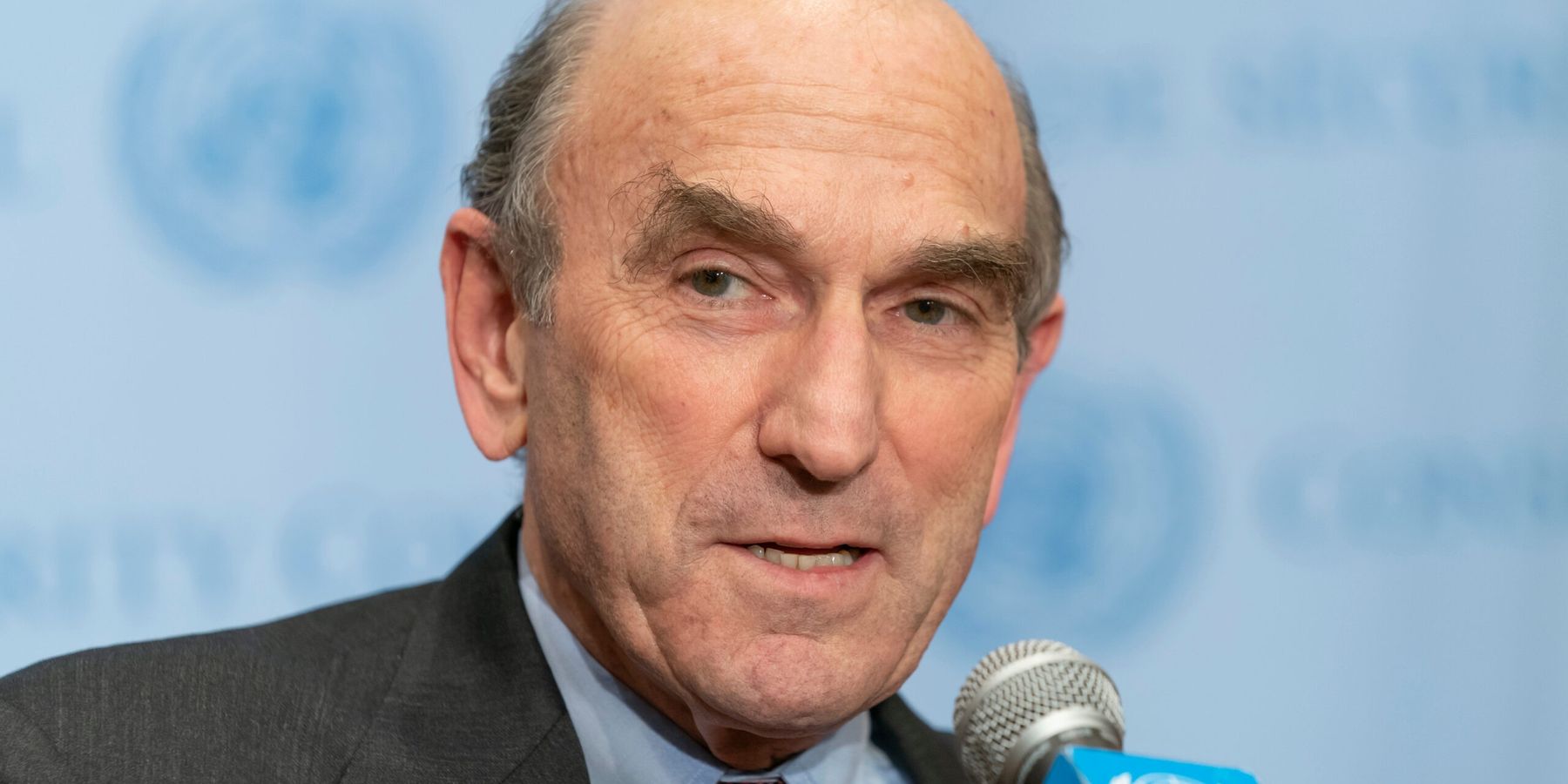
The author: Elliott Abrams, who served as Special Representative for Venezuela in President Trump’s first term. He also helped prosecute the contra war in Nicaragua as Assistant Secretary of State for Inter-American Affairs under former President Ronald Reagan (and was convicted of misleading Congress about his role in the Iran-contra affair), and wait for it… he was former President George W. Bush’s senior Middle East adviser on the National Security Council (2002-2009) during which he promoted the disastrous U.S. invasion of Iraq and backed an equally disastrous coup attempt against Hamas in Gaza.
Here's his plan for regime change in Venezuela:
“First, Washington should expand its target list to include drug-trafficking speedboats in ports in addition to those on the high seas, because the threat must be brought home to the Venezuelan military. To protect U.S. planes that may strike targets in Venezuela (and to demonstrate that such strikes are planned), U.S. forces should destroy Venezuela’s air defense systems, F-16 fighter aircraft at the Palo Negro Air Base, and Sukhoi jets at the air base located on La Orchila, an island about 100 miles off the coast. Airstrikes should also target small airstrips in western Venezuela used for drug trafficking and bases in western Venezuela used by the National Liberation Army (known by its Spanish acronym, ELN), a Colombian terrorist group aligned with Maduro and also engaged in narcotics traffic.
“No single step would have a greater effect on the Venezuelan military, intelligence services, and police than removing [Interior Minister] Diosdado Cabello, the regime’s chief thug… …Removing him from power would show everyone in the regime’s security organs that they were not safe, and that its power to protect itself and them was fast eroding.
“It is not likely that [President Nicolas Maduro’s] regime could withstand such an assault,” according to Abrams, who stresses, that aside from the possible deployment of Special Forces to “apprehend indicted regime leaders,” “[i]t would be neither wise nor necessary to deploy U.S. ground forces to Venezuela.”
Ironically, Abrams’ advice was published on the same day that the New York Times reported that war games carried out by participants from all relevant agencies in the U.S. government in early 2019 — of which Abrams as Special Representative for Venezuela must have been aware — concluded that Maduro’s ouster by military coup, popular uprising, or U.S. military action would, according to one unclassified report, produce “chaos for a sustained period of time with no possibility of ending it.”
“You would have no command and control over the military and no police force. You’d have looting and chaos,” the author of the war games report, Douglas Farah, told the Times, adding that restoring order would likely require tens of thousands of U.S. troops.
That assessment echoed the conclusions of a recent report by the International Crisis Group (ICG) that warned that, even if the U.S. succeeded in removing Maduro, it could a general breakdown in security, whether from senior military officers, parts of the security forces determined to “wage a guerrilla-type war against the new authorities,” other armed groups already active in the country, including the battle-hardened Colombian rebel group, the ELN, urban-based pro-Maduro gangs known as colectivos, or all of the above.
“Any incoming post-Maduro government will have to deal with a dysfunctional politicised bureaucracy; a major economic and humanitarian crisis; and collapsed infrastructure. It would be hard-pressed to maintain stability if it is simultaneously subjected to a campaign of political violence,” according to the report.
Unsurprisingly, Abrams apparently thinks such warnings are overly pessimistic.
“Maduro’s departure from power [would be] followed by the installation of the legitimate government led by [Edmundo] González [the presidential opposition candidate widely believed to have defeated Maduro in the 2024 election], followed by economic recovery, free elections, and the kind of negotiated amnesty (for all but the top figures of the regime) and national reconciliation that has been possible in other Latin American countries after dictators have fallen. The loyalty of the army and police to the new government cannot be assumed, of course, but if it can pay them using frozen assets or loans, their fealty to the departed Maduro will rapidly disappear.”
Hey, what could be easier? Everything should just fall into place, right? A cakewalk in Caracas.
“The idea that you’re going to be able to slot in a government and everything else will just fall into place, I think is just fantasy,” the ICG report’s main author, Phil Gunson, told the Times.
Abrams certainly doesn’t think so. “The escape hatch should be clear," he wrote, "Maduro’s departure from power, followed by the installation of the legitimate government led by González, followed by economic recovery, free elections, and the kind of negotiated amnesty (for all but the top figures of the regime) and national reconciliation that has been possible in other Latin American countries after dictators have fallen.”