

President Donald Trump declared in his second inaugural address, “We will measure our success not only by the battles we win, but also by the wars we end, and perhaps most importantly, the wars we never get into.”
But he may be trying to get into a war in Venezuela. A chorus of voices on both sides of the political aisle are urging him to stick to his better instincts. Perhaps news this week that the president is now willing to talk to Venezuelan leader Nicolas Maduro is a sign they are having some impact. Or not.
The New York Times reported last week that, according to its anonymous sources, President Trump had “signed off on CIA plans for covert measures inside Venezuela, operations that could be meant to prepare a battlefield for further action.” This comes after continuing U.S. strikes on alleged drug-smuggling boats off the coast and the administration designation of Venezuela’s "Cartel de los Soles" as a foreign terrorist organization — of which we are to believe President Nicolas Maduro is the leader, therefore making him a terrorist threat to the United States.
The Pentagon is reportedly reviving old bases in Latin America too.
It certainly looks and feels like the road to war, including the propaganda: Maduro is illegitimate, a dictator, a trafficker and a terrorist, and the region would be much better off without him.
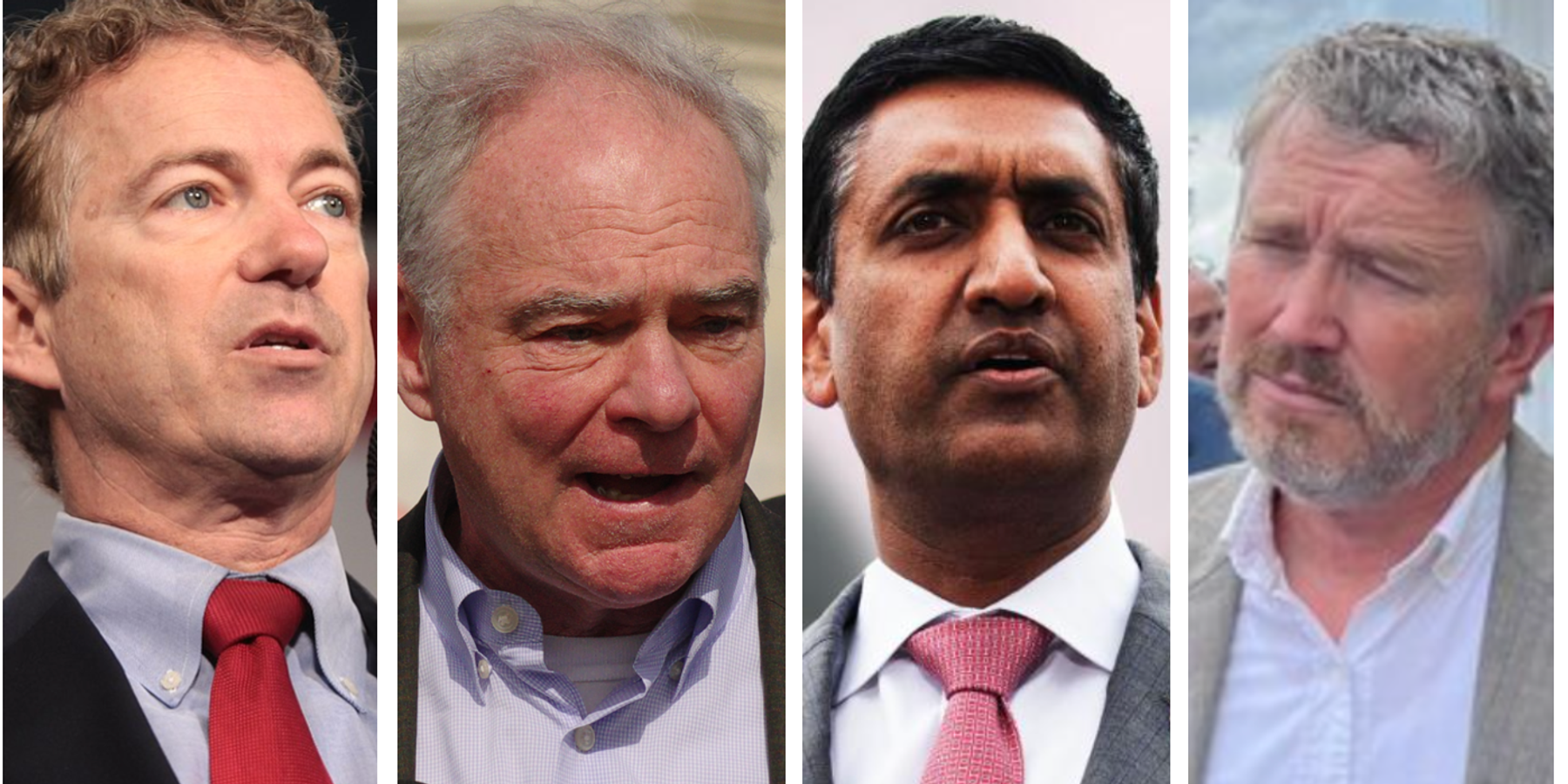
Members of Congress in both parties are questioning the authority and wisdom of Trump potentially dragging the U.S. into yet another regime change war. The question is whether, collectively, their voices are making a difference.
In early November, outspoken progressive Democrat Congressman Ro Khanna challenged the administration, specifically the defense secretary and the vice president, on X: “(Pete Hegseth) and (JD Vance) you were sent to fight a war that was based on a lie.”
He was referencing the U.S. war in Iraq and the fact both men are veterans of that conflict.
“Now you are asking Americans to trust intelligence for a war in Venezuela… What happened to you?” Khanna charged.
“It’s long past time for Congress to finally get substantive and complete answers to the questions Democratic and Republican lawmakers have been asking for months, and for the Administration to be transparent about its strategic intentions in the region,” Senator Time Kaine (D-Va.), who sits on the Armed Services Committee, said on Nov. 20 in a statement.
“The American people have no interest in stumbling into an illegal new war that would place the lives of our servicemembers at risk," he added.
On Monday, NPR reported that “a group of mostly Democratic senators is urging Attorney General Pam Bondi and Defense Secretary Pete Hegseth to declassify and release the legal opinion underpinning the Trump administration’s airstrikes in the Caribbean Sea and eastern Pacific.”
Democrats are expressing frustration over being kept in the dark on how these decisions are made, but so are some Republicans.
Sen. Rand Paul called out Trump on CBS’s Face the Nation on Sunday for seemingly dragging the U.S. into war with Venezuela without consulting Congress. “The Admin is pretending we’re “at war” with Venezuela to justify blowing up boats all without a vote, without transparency, and without answering to Congress,” he shared on X,
“If it’s war, declare it,” Paul added. “If it’s not, stop acting like it is.”
Paul said that Trump risks appearing to betray his antiwar posturing during the campaign in a way that threatens his own MAGA Republican coalition. "If he invades Venezuela or gives more money to Ukraine, his movement will dissolve," he told Reason magazine’s Nick Gillespie,
Marjorie Taylor Greene, arguably the most MAGA member of Congress (she announced her January resignation last Friday) recently shared her opposition with “The View.” “I don't believe in regime change. I don't believe that we should be engaging in war,” she told the daytime talk show. “I don't think that we need to go out and attack other countries."
Trump’s least favorite Republican, Kentucky Rep. Thomas Massie, asked during the government shutdown two weeks ago when air traffic controllers were at risk of not getting paid: “How is it that we have money for regime change in Venezuela but not money to pay air traffic controllers in our country?”
Trump now routinely attacks Paul, Greene, and Massie. But which Republicans are on Trump’s good side these days? Habitually hawkish Republican Sen. Lindsey Graham, an avid interventionist whether in Venezuela or anywhere else, appears to be the president’s best friend, and some wonder whether Marco Rubio, who Trump calls the best Secretary of State in U.S. history, has been the primary guiding force in pushing the U.S. to attack Venezuela.
While polls show a strong majority of Americans do not want a U.S. war with Venezuela, old guard Republicans are quite comfortable with the leader of their party getting back to the good old days of neocon regime change.
Republicans and the majority of Democrats 23 years ago went all-in on regime change in Iraq to root out that country’s WMDs, which did not exist. Will the U.S. commit to the same kind of mistake in Venezuela over concerns about drug trafficking that may or may not originate in that country?
“The simple fact is we are headed to a regime change efforts in Venezuela based entirely on a false pretense (flimsier than WMD),” right-leaning Breaking Points host Saagar Enjeti observed in late October. “Even more concerning is the anti-war right is silent and seems to believe the government claims about drug trafficking.”
Thankfully, not everyone has been silent. Bipartisan members of Congress demanding that the president come to them first before committing the country to war is commendable, even if they were unable to make those demands official through recent war powers votes.
Since World War II, both Republican and Democratic presidents have carried out acts of war unilaterally, and as many would argue, unconstitutionally. It’s good that some in both parties now think that presidents shouldn’t be allowed to do that anymore.
In Venezuela, and hopefully, anywhere else.
- Dick Cheney's ghost has a playbook for war in Venezuela ›
- Is Rubio finally powerful enough to topple Venezuela's regime? ›
- Rand Paul to Trump: Don't 'abandon' MAGA over Maduro regime change ›
- Khanna & Massie show bipartisan antiwar populism can exist | Responsible Statecraft ›
- New House, Senate attempts to preempt war with Venezuela ›