

The Gaza Humanitarian Foundation officially closed up shop this week, just six months after it launched. The news came as something of a relief to the organization’s myriad critics, who argued that its privatized approach to aid distribution had contributed to the deaths of some 2,000 Palestinians.
For now, this means that aid in Gaza is being handled by the United Nations and other NGOs with long experience in the field, in coordination with the U.S.-led Civil-Military Coordination Center. But private contractors aren’t quite ready to throw in the towel yet.
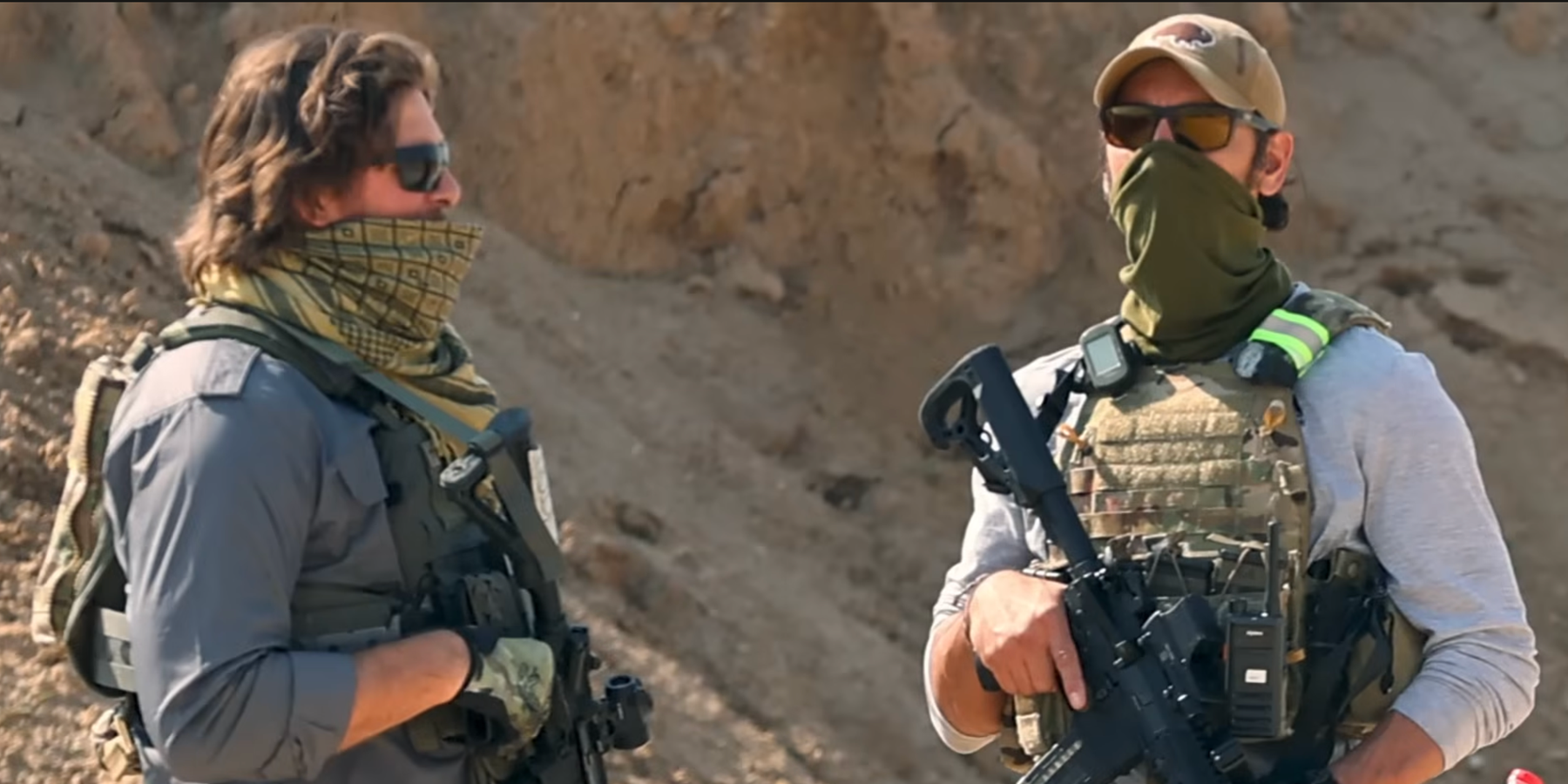
One such contractor is UG Solutions, a private company that provided armed security at GHF aid distribution points. UGS drew harsh criticism for this work, particularly following a series of allegations from former Green Beret and UGS contractor Anthony Aguilar, who claimed that he saw other contractors commit war crimes during his deployment to Gaza. Further harming the organization’s reputation was the revelation that it had sent at least 10 members of an anti-Muslim biker gang to work security in Gaza.
Undeterred by these controversies, UGS is already staffing up for new deployments at up to 15 aid sites in Gaza starting in December, according to Drop Site. And UGS isn’t the only contractor angling for a role in post-war Gaza. As Drop Site noted, a consulting company called Q2IMPACT has also received a $7 million U.S. contract to “monitor the efficacy of humanitarian aid in Palestine and Lebanon.”
Aguilar told RS that he believes Q2IMPACT is now taking over for the work of the GHF and Safe Reach Solutions, which had coordinated private aid with the U.S. and Israeli governments. “The intent of the privatized aid mechanism under GHF, now under Q2IMPACT and UGS, is to displace the population, establish precursors to kill unarmed civilians, and implement systematic starvation under the guise of humanitarian aid,” he said.
UGS said it is unaware of any new companies contracted to do “humanitarian or logistics work in Gaza” at the moment. “UG Solutions has not been retained by Q2IMPACT nor has had any conversations with the firm, though we are open to discussions with them,” a company spokesperson told RS. UGS also rejected allegations that its contractors had committed war crimes, accusing Aguilar of peddling “the same tired claims which have been rebuked on many occasions in hopes of remaining somehow relevant.”
The State Department, for its part, denied any intention of returning to privatized aid operations and accused Aguilar of “lying.” When asked to clarify what role Q2IMPACT will play in aid distribution, the department did not respond. Q2IMPACT did not respond to a request for comment.
Regardless of Q2IMPACT’s potential role, the return of UGS should be a major cause for concern, Aguilar told RS. The former Green Beret said that, before deploying to Gaza, he and other recruits “received absolutely no training whatsoever.” He alleged that UGS “did not confirm the credentials or abilities of the security guards they hired” in previous rounds of recruiting, adding that the company lacks the resources to “train security personnel at scale to deal with the complexities of the Humanitarian Crisis in Gaza.”
UGS denied all of these claims and said its recruits go through a “Humanitarian Security Officer vetting course” involving shooting evaluations and classroom instruction on international law.
Lurking behind this discussion is a broad sense of uncertainty over what the governance of post-war Gaza will look like, assuming that recent Israeli escalations don’t spark a return to open conflict.
The U.S. is now publicly discussing the possibility of building temporary towns of “vetted” Palestinians inside Israeli-controlled portions of Gaza, which they refer to as “alternative safe communities.” Under this plan, roughly half of Gaza would be left in ruins unless Hamas fully surrenders.
It is unclear whether these plans have any relation to the new aid distribution points that UGS is reportedly staffing up for. But they raise similar questions about the role of U.S. and Israeli officials and contractors. Aid experts say relief operations must adhere to strict rules of neutrality or risk putting aid seekers in danger. The very involvement of foreign contractors or Israeli soldiers in aid efforts increases the risk of violent incidents, like those that occurred repeatedly during the GHF’s brief tenure in Gaza.
Private groups like the GHF offer an “enticing proposition” to governments looking for a non-neutral alternative to typical aid organizations, wrote Scott Paul of Oxfam. “But as the failure of the GHF demonstrated, the essential ingredients for humanitarian assistance are not trucks and guns,” Paul continued. “They are the trust of communities, a deep understanding of how crisis shapes what people do and need, a steadfast determination to keep people safe and treat them with dignity, and an uncompromising commitment to avoid being instrumentalized for political or military agendas.”