

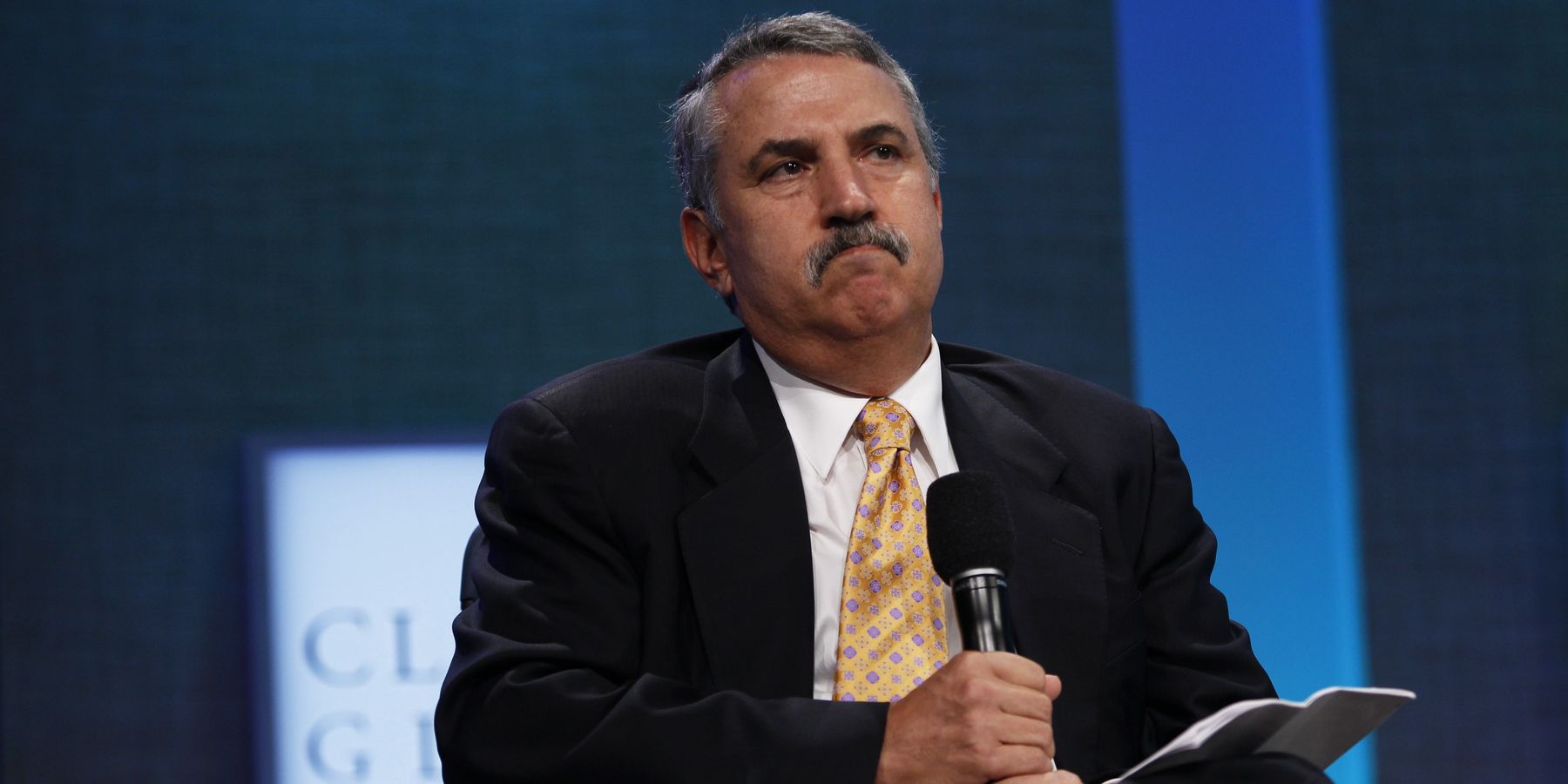
Among certain foreign policy mavens, the year is always 1938, and the location is always Munich. Thomas Friedman gives the latest example. This weekend, he awarded Trump the “Neville Chamberlain Prize” for proposing the parameters of a negotiated settlement to the bloody and seemingly endless Russia-Ukraine war.
Not only would the execution of Trump’s plan, he claims, lead to the modern equivalent of World War II and put all of Europe “under Putin’s thumb,” it would mean that “Thanksgiving will no longer be an American holiday." It would “become a Russian holiday," a day of thanks for Trump’s delivery of a Russian victory in Putin’s misbegotten war.
Losing all of Europe and having to refight WWII is bad enough, but losing Thanksgiving? The perfidy of Putin and Trump knows no bounds!
The Munich-only approach to foreign policy, with its attendant conversion of every foreign enemy into Hitler, utterly subordinates understanding of the concrete situation to a propaganda effort to portray peacemaking as appeasement. Examining Putin’s situation and what is possible for Ukraine in a peace deal shows that Russia has failed and will fail in key objectives for the war. Although it does not seem possible for Ukraine to regain all its lost territory in the East, a secure, independent, and Western-aligned Ukraine on 80% of its pre-2014 territory is a very attainable goal.
Admittedly, many in the mainstream media appear bent on preventing their readers from understanding this. Friedman cites his New York Times colleague David Sanger in claiming that Trump’s initial peace offer reflects “almost all Mr. Putin’s maximalist demands.” But even a surface understanding of the conflict shows that’s not true.
The original Russia-Ukraine conflict that triggered the 2014 Maidan revolution in Ukraine was over whether Ukraine could join the European Union. Under Trump’s peace offer, Ukraine would join the European Union.
When Putin invaded Ukraine in 2022, he struck directly for Kyiv, showing a desire to create regime change in Ukraine and place a Russia-friendly regime in control of the country. Under the U.S. peace offer, Russia would take possession of only about 20% of Ukraine’s pre-2014 borders, almost all of which is territory Russia has conquered and cannot feasibly be dislodged from. Ukraine’s EU membership demonstrates that the rest of the country would remain independent and aligned with Europe, not Russia.
In the past, Russia sought to prevent Ukraine from having adequate military power to defend itself. In 2022 Russia tried to place a limit of just 80,000 troops on Ukraine’s military. Under the initial U.S. peace offer, Ukraine was offered an active duty military of 600,000 troops — the largest military force in Europe and larger than the militaries of France, Germany, and the UK combined.
When Putin invaded Ukraine in 2022, it’s hard to believe that his goal was creating a firmly Western-aligned and independent Ukraine, fielding the largest army in Europe, bolstered by a steady supply of military equipment from the West and still holding almost all the key cities he targeted in his initial wave of invasion. But beyond the details, that’s what the peace proposals under discussion would leave him with.
There’s no doubt that any peace deal will be imperfect. But Iulia Mendel, a former spokesperson for Zelensky, recently posted on X that “My country is bleeding out. Many who reflexively oppose every peace proposal believe they are defending Ukraine. With all respect, that is the clearest proof they have no idea what is actually happening…War is not a Hollywood movie.”
For Americans, WWII and the defeat of Hitler is the ultimate Hollywood movie, one we seem to want to re-live constantly. The endless invocation of Munich is part of that. But Americans aren’t the ones who pay in blood for those Hollywood dreams. We can’t let them blind us to real opportunities to make peace.