

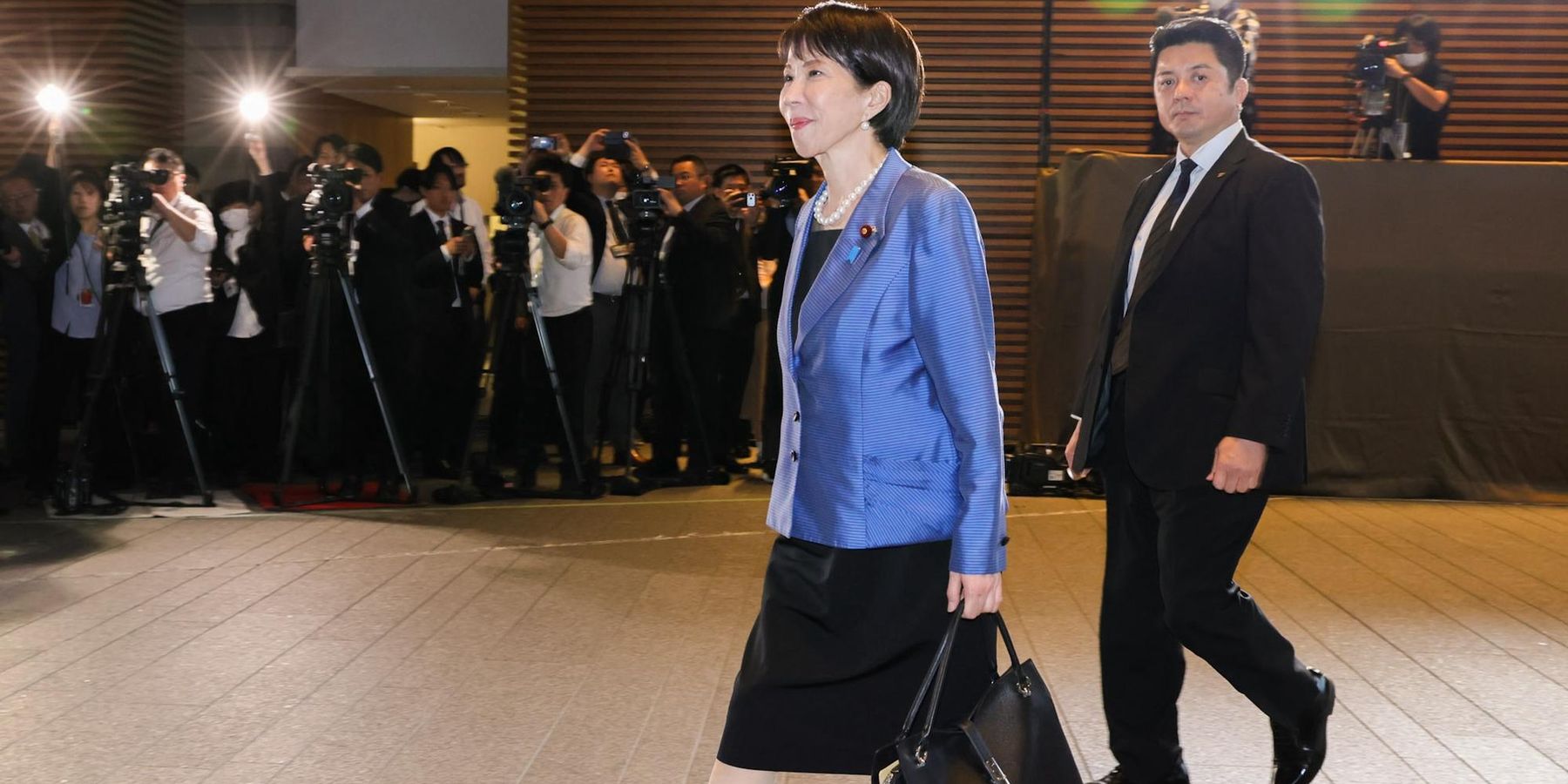
On November 7, Prime Minister Sanae Takaichi stated that a Chinese attack on Taiwan could undoubtedly be “a situation that threatens Japan’s survival,” thereby implying that Tokyo could respond by dispatching Self-Defense Forces.
This statement triggered the worst crisis in Sino-Japanese relations in over a decade because it reflected a transformation in Japan’s security policy discourse, defense posture, and U.S.-Japan defense cooperation in recent years. Understanding this transformation requires dissecting the context as well as content of Takaichi’s parliamentary remarks.
The controversy centers around applying Japan’s “survival-threatening situation” law to Taiwan.
Approved by Japan’s Diet in September 2015, this legislation enabled Japan to exercise to a very limited degree its right of collective self-defense even if Japan itself were not attacked directly.
The law imposed three stringent conditions: (1) an attack against a foreign country with which Japan has close relations threatens Japan’s survival and poses a clear danger to fundamentally overturn the people’s right to life, liberty and the pursuit of happiness, (2) there is no other appropriate means to repel the attack and ensure Japan’s survival and protect its people, and (3) the use of force must be limited to the minimum extent necessary.
During the Diet deliberations in September 14, 2015, the government explained that contrary to the general notion of collective self-defense under international law, the Self-Defense Forces according to article 88 of the Self-Defense Force Law would be limited to the defense of Japan and would not be involved in the use of force overseas to fight in another country including the victim of the attack.
The Abe government at the time avoided any mention of a Taiwan contingency. In fact, the conventional view was that because Japan did not recognize Taiwan as a sovereign country consistent with the 1972 Japan-China normalization communique, an armed Chinese attack against Taiwan in itself would not constitute a “survival-threatening situation.” Most Japanese security experts thought that a Chinese attack on an allied country like the United States in the context of a Taiwan scenario would be necessary.
While prime minister, Shinzō Abe was careful not to provoke China by mentioning Japan’s military involvement in a Taiwan contingency. But after his retirement, he became more openly supportive of Taiwan. In December 2021, during an on-line appearance at a Taiwan think tank event, Abe stated, “A Taiwan contingency is a contingency for Japan. In other words, it is also a contingency for the Japan-U.S. alliance.”
Then during a Japanese television program in February 2022, Abe called on the United States to drop its strategic ambiguity regarding the defense of Taiwan. While reiterating that “a Taiwan contingency is a Japan contingency,” Abe declared that the establishment of Chinese air and sea superiority around Taiwan would “affect Japan’s territorial waters, or at least our exclusive economic zone.”
During a gathering of the ruling Liberal Democratic Party in July 2021, then Deputy Prime Minister Tarō Asō declared that Japan with the United States “would have to defend Taiwan” if invaded by China and that Taiwan experiencing a “big problem” could “relate to a survival-threatening situation for Japan.”
While visiting Taiwan in August 2023, Asō, who was then LDP vice president stated, “I believe that now is the time for Japan, Taiwan, the United States and other like-minded countries to be prepared to put into action very strong deterrence. It’s the resolve to fight.”
And in September 2025, Asō in a Tokyo meeting with Taiwan legislators stated that “Taiwan is a country that shares fundamental values with Japan.” China protested Asō’s remark by insisting that “Taiwan is a province of China, never a country.”
Before becoming prime minister, Takaichi echoed Abe and Asō. In her first run for the LDP presidency in September 2021, she argued that a Taiwan crisis would be a threat to Japan and the possibility of deploying Self-Defense Forces would be high. During her second run for the LDP’s top post in September 2024, Takaichi suggested that a Chinese maritime blockade on Taiwan could qualify as a “crisis that threatens the nation’s existence.”
Moreover, Abe and Asō played a major role in Takaichi’s path to the prime ministership. Abe endorsed Takaichi during the September 2021 LDP presidential race. The Asō faction’s support was critical to Takaichi’s victory in October 2025.
This political context motivated former Foreign Minister Katsuya Okada of the opposition Constitutional Democratic Party to grill Takaichi about what constitutes a “survival-threatening situation.” Okada was concerned that Takaichi as prime minister might adopt an expansive interpretation of the “survival-threatening situation” law that exceeded the understandings reached during the September 2015 Diet deliberations.
After having the director-general of the Cabinet Legal Affairs Bureau confirm the September 2015 government’s restrictions regarding the “survival-threatening situation” legislation, Okada got Takaichi herself to confirm this understanding. He then noted how some politicians have been making careless remarks about what would qualify as a “survival-threatening situation” despite these officially acknowledged restrictions.
Okada gave as an example Takaichi’s own comments that a Chinese maritime blockade of Taiwan could constitute a “survival-threatening situation.” He questioned how that could be since Japanese ships could bypass the blockaded area and Japan would still be supplied with energy and food. Takaichi responded that the U.S. military intervening to break the blockade that then led to an armed clash or a blockade imposed in the context of war could be considered a “survival-threatening situation.”
Okada criticized her answer as being an overly expansive view of the concept since a blockade on Taiwan would not necessarily threaten Japan’s survival.
Emphasizing the importance of considering worst-case scenarios, Takaichi then referred to different ways that China could seek to bring Taiwan completely under its control such as “closing off its sea lanes, the use of force, misinformation, or cyber propaganda.” She then declared, “If [China’s control of Taiwan] involves the use of warships and the exercise of military force, I believe this could undoubtedly constitute a case of a survival-threatening situation.” Especially problematic in this statement was the absence of any reference to a Chinese attack on U.S. forces. This implied that a Chinese attack on Taiwan in itself could threaten Japan’s survival and thereby permitting the use of force.
In addition to being the first time a sitting Japanese prime minister has explicitly mentioned a Taiwan contingency as a “survival-threatening situation,” Takaichi’s remarks angered China because they reflected a sea change in Japan’s security discourse, defense posture, and U.S.-Japan defense cooperation.
Mainstream Japanese defense experts now openly argue that China’s control over Taiwan could be an existential threat to Japan. Japan has been deploying new defense capabilities in its southwestern region (including the recently announced missile deployment on Yonaguni Island near Taiwan), and the U.S. and Japan are enhancing military planning, coordination, and joint exercises to more effectively respond to a Taiwan crisis. Moreover, in March 2025, the former chief of the Joint Staff of Japan’s Self-Defense Forces was appointed to be an adviser to Taiwan’s Cabinet, suggesting that Taiwan seeks to advance security cooperation with Japan.
From the U.S. and Japanese perspective, these developments aim to deter China’s use of force against Taiwan at a time when Beijing is increasing its economic and military pressure on Taipei. But from China’s perspective, Japan with the United States is interfering in a Chinese domestic issue, encouraging Taiwan’s pro-independence forces, and impeding the possibility of peaceful unification of Taiwan with China. A possible Japanese military role in a Taiwan scenario is especially infuriating to Chinese because of Japan’s colonial rule over Taiwan after 1895.
Under current circumstances, Chinese diplomatic and economic coercion against Japan could accelerate the militarization of the Taiwan issue and increase the risk of a dangerous military incident.
So what should Japan do to help defuse this crisis?
Ideally, as former Deputy Foreign Minister Hitoshi Tanaka has recommended, Prime Minister Takaichi could retract her Diet remarks and apologize for going beyond the Japanese policy and practice of not commenting on specific hypothetical scenarios related to survival-threatening situations. But that appears to be politically difficult if not impossible, especially after Xue Jian, the Chinese Consul-General in Osaka, posted on social media a threat of beheading Takaichi. Since this malicious and inflammatory post was quickly removed, a helpful Chinese next step would be to reprimand the Chinese diplomat for his unprofessional conduct after recalling him to Beijing.
In response, Japan should reassure China with a more robust articulation of its one-China policy. Rather than simply reiterating that Japan continues to abide by the 1972 normalization communique, Tokyo should explicitly say that it does not support Taiwan’s independence, as Prime Minister Keizō Obuchi orally conveyed to Chinese President Jiang Zemin in November 1998. In addition, Japan should declare that it opposes unilateral changes in the status quo, including the independence of Taiwan.
Regarding the “survival-threatening situation” law, Japan should explicitly state that it does not consider Taiwan to be a sovereign country and should confirm that its actions will be consistent with its long-held strictly defensive defense doctrine (senshu bō’ei). In other words, Tokyo should publicly reaffirm that even under a “survival-threatening situation,” Japan’s Self-Defense Force would be limited to the defense of Japan and would not be using force overseas to fight in another country or territory such as Taiwan.
These statements, if made by Prime Minister Takaichi herself, would give more credibility to Japan’s claim that her November 7 remarks did not entail a substantive policy change regarding Taiwan and may clear the way for stabilizing Sino-Japanese relations.
- Can China, Japan, and South Korea just get along? ›
- First female Japan PM takes hawkish position on China, Taiwan ›
- New weapons to Taiwan: Overdue correction' or poorly timed move? | Responsible Statecraft ›
- If surviving Trump meeting was goal, Takaichi leaves DC a winner | Responsible Statecraft ›