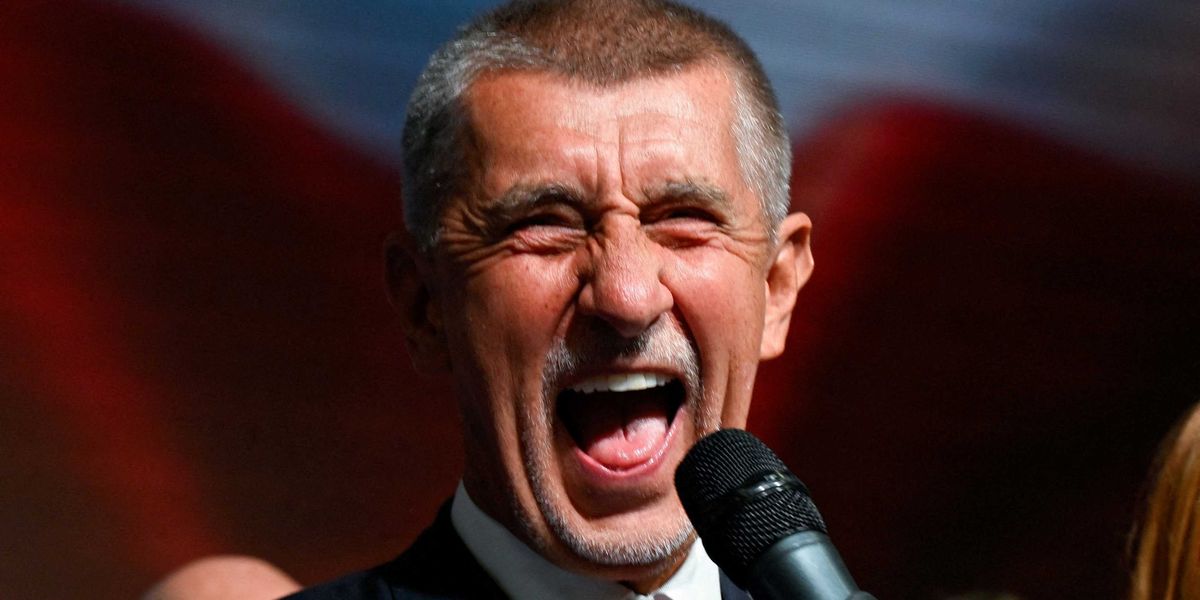
Nationalist populist Andrej Babiš scored a decisive win in the Czech Republic’s parliamentary elections held over the weekend. With the vote count almost finalized, the ANO (“Yes”) party of former Prime Minister Andrej Babiš had 35% of the vote with incumbent Prime Minister Petr Fiala’s centrist Spolu (“Together”) coalition in second place with around 23%.
ANO’s victory margin exceeds the forecasts of pre-election polling, which anticipated a gap of about ten percentage points.
This election replicated the pattern seen in recent contests in Austria, Poland, and Romania where right populists emulating the success of Trump have harnessed economic and social grievances, a sovereigntist challenge to the EU, migration flows, and Ukraine fatigue to gain support and sometimes win power. These developments across Europe have been called Trump’s European revolution.
ANO’s strong finish indicates that the alarm raised by the center right PM Fiala, President Petr Pavel, and the sympathetic European press, about the pernicious role of Russian disinformation failed to move the needle back toward the incumbent mainstream. A self-described “Trumpist,” Babiš campaigned on a “Strong Czechia” (Silne Cesko) slogan, displayed on red baseball caps.
Babiš does not favor leaving the EU or NATO, but he opposes arming Ukraine and the NATO pledge to raise defense spending to 5% of GDP. The issue of migration is not as salient on the populist right in Czechia as it is in France, Germany or Hungary. However, the country has offered refuge to many Ukrainians, an expense resented by some voters, in view of the tight fiscal policy of the Fiala government.
Along with Hungarian PM Viktor Orbán, Babiš founded the right-populist Patriots of Europe faction in the European Parliament after the European elections of last year. Two other Czech parties broadly in support of Babiš, the Freedom and Direct Democracy (SPD) party and the Motorists for Themselves, finished with 7.9% and 6.8% respectively. Both parties are Eurosceptic and belong to Patriots for Europe. The SPD has called for referendums testing support for remaining in the EU and NATO.
Babiš has promised to boost social spending and is ready to defy EU limitations on fiscal deficits. He also opposes EU migration policies and EU-imposed climate related guidelines.
Security issues in the campaign
President Petr Pavel, a former NATO general, is a fervent supporter of the European consensus on Ukraine and of NATO’s rearmament drive. His signature contribution has been to spearhead an EU initiative to procure artillery shells globally for Ukraine. Babiš has indicated he might drop or modify Czech participation in this scheme.
Pavel seems prepared to appoint Babiš but has indicated he would oppose any role for SPD in a governing coalition because they are open to withdrawal from the EU and NATO. In a speech on October 1, Pavel urged voters to reject Russian attempts to draw Central Europe back under Russian influence.
This decisive win for ANO makes the Babiš appointment likely, but Pavel has pledged to scrutinize conflicts of interest stemming from Babiš’ considerable business activities. Hard evidence of Russian meddling through TikTok and other social media could also hold up the formation of a new government.
Critics depicted Babiš as at best complacent about Russia’s potential threat to European NATO members after drone incursions in Poland and Romania and the alleged violation of Estonian airspace by Russian military aircraft.
Polls indicate that a solid majority of Czech citizens favor a negotiated settlement of the war in Ukraine, even if this involves ceding territory. It seems highly improbable that these evolving attitudes are explained exclusively by Russian influence operations. Two politically active former Czech presidents, Václav Klaus (2003-2013) and Miloš Zeman (2013-2023), are fervent Eurosceptics and not enthusiastic supporters of Ukraine.
A centrist coalition consisting of Spolu, STAN (mayors and independents), and Pirates would amount to only 42% of the vote. Babiš has stated his preference to govern alone with a minority of seats, seeking only ad hoc support from other parties. Whether this will be feasible depends on the conditions Pavel will require in return for designating Babiš to form a government. His two potential coalition partners — SPD and Motorists — are more anti-EU and anti-Ukraine than he is. Pavel has indicated he considers EU and NATO membership to be a core raison d’etat for the Czech Republic.Implications: Cohabitation or deadlock
The cohabitation of presidents and prime ministers from opposing parties will test institutions in Czechia as it is already doing in Poland. Presidents in both countries have some power to shape foreign and security policy. Poland’s president Karol Nawrocki is a nationalist-populist in uneasy cohabitation with the pro-EU and pro-Ukraine liberal PM Donald Tusk. The situation emerging in Czechia will have the two roles reversed.
Poland, Hungary, Czechia and Slovakia will now have some or all power held by nationalist-populists. This may lead to a revival of the four countries’ cooperation in their Visegrad group to press the common sovereigntist outlook of Poland’s Nawrocki, Hungary’s Orbán, Slovakia’s Fico, and Czechia’s Babiš. This could create problems for Brussels and Ukraine.
Babiš will have to conciliate Pavel in order to gain and keep the role of Prime Minister. Although he admires and likes Orbán, he seems likely to follow the more cautious approach followed by Italy’s Georgia Meloni in relation to the EU, rather than joining Orbán’s high-risk challenge to the EU and open opposition to Ukraine’s European aspirations.
- Poland, Romania and the nationalist populist challenge ›
- Karol Nawrocki: A Polish Euro-skeptic who chills with Trump ›