
Follow us on social

google cta
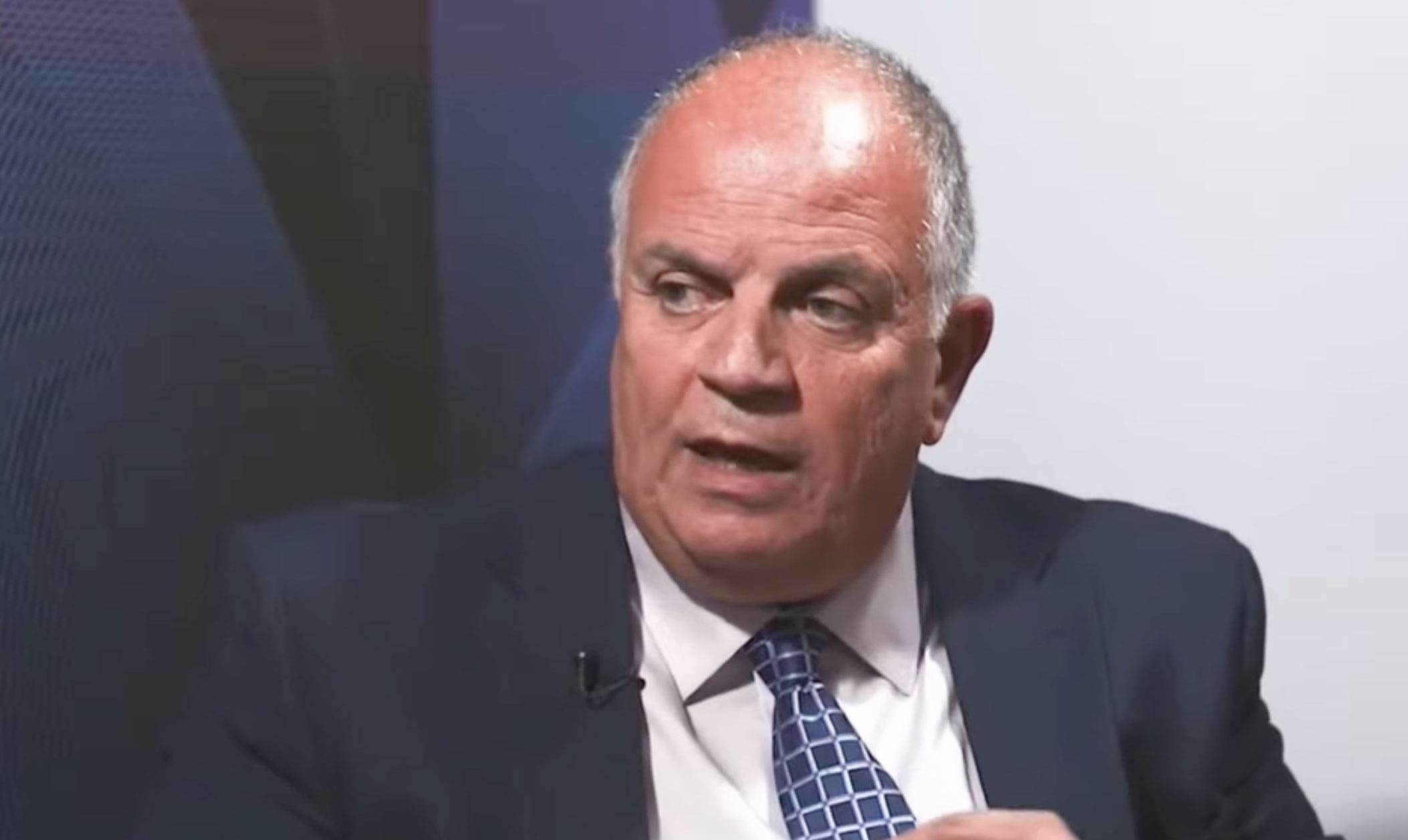
Rafael CEO Yoav Turgeman

Israeli wants to put 'Iron beam' laser on Trump’s Golden Dome

Maybe, since the US taxpayers helped to pay for it, after all

Reporting | QiOSK
google cta
google cta

As the DoD seeks out contract bids for its ambitious, yet controversial Golden Dome aerial defense shield, Israeli defense firm Rafael CEO Yoav Turgeman thinks his company’s “Iron Beam,” a giant laser system which can destroy aerial threats on contact, would make a great addition.

Nearly operational after years in development, Iron Beam will be integrated into Israel’s operational Iron Dome aerial defense system, which uses individual missile interceptors to neutralize incoming aerial threats, like rockets and missiles — to revolutionize Israel’s defenses. The Iron Dome system has seen heavy use during Israel’s war on Gaza.

In turn, America’s Golden Dome concept, though not finalized, is broadly imagined as a way to scale up Iron Dome’s capacities — toward defending the whole of the U.S.

Asked about it on the National News Desk Friday, Turgeman said his laser beam technology could “absolutely” be used to assist the Golden Dome system, much like Iron Beam will assist Iron Dome.

“The United States is our biggest ally. And we would be more than delighted to support, to help, to give our experience and some of our technologies that might be critical,” he said.

Here, Turgeman talked up a primary selling point for Rafael’s laser beams: whereas Iron Dome missile interceptors cost about $50,000 each, lasers can do the same thing, at little cost.

“Currently, the cost of the laser beam is the energy itself — a few dollars per interception,” Turgeman said.

That price tag might sound appealing to Golden Dome proponents, especially as Golden Dome’s estimated costs soar from hundreds of billions, to even trillions, of dollars — and while critics wonder whether the endeavor, of using individual missile interceptors to protect the whole of the U.S. from incoming projectiles, is feasible altogether.

The National News Desk reported that Rafael was in talks with other American defense contractors to potentially collaborate on Golden Dome, though no formal announcements have been made.

The CEO’s laser beam-for-defense idea sounds like it comes from science fiction. In fact it comes, in part, from the U.S. which has heavily invested in the technology for military purposes.

Spending about $1 billion each year toward the development of directed energy weapons, which includes laser systems, the U.S. put $1.2 billion toward Israel’s Iron Beam alone last year. It has also considered repurposing Iron Beam for its own air defense systems.

Ultimately, directed energy systems like Iron Beam may soon help nations to cheaply, yet effectively, protect themselves from incoming aerial threats. But their ability to quickly destroy systems on contact may well prove destructive for the future of war, where repurposing these lasers to offensive ends could be a simple feat.


Top image credit: Israel's laser defense could power Trump's Golden Dome missile shield/ NBC Montana [YouTube/Screenshot]
google cta
Reporting | QiOSK
Vice President JD Vance Azerbaijan Armenia
U.S. Vice President JD Vance gets out of a car before boarding Air Force Two upon departure for Azerbaijan, at Zvartnots International Airport in Yerevan, Armenia, February 10, 2026. REUTERS/Kevin Lamarque/Pool

VP Vance’s timely TRIPP to the South Caucasus

Washington Politics

Vice President JD Vance’s regional tour to Armenia and Azerbaijan this week — the highest level visit by an American official to the South Caucasus since Vice President Joe Biden went to Georgia in 2009 — demonstrates that Washington is not ignoring Yerevan and Baku and is taking an active role in their normalization process.

Vance’s stop in Armenia included an announcement that Yerevan has procured $11 million in U.S. defense systems — a first — in particular Shield AI’s V-BAT, an ISR unmanned aircraft system. It was also announced that the second stage of a groundbreaking AI supercomputer project led by Firebird, a U.S.-based AI cloud and infrastructure company, would commence after having secured American licensing for the sale and delivery of an additional 41,000 NVIDIA GB300 graphics processing units.

keep readingShow less
United Nations
Monitors at the United Nations General Assembly hall display the results of a vote on a resolution condemning the annexation of parts of Ukraine by Russia, amid Russia's invasion of Ukraine, at the United Nations Headquarters in New York City, New York, U.S., October 12, 2022. REUTERS/David 'Dee' Delgado||

We're burying the rules based order. But what's next?

Global Crises

In a Davos speech widely praised for its intellectual rigor and willingness to confront established truths, Canadian Prime Minister Mark Carney finally laid the fiction of the “rules-based international order” to rest.

The “rules-based order” — or RBIO — was never a neutral description of the post-World War II system of international law and multilateral institutions. Rather, it was a discourse born out of insecurity over the West’s decline and unwillingness to share power. Aimed at preserving the power structures of the past by shaping the norms and standards of the future, the RBIO was invariably something that needed to be “defended” against those who were accused of opposing it, rather than an inclusive system that governed relations between all states.

keep readingShow less
china trump
President Donald Trump announces the creation of a critical minerals reserve during an event in the Oval Office at the White House in Washington, DC on Monday, February 2, 2026. Trump announced the creation of “Project Vault,” a rare earth stockpile to lower reliance on China for rare earths and other resources. Photo by Bonnie Cash/Pool/Sipa USA

Trump vs. his China hawks

Asia-Pacific

In the year since President Donald Trump returned to the White House, China hawks have started to panic. Leading lights on U.S. policy toward Beijing now warn that Trump is “barreling toward a bad bargain” with the Chinese Communist Party. Matthew Pottinger, a key architect of Trump’s China policy in his first term, argues that the president has put Beijing in a “sweet spot” through his “baffling” policy decisions.

Even some congressional Republicans have criticized Trump’s approach, particularly following his decision in December to allow the sale of powerful Nvidia AI chips to China. “The CCP will use these highly advanced chips to strengthen its military capabilities and totalitarian surveillance,” argued Rep. John Moolenaar (R-Mich.), who chairs the influential Select Committee on Competition with China.

keep readingShow less
google cta
Want more of our stories on Google?
Click here to make us a Preferred Source.

LATEST

QIOSK

Newsletter

Subscribe now to our weekly round-up and don't miss a beat with your favorite RS contributors and reporters, as well as staff analysis, opinion, and news promoting a positive, non-partisan vision of U.S. foreign policy.