

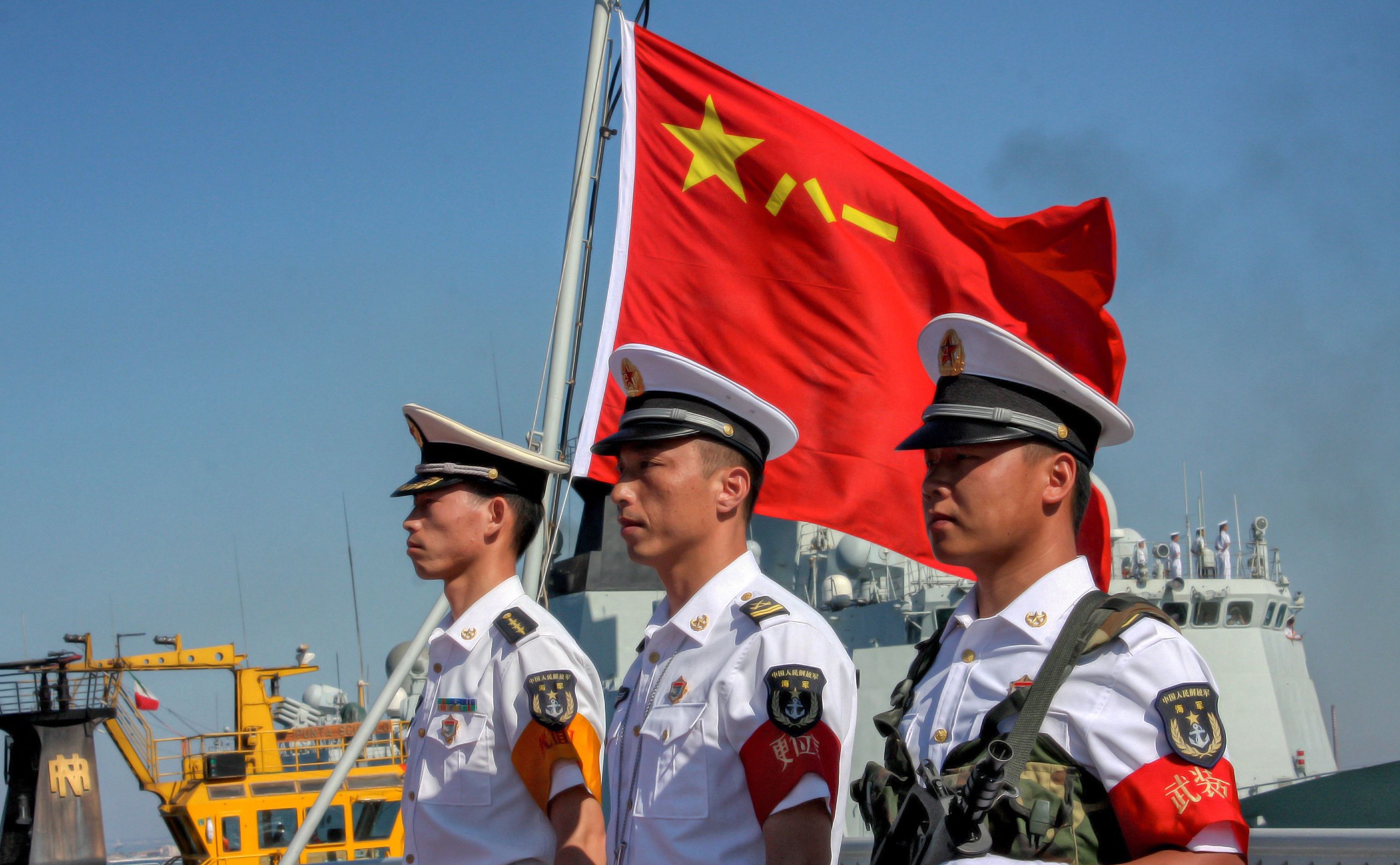
Taiwan has become a focal point for the U.S.-China conflict, with the Pentagon turning its attention towards a hypothetical conflict with China — referring to it as the “sole pacing threat” — and China continuing combat and blockade drills around the island.
However, despite China’s demonstrations of military power, Taiwan’s unique economic niche and geographic position make it a particularly thorny target for Beijing. The Chinese Communist Party’s legitimacy rests largely on the robust economy it has built, and the direct economic repercussions of an invasion or blockade of Taiwan stand to shatter the foundations of Beijing’s domestic power.
There are three non-military conditions that make a full military assault or blockade of Taiwan a nonviable option for the CCP. First is the global importance of Taiwan’s semiconductor manufacturing base, second is the impact on trade and the shipping industry running through the Taiwan Strait and Luzon Strait, and third is China’s own less-than-favorable economic conditions.
The semiconductor issue
Taiwan is the largest manufacturer of semiconductors in the world. In the fourth quarter of 2024, Taiwan Semiconductor Manufacturing Co. (TSMC) —Taiwan’s largest producer of semiconductors — took a 67.1% market share of all chips globally, and produced nearly all of the most advanced chips. There is no viable replacement for Taiwan’s manufacturing in the semiconductor market; not only does the nation represent a massive share of the chip industry, its infrastructure uniquely supports the scale and quality of production.
Semiconductors represent an irreplaceable enabler of global economic activities. If Taiwan were to stop producing chips, both the American and Chinese economies — not to mention the world economy — would contract and ignite a global depression. Chips enable electrical grids, manufacturing, home utilities, automobiles, and more; they have permeated every facet of the global economy.
Semiconductors are not an end in themselves, they are a means to an end, enabling innovation and emerging technologies like AI and robotics. Taiwan’s dominance in this critical market is referred to as its “silicon shield,” which means that the U.S. and China are invested in protecting its output.
An offensive or blockade against the island nation would have a profound global economic impact. The most important global economies rely on the chips manufactured in Taiwan. With demand for chips only growing, losing Taiwan's manufacturing base could throttle global supply chains for years to come.
Inefficacy of military action
Chinese military action would disrupt the global commerce running through the Taiwan and Luzon Straits. The straits on either side of Taiwan are thoroughfares for international trade, with Taiwan’s own ports handling $586 billion in trade in 2022, and an estimated $2.45 trillion transiting the strait in the same time period. Besides Taiwan, China’s ports are most likely to be impacted, with ships diverting from the ports along China’s eastern coast.
While global shipping lanes can likely divert around a conflict zone without significantly raising prices, China’s role in maritime shipping infrastructure means that conflict would have a direct negative impact on some of China’s most lucrative ports and port cities, with ships no longer making stops along a broad swath of the coast.
Ships will not be able to access the extensive network of maintenance and repair sites along the Chinese coast, as well as cargo processing sites. The loss of access to some of these ports would have knock-on effects for the global shipping industry if there is a protracted conflict or blockade, leaving remaining ports to deal with the spillover.
Geopolitically, China would have to reckon with the Global South and BRICS nations, whose trade relies on the straits even more than the G7. Given that China is courting these nations diplomatically, impeding their trade could set off a diplomatic fiasco that Beijing would likely want to avoid.
Already poor economic conditions
China is not in a strong economic position as it has been reined in by the lingering aftereffects of its real estate crisis, subdued domestic consumption, and the impacts and uncertainty created by the trade war’s tariffs. Kicking off a global crisis would likely exacerbate the economic issues it currently faces. Furthermore, Taiwan represents up to 60% of China’s own chip imports. If China attacks Taiwan it stands to cripple its own industries by starving them of chips. Besides chips imports, the PRC is heavily dependent on trade — comprising 37% of its GDP — making it even more vulnerable to disruptions in global trade.
According to a study done by Bloomberg Economics, in the event of a blockade, global GDP would be down 5%, with China and the U.S. seeing shrinkage of 8.9% and 3.3%, respectively. And in the event of an invasion, global GDP would be down 10.2%, with South Korea, Japan, and other East Asian nations seeing the worst of the impact. The resulting $10 trillion price tag on merely the first year of the crisis incentivizes the stakeholders to avoid confrontation. If any or all of Taiwan’s foundries are destroyed, the impact would be even greater and the economic depression would last for a decade or more as nations attempt to build out their own profitable foundries. Not to mention that this would likely create a permanent rift between China and trade with the U.S. and the EU.
While both China and the U.S. attempt to relieve their respective reliance on Taiwanese chips through domestic production, Taiwan retains its most advanced nodes on its territory in order to maintain global dependence on its chips industry. Cajoling from both the U.S. and China has brought TSMC investment and factories to both nations, but these nodes do not represent a viable replacement for Taiwan’s output.
***
Given these three factors, China would have to be certain that it would be able to take Taiwan quickly, and with minimal damage to the delicate foundries and their personnel. With an ongoing purge of the PLA due to corruption concerns, it seems there is either widespread corruption or a political purge, both of which put a damper on readiness. If Xi’s generals are corrupt that means readiness isn’t where it should be, if it’s a political purge then it impacts morale and cohesion.
If Taiwan shapes itself into a high-stakes/low value target it can remain largely untouchable because of the economic structures surrounding it. These economic shields could compound if Taiwan engages in military strategies such as becoming a “porcupine,” to make itself a hard military target as well — engaging in anti-access/area denial strategies with high volumes of antiship missiles, sea mines, and air defense systems.
Taiwan's main value to China is through its nationalistic claims to the island. China’s issue with Taiwanese independence also hinges on U.S. assurances that it will not deny China access to the lagging edge chips Taiwan’s foundries export to China and that it will not separate the island from the mainland.
As long as the island does not move towards independence and continues to “porcupine,” the structural economic factors play to the island's advantage, making it easier for the Chinese to ignore the situation, for now, to maintain the favorable economic conditions of the region.
- On Taiwan and China, is the US ignoring the real lesson of Ukraine? ›
- War with China over Taiwan? Don't expect US allies to join ›
- War with China over Taiwan won't end well for anyone ›
- The 8-point buzzsaw facing any invasion of Taiwan | Responsible Statecraft ›
- Taiwan not a vital interest | Responsible Statecraft ›
- Taiwan shouldn't become the thorn we use to provoke China | Responsible Statecraft ›
- How not to prevent a war over Taiwan | Responsible Statecraft ›