

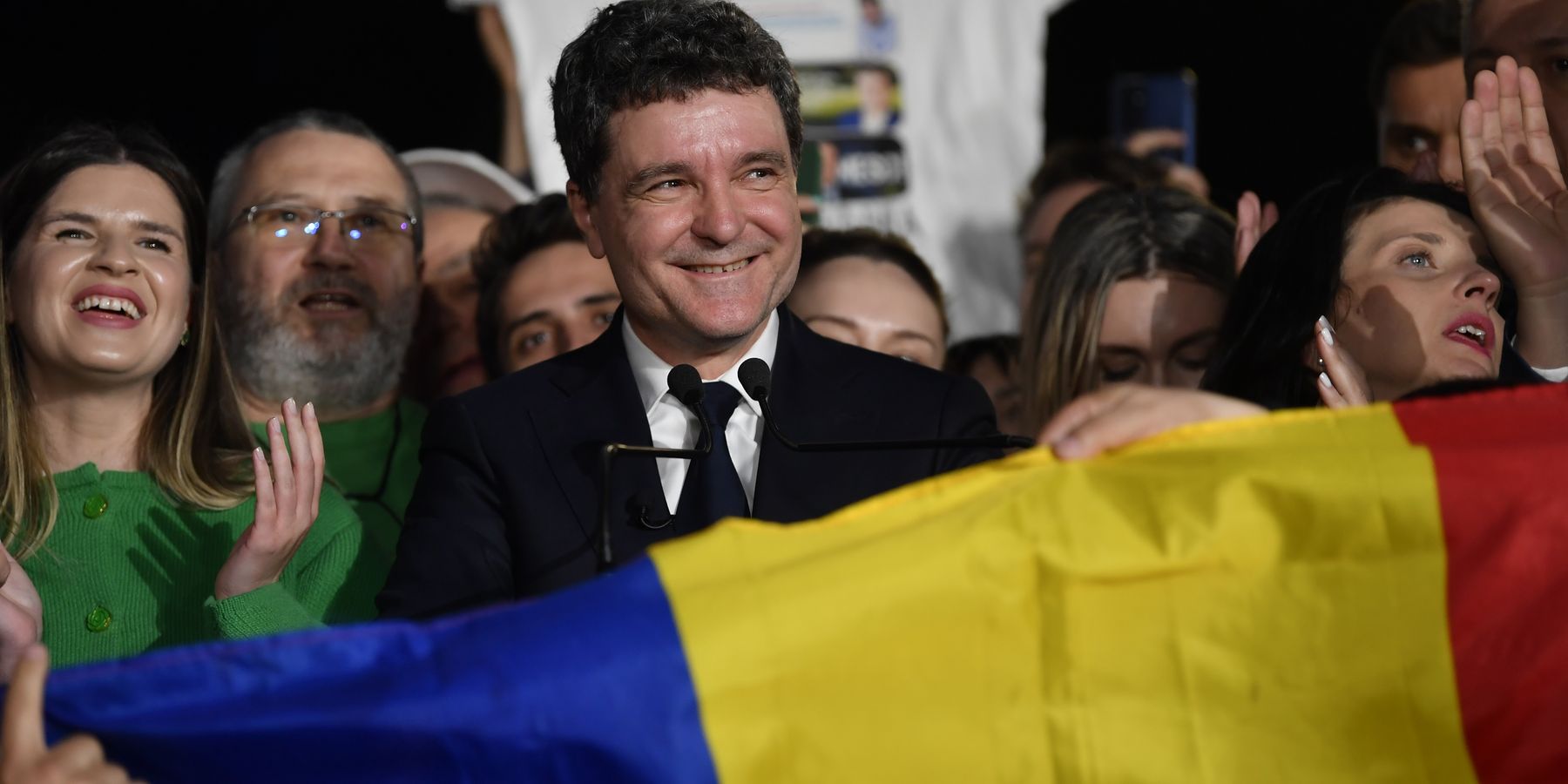
Two EU countries on the front line of the war in Ukraine held presidential elections on May 18, a decisive second round runoff in Romania, and in Poland a tightly contested first round to be concluded in a June 1 vote.
In both campaigns, controversy swirled over the value of the EU, alleged Russian election interference, and whether to align with or oppose the Trump Administration’s attempts to negotiate an end to the conflict in Ukraine.
Poland: Uncertain prospects for June 1 second round
Warsaw mayor Rafał Trzaskowski, standard bearer for the centrist pro-EU, pro-Ukraine Civic Coalition (KO) of Prime Minister Donald Tusk will, as anticipated, face a runoff against Karol Nawrocki, the candidate of the main right-wing opposition Law and Justice Party (PiS) in the runoff set for June 1.
Trzaskowski’s margin of victory over Nawrocki (31.4% vs 29.4%) was much smaller than polls had forecast. Turnout was over 67%, a post 1989 high for a first round presidential race.
The difficulty for Trzaskowski’s second round prospects is that the third-place finisher in the race, Sławomir Mentzen, represents the Confederation Liberty and Independence party, which is further nationalist populist right than PiS. The prospect of Mentzen’s nearly 15% of voters rallying to Nawrocki on the second round could swing the election against Trzaskowski. Prime Minister Tusk’s government has been frustrated by vetoes from the incumbent PiS president Andrzej Duda who defeated Rafal Traszkowski to win reelection in 2020.
The Polish electorate since 1989 has shown a marked preference for electing presidents who tend to check the power of the governing majority in parliament, and this might tend to favor Nawrocki’s chances in the runoff.
While it is true that both PiS and Civic Coalition support Ukraine in its war with Russia, PiS and Mentzen’s Confederation party cultivate rural voters in Poland’s east who are unhappy with the alleged costs of supporting Ukrainian refugees in Poland, bear a grudge against Ukraine for the mass expulsions and killing of Poles by Ukrainian nationalists in western Ukraine in 1943, and oppose Ukraine’s EU accession because of its potential impact on Polish agriculture.
Cohabitation with Nawrocki as president would make it harder for Tusk to pursue his cooperation at Europe’s top table with Macron, Merz and Starmer in defense of a doubling down on the European effort to force back Russia’s ambitions for an advantageous settlement in Ukraine. The distinction between Tusk’s camp and his opponents in PiS and Confederation can be framed as a choice between pro-Americans and pro-Europeans, with Tusk and Trzaskowski seen as the latter.
Tusk’s tenure as president of the European Council and his strong acceptance in Europe allows him to be painted by opponents as pro-German and divorced from the concerns of ordinary Poles. It is not accidental that Nawrocki has made his career in the highly politicized and polarized historical debates in Poland where opposition to Russia is a constant, but where Germany and even Ukraine are also depicted as potential foes.
Romania: Calm restored?
Having won handily the first round of the Romanian presidential contest on May 5, nationalist populist George Simion lost to the liberal pro-EU mayor of Bucharest Nicosur Dan by a decisive 8 percentage point margin (54% to 46%). Turnout was much higher (65%) than the 53% garnered in the first round. Simion conceded defeat, after having at first indicated he would challenge the results.
The storm caused by the cancellation of last November’s first round won by the nationalist dark horse Calin Georgescu may now have ebbed. The rallying of Romanian voters to oppose Simion (who had pledged to appoint Georgescu as PM) was impressive but not total. Simion’s Alliance for the Union of Romanians is the second largest party in parliament and could be joined by the largest party, the Social Democrats, to become a formidable opposition.
Dan himself lies outside the mainstream parties which in coalition have disappointed many Romanians and fed the rise of Georgescu and Simion. His anti-corruption stance had at least something in common with Simion’s arguments. In the interim between the two rounds, the exchange rate wobbled and there were indications that Romania might face tougher borrowing terms for its public finances. Romania is one of the largest net recipients from the EU budget, a position that a Simion victory could have jeopardized.
Polls show that a large majority of Romanians favor the EU and NATO membership. Simion reassured the public that he did not favor leaving the EU; he only sought to restore a greater role of member state governments relative to the Commission. As for NATO, Simion approved of this as the embodiment of U.S. engagement in Romania and depicted this as challenged by figures such as Macron and Merz who sought greater independence from the U.S.
Conclusion: West vs. West?
The nationalist right sees the EU as setting itself against the U.S. and tends to elevate relations with the U.S. over the preservation of EU cohesion. They obviously and ostentatiously imitate the American president’s MAGA approach to nationalist self-assertion over the advantages of EU collective approaches to matters such as the war in Ukraine, migration, the green transition.
The pan-European scope of these elections was noteworthy. Poland’s election shadowed Romania, with Nawrocki campaigning with Simion. Former PiS PM Mateusz Morawiecki, a close associate of Simion, joined him in castigating Macron for allegedly interfering in Romania’s election. Hungarian Prime Minister Viktor Orban actually endorsed Simion, despite an abiding historical grievance about the rights of ethnic Hungarians in Romania’s Transylvania region.
Brussels, meanwhile, has shown great forbearance toward Tusk’s perceived political imperative to oppose EU positions on immigration, the Green transition, and other issues because of his stalwart pro EU and pro Ukraine policy.
The novelty of these races is the pitting of the U.S. against the EU mainstream on Ukraine, Russia, trade, climate change — “sovereigntism” versus EU solidarity. The results indicate that emulation of Trump’s appeal to voters may not be a winning tactic.
On the other hand, there is clear evidence of a reorganization of political competition across Europe setting the nationalist challenge against a mainstream consensus. This process tends to lock the parties encompassing the traditional social democratic left and the pro-business right into a single pro-establishment bloc.
This development could produce a fundamental realignment of party competition in Europe and force fundamental redesign of the European Union.
- The dangers of Europe's blindness to a long war in Ukraine ›
- Right and left populists bringing down Euro elites in 2024 ›
- Trumpism finds a home in Poland | Responsible Statecraft ›
- Karol Nawrocki: A Polish Euro-skeptic who chills with Trump | Responsible Statecraft ›
- Populist, EU-Ukraine skeptic wins big in Czech elections | Responsible Statecraft ›
- 'Private Mossad' goes after pro-Palestinian leader in Slovenia | Responsible Statecraft ›