

It wasn’t that long ago that the mysterious attack on the Nord Stream pipelines was a massive outrage across the Western world.
With Russia the presumed culprit, European Commission President Ursula Von der Leyen vowed the “strongest possible response,” while a top adviser to Ukrainian President Volodymyr Zelensky declared it “a terrorist attack planned by Russia and an act of aggression towards the EU.”
What a difference a few years makes. Not only is Russia no longer a target in the criminal investigation, but most Western officials have seemingly lost interest in finding out who was really behind the attack and bringing them to justice.
Maybe that’s because the main investigation of the case, conducted by Germany, has led instead to the upper reaches of the Ukrainian government. Awkward.
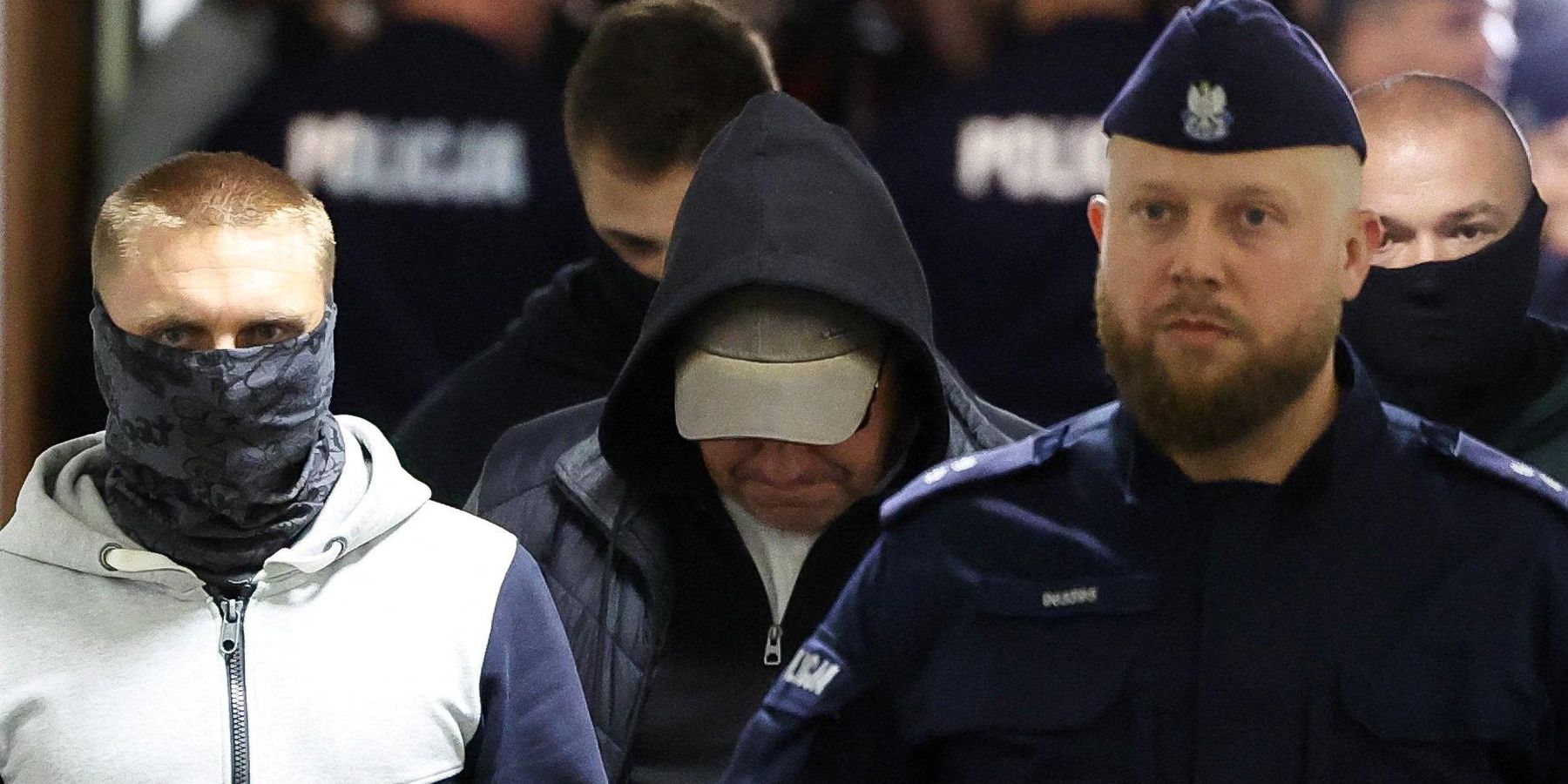
Last week a Polish court put a major wrench into the gears of the case, blocking a Ukrainian suspect’s extradition to Germany and ordering him released from custody, with the judge declaring his alleged crime a lawful military action taken that was “justified, rational and just,” and Polish Prime Minister Donald Tusk deeming it “rightly so. The case is closed.”
It’s an odd response to an attack in Sweden and Denmark economic zones that crippled infrastructure partly owned by Europeans (the pipelines were located in the Baltic Sea and brought Russian natural gas to Germany and were 51% Russian owned, with the rest owned by companies in Germany, France, and the Netherlands), an attack once widely denounced by much of the Western establishment. But this is just the latest instance of Polish officials’ disinterest in, if not outright public celebration of, the sabotage.
Probably the best-known instance is former foreign affairs minister and now Deputy Prime Minister Radosław Sikorski’s now-infamous (and since-deleted) “Thank you, USA” tweet, posted mere hours after the attack in September 2022 and accompanied by a photo of the aftermath of the underwater explosion. But you could go back much further.
There are more than half a dozen cables in the WikiLeaks-released tranche of U.S. diplomatic communications that detail the Polish government’s opposition to Nord Stream dating back to the 2000s, including from Sikorski himself, who had served an earlier stint as foreign minister from 2007 to 2014.
In one September 2007 cable, Polish officials laid out their government’s official position that “Poland considers the project as opposing our interest and the general rule of European solidarity.” Another from November that year describes Poland as “among the most vocal opponents of the project,” and that Poles viewed it as the “modern Molotov-Ribbentrop Pact,” referring to the secret deal between Moscow and Berlin in 1939 to carve the country in two.
Poland has been an unwavering opponent of the pipeline ever since, viewing it as a dangerous political project to not just sideline Poland and Ukraine, but make Germany and other Western European powers more dependent on Russian energy.
So it’s not exactly surprising that while much of Europe expressed outrage at the pipeline’s destruction — especially with consensus being for a time that Russia was responsible for destroying its own geopolitical trump card — Polish officials have been somewhere between celebratory and gloating.
“The destruction of Nord Stream, as far as I’m concerned, was a very good thing,” Sikorski told The New Statesman a year later. “The problem with North Stream 2 [the English translation of the pipeline’s name] is not that it was blown up,” tweeted Polish Prime Minister Donald Tusk earlier this month. “The problem is that it was built.”
Meanwhile, while Germany has been understandably eager to get to the bottom of who was responsible — the switch-off of Russian gas exports to the country that the attack contributed to has sent its energy market reeling, hastening a process of economically ruinous deindustrialization — Poland has not exactly been helpful. As German investigators followed the trail of evidence to Ukrainians and then Poland, which the saboteurs allegedly used as an operating base from which to plan and resource the operation, they were met with resistance from their counterparts in the fellow NATO state, who dismissed the widespread reports of possible Polish complicity as simply Russian propaganda.
By September last year, angry German investigators were privately accusing the Polish government of having sabotaged their probe and engaged in “obstruction of justice.” One former head of Germany’s foreign intelligence agency, the BND, charged outright that it had done so to “to cover up its own involvement in the attack on the pipelines,” because “operations of such dimensions are inconceivable without the approval of the political leaders of the countries involved.”
In other words, the Polish court’s decision to release the leading suspect last Friday is just the capstone to this alleged Polish campaign of obstruction of Germany’s investigation. The judge who ordered the case closed, it should be noted, was not acting in defiance of the official Polish government position, but in deference to it. Polish officials, including Prime Minister Tusk, repeatedly spoke out publicly against the suspect’s extradition in advance of the ruling.
It all adds to mounting tensions between the two NATO allies, tensions that could strain the alliance should evidence ever surface that Germany’s own ally assisted what is essentially a terrorist attack against it. Lucky for everyone involved, the Ukrainian suspect’s release makes it exceedingly unlikely not only that the perpetrators of the attack will face justice, but that the world ever finds out which larger powers, if any, were behind it and for what reason. It’s not farfetched to wonder if that’s by design.
- Latest Nord Stream break: propaganda, patsy, or truth? ›
- Nord Stream explosions linked to Ukraine military but no one cares ›
- Poland’s Janus face on Ukraine is untenable | Responsible Statecraft ›