

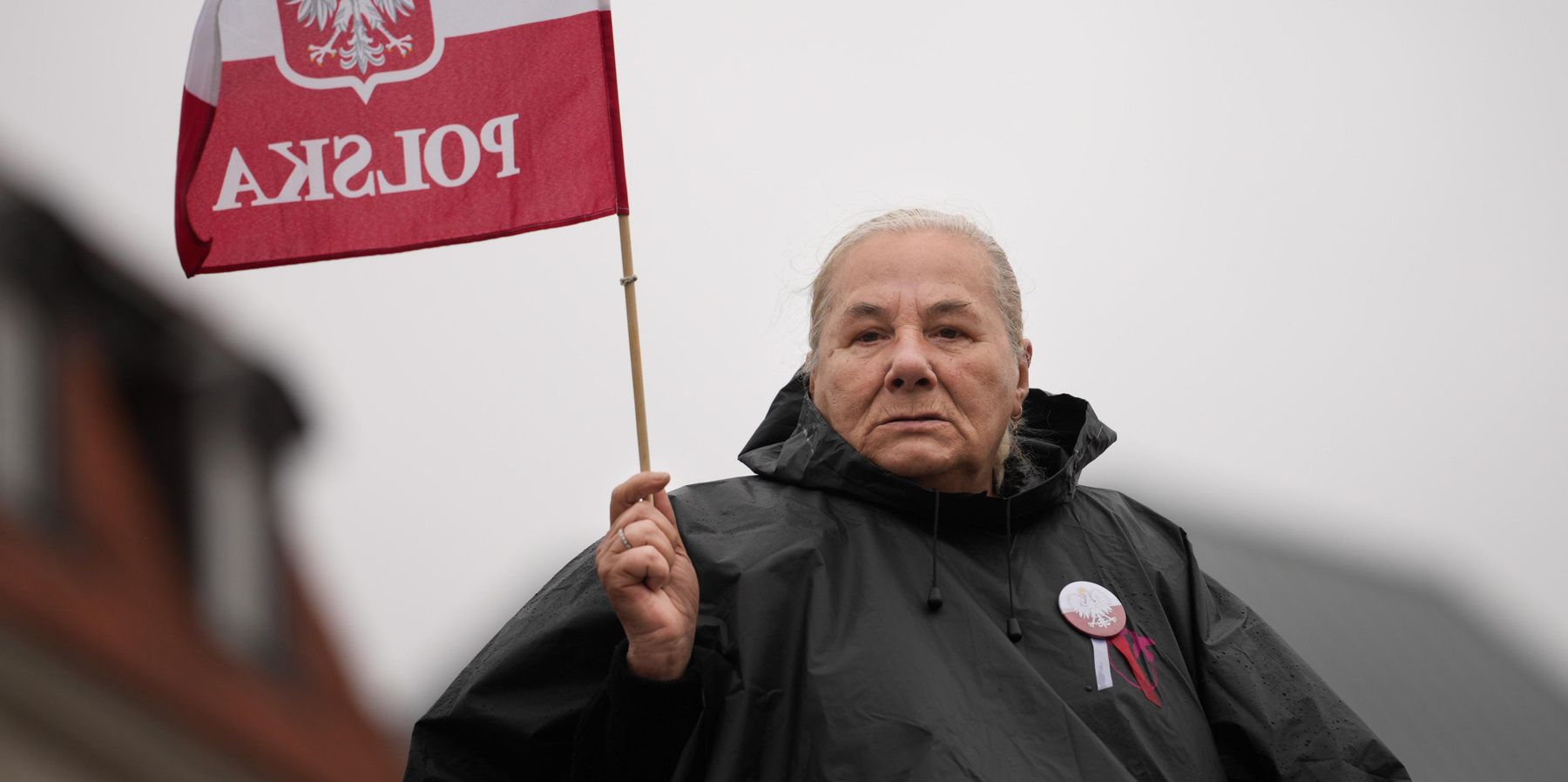
Of all the countries in Europe, Poland grapples with deep inconsistencies in its approach to both Russia and to Ukraine. As a result, the pro-Europe coalition government of Prime Minister Donald Tusk is coming under increasing pressure as the duplicity becomes more evident.
In its humanitarian response to Ukraine since the war began in 2022, Poland has undoubtedly been one of the most generous among European countries. Its citizens and NGOs threw open their doors to provide food and shelter to Ukrainian women and children fleeing for safety. By 2023, over 1.6 million Ukrainian refugees had applied for asylum or temporary protection in Poland, with around 1 million still present in Poland today.
That of course aligns with Poland’s consistently hawkish line and deep seated mistrust of Russia, dating back to the partition of Poland in 1939 following the Nazi-Soviet Molotov-Ribbentrop pact, the abuses of the Red Army in Poland in 1945 while driving the Nazis back to Berlin, and subjugation by a Soviet-installed puppet Communist regime after the war.
In a recent New York Times editorial, Poland’s Foreign Minister, Radoslaw Sikorski repeated the common Ukrainian mantra that the only way to negotiate with Russia is first to show force. With Russia still maintaining the military upper hand and also continuing life relatively as normal (there has been no need for a widespread mobilization of troops in Russia of the kind that is ongoing in Ukraine for men over the age of 25), it is unclear how ongoing supplies of military aid to Ukraine will do anything other than to prolong the war.
And for all of Sikorski’s comedy Eton-accented tough talk, it’s abundantly clear that Poland has no plans to show its force, having consistently expressed that it will not send troops to fight in Ukraine or participate in any so-called "reassurance force." This may in part be linked to an uncomfortable truth: Poland also has a fraught relationship with Ukraine.
The Ukrainian government is often criticized for creating space for neo-Nazi sympathizing groups. That historical grievance remains an open wound in Poland to this day, on account of the Volyn massacre of July 1943, in which up to 100,000 Poles were stabbed, axed, beaten or burned to death by the Ukrainian Insurgent Army (UIA), which many far right figures in Ukraine continue to revere.
This year, Poland named July 11 the National Day of Remembrance for Volyn Massacre victims. Polish President Karol Nawrocki has also proposed a law that would outlaw “Banderite” symbols, such as the Black and Red UIA flag, which you will commonly see today flown above the graves of fallen Ukrainian service personnel.
As with resentment towards Russia, resentment towards Ukraine is common among ordinary Poles, linked both to the past and the present. In a recent poll, support in Poland for Ukrainian membership of the EU (and of NATO) was low, at 35%, with 42% opposed. An end to the war in Ukraine will certainly accelerate the issue of Ukrainian membership of the European Union, which will be disadvantageous to ordinary Poles.
As I pointed out a year ago for Responsible Statecraft, Poland is by far the largest recipient of European Union subsidies. In the EU’s multi-year financial framework covering its budget plans for 2028-2034, Poland is again set to be the largest beneficiary of EU funds by far, with $144 billion (EURO 123.3 billion).
This funding will be threatened by Ukraine’s membership of the EU, if it joined on equal terms to existing Member States. That is because Ukraine would account for 25% of all agricultural land, soaking up generous subsidies that currently benefit Polish farmers. Ukraine would also be by far the poorest European country and, with its still large if depleted population, be eligible for the largest share of so-called cohesion funds, which go into improving outdated infrastructure.
From being the bloc’s largest net beneficiary of funds, Poland may be staring down the barrel of becoming a net contributor to the EU budget.
Polish farmers already lobby hard against the import of much cheaper Ukrainian agriculture imports, once again coming out in protest in Warsaw in January of this year. That move followed a steady liberalization of EU-Ukraine trade rules, intended to give the war-torn country an economic boost. However, the Polish government (along with Hungary and Slovakia) has maintained a ban on Ukrainian agricultural imports to protect their domestic agricultural sector.
This policy seems unlikely to change any time soon, even under the Euro-centrist coalition government of former European Commission President, Donald Tusk.
Instead, the Polish strategy appears to be one of deflection — to maintain the rhetoric about Russia while going soft on their support for Ukraine. An increasingly common Polish attack line has been to criticize Hungary and Slovakia – who Sikorski has called “self-described MAGA acolytes” — for the stance they are taking, for example on continuing to buy Russian oil and gas.
This is more than slightly duplicitous, given Poland’s continued refusal to buy Ukrainian grain. Donald Tusk has also frequently criticized Hungarian Prime Minister Viktor Orban’s efforts to mediate in the war in Ukraine and continues to do so.
The Polish courts have this past week also refused to extradite a Ukrainian suspected of involvement in the Nord Stream II explosion to Germany. This is undoubtedly politically motivated. Poland sought to block the pipeline from an early stage by launching anti-trust cases against European companies involved in the Nord Stream consortium. Both Foreign Minister Radek Sikorski and Prime Minister Donald Tusk have sought not only to justify the court decision, but to endorse the destruction of the pipeline itself through their remarks. This will undoubtedly continue to cause tensions between Poland and Germany.
At times it seems like there is barely a bridge in Europe that Sikorski and Tusk are not willing to burn, to show that Poland is the toughest on Russia. Yet, the uncomfortable truth remains, that Poland is not that friendly towards Ukraine either.
In August, nationalist President Nawrocki blocked a bill that would extend the rights of Ukrainians to claim welfare benefits in Poland, limiting benefits only to those Ukrainians who are in employment. Tusk’s coalition does not have the parliamentary seats to overturn this move, which it has criticized. However, Radek Sikorski has also in the past called for European governments to halt benefit payments to male Ukrainians taking refuge in their countries.
Halfway through its term, and having already faced a no-confidence vote, dissatisfaction among ordinary Poles continues to grow about Donald Tusk’s government, with 60% of citizens expressing disapproval in a recent poll. That might help to explain why the more obviously nationalist Karol Nawrocki won the Presidential election.
Seeking to defeat Russia in Ukraine, while keeping Ukraine locked out of Europe is manifestly as illogical as it is unsustainable. But you won’t find Sikorski or Tusk pushing for peace with Russia any time soon. Instead, and as is already happening elsewhere in Central Europe, I expect Poland increasingly to turn nationalist as these inconsistencies become more glaring.
- Karol Nawrocki: A Polish Euro-skeptic who chills with Trump ›
- What is Poland hiding besides the Ukrainian Nord Steam suspect? ›
- Pranked Sikorski says quiet part out loud about Kyiv's EU challenge ›