

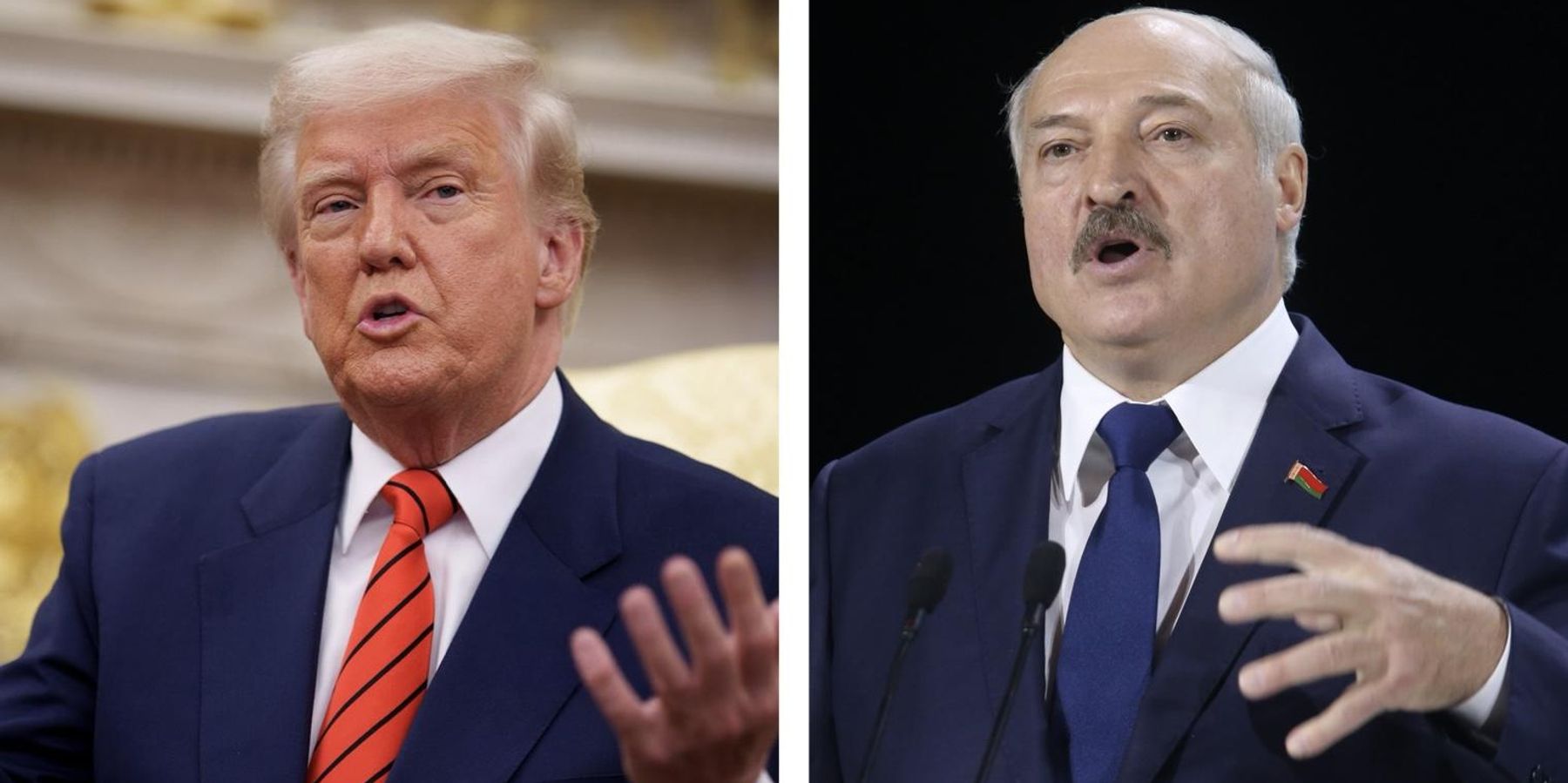
Rarely are foreign policy scholars and analysts blessed with as crystalline a case study in abject failure as the Western approach to Belarus since 2020. From promoting concrete security interests, advancing human rights to everything in between, there is no metric by which anything done toward Minsk can be said to have worked.
But even more striking has been the sheer sense of aggrieved befuddlement with the Trump administration for acknowledging this reality and seeking instead to repair ties with Belarus.
A recent New York Times report cited several experts who charged the White House with rushing to give away the farm to Minsk for nothing that they can put their finger on. But anyone who has reached this conclusion hasn’t looked very hard, or, as it were, not in the right places. The administration’s Belarus strategy has so far been remarkably effective and, if consistently pursued over the coming months, promises greater successes still.
Critics of the White House initiative to engage Belarus are keen to inveigh against the country’s authoritarianism, an argument curiously seldom deployed against U.S. cooperation with dozens of partners across the Middle East and Africa whose domestic politics hardly fits the liberal-democratic mold. One need not venture so far from Europe to happen upon the glaring inconsistencies of a “values-based” approach to Belarus. Azerbaijan is hardly any more aligned with the Western liberal-democratic model than Belarus, yet the very same European champions of democratization in Minsk have not the slightest qualms about striking deals with President Ilham Aliyev in Baku.
European leaders could respond, with full justification, that concrete interests are served by maintaining good relations with Azerbaijan, but the same has always been true when it comes to Belarus’ importance in Eastern European security issues. Even within a narrowly selective democratization framework, it's been well established that the only way to advance a substantive dialogue on civil society with Belarus is through engagement, whereas punishment and isolation drives Belarus away from the West and thereby produces the opposite effect.
There is no government on either side of the Atlantic that does not accept, even if tacitly or grudgingly, the basic diplomatic principle that it is necessary to engage countries that differ from the West — itself far from a monolith — in their norms, values, and institutions. On what basis, then, is Belarus one of the few to be held to another standard? European leaders would counter that Belarus is different because it provided passage and logistical support to Russian troops in the opening stages of Russia’s 2022 invasion of Ukraine. This argument shifts the debate from values back to security, which is where it should have always been.
The Europeans are quite correct that there are legitimate concerns stemming from what scholars have called the “Belarusian balcony,” or Belarus’ capacity to act as a staging ground for hybrid attacks or a full-scale confrontation between NATO and Russia. Such concerns are felt especially acutely by Belarus’ Western neighbors, Poland and Lithuania. But the best and only viable way to address these challenges is through sustained dialogue with Belarus, not by pushing for a change in government or punishing Minsk until it cuts ties with Moscow. The latter strategies were tried for the past five years and have been revealed as deeply counterproductive for reasons fully explained in the latest Quincy Institute brief on Belarus.
To the extent that the Europeans are interested in a stable Belarus-West relationship that reduces risks of escalatory spirals on NATO’s eastern flank, their current policy is akin to kicking in a wide open door. President Alexander Lukashenko has built his brand of “multi-vector” foreign policy precisely on the idea that Belarus’ sovereign interests are best advanced by hedging between Russia and the West not just to secure the best terms for itself but to assert itself as a regional stabilizer.
Minsk has long sought positive relations with the West as the only possible counterweight to what would otherwise be its one-sided dependence on Russia. Lest this be dismissed as an exotic arrangement, consider that the precedent for this style of hedging was set by NATO members themselves.
Turkish President Recep Erdoğan and Hungarian Prime Minister Viktor Orban, for instance, have developed their own nuanced relationships with competitors, including Russia and China. These governments have layered their national interests on top of NATO’s overall priorities in ways that are not always complementary but are nonetheless accepted as part of their sovereign foreign policy decisions. There is no reason why Belarus, a Russian military ally, cannot engage in similar hedging behavior in its dealings with the West.
The White House, contrary to many skeptics’ claims, is not trying to conjure a diplomatic opening ex nihilo. Rather, it is exploiting a window for substantive diplomacy that has existed for decades. That window is premised on the crucial understanding, lacking under previous administrations, that severing Belarus’ tight-knit military, economic, and diplomatic ties to Russia is not just unviable but unnecessary. Lukashenko was well positioned to provide a backchannel for the kinds of signaling and trial balloons that paved the way for the Alaska summit between President Trump and Vladimir Putin in August. The White House rightly perceives that Minsk, beyond the POW exchanges and other services it is rendering now, has — by dint of geography if nothing else — a major postwar role to play in supporting a peace deal.
American interests toward Belarus extend beyond finding additional ways to advance the Ukraine peace process. The White House cannot conclusively accomplish its goal of retrenching away from Europe and prioritizing other theaters while NATO’s eastern flank remains a powder keg. Progress on a U.S.-led normalization track with Belarus can set the stage for a much-needed dialogue between Minsk and its Western neighbors building into a new set of security agreements.
This understanding can eventually be formalized into a binding commitment by Belarus not to enable, facilitate, or engage in aggression against any of its neighbors, something Minsk has consistently averred it has no interest in, as part of a normalization deal. An agreement along these lines does not violate any of Belarus’ treaty obligations to Moscow, which are purely defensive in nature, and carries positive deescalatory spillover effects for long-term deconfliction and confidence building between Russia and NATO.
If carried to its conclusion, the U.S.-Belarus track can be a template for a model of low-risk, low-cost American regional engagement that strikes a sustainable balance between U.S. ends and means. It would, in its novelty and boldness, amount to something that can be called a Trump Doctrine for NATO’s eastern flank.