Follow us on social

google cta
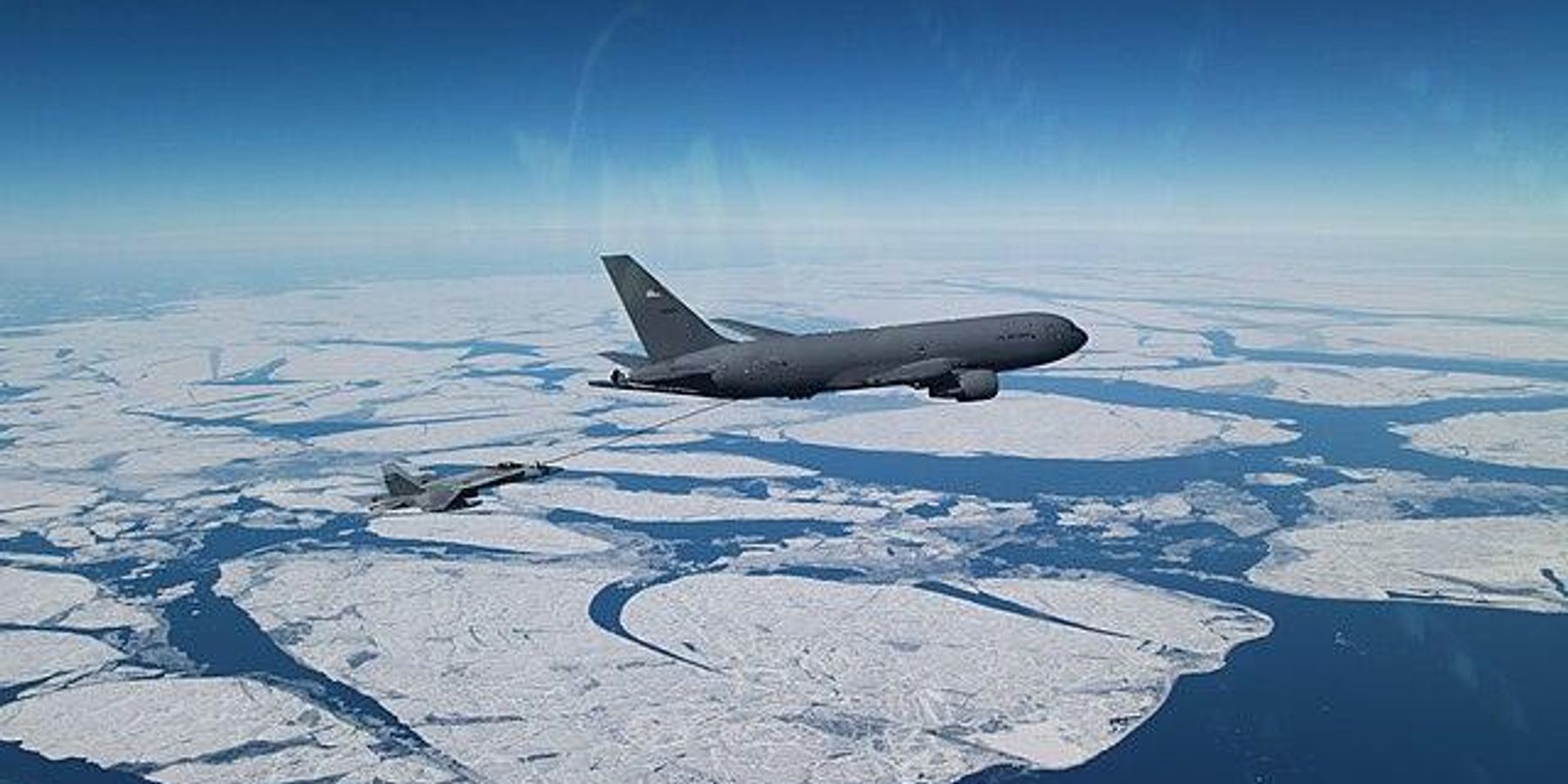
US Air Force Tanker

'Reckless' US ops in Caribbean lead to near-miss with Jet Blue plane

Washington’s ongoing escalation in a busy airspace in the Caribbean could be ‘recipe for disaster’

Reporting | QiOSK
google cta

Just as the U.S. takes responsibility for a tragic military aircraft accident at home, its military planes are causing other near-misses, where geopolitical tensions are already sky-high.

On Wednesday, the U.S. admitted failure for an incident in which a military Black Hawk crashed into a civilian passenger plane over the Potomac river on January 29, killing everyone on each aircraft. Here, the U.S. said the Black Hawk pilot’s lack of vigilance was "a proximate cause" for the crash.

That admission of wrongdoing comes amid new close calls between U.S. military jets and passenger planes in the Caribbean, where there were two near crashes with passenger planes within a 48 hour window between December 12-13. Namely, a JetBlue Airways plane leaving the island nation of Curaçao, near Venezuela, almost hit a U.S. Air Force tanker on December 12; the next day, a private jet headed from Aruba to Miami almost hit another one.

In the near miss over Curaçao, the JetBlue Airways pilot said the military aircraft did not have its transponder on. Military planes often have these off during reconnaissance missions and other military operations; that aircraft, however, was over civilian airspace, a nation the U.S. has no hostilities with.

"They passed directly in our flight path," the pilot said, calling the incident “outrageous.” "We had to stop our climb."

These near misses come amid the largest U.S. military buildup in Latin America in decades including F-35 fighter planes and MQ-Reaper drones carrying out ongoing boat strikes in the Caribbean

Experts say the near misses reflect a recklessness in the build-up and could lead to a real collision, which could be cause for further military escalation there.

“These incidents are the result of an unusual and dramatic increase in military activity in the Caribbean, an airspace heavily trafficked by civilian aircraft. Mix that with secrecy, and you have a recipe for disaster,” Alan McPherson, a professor at Temple University who specializes in the history of U.S.-Latin America relations, told RS.

“Such near accidents could also lead to actual accidents. If these kill Americans or Venezuelans, they could inflame tensions on both sides and even precipitate a war," he said.

To some observers, the U.S.’s military mishaps are par for the course.

“The near mid-air collision between a Jet Blue Airways pilot and a U.S. military aircraft taking off from Curaçao and heading toward Venezuelan airspace is a perfect metaphor for the lack of discipline and the recklessness in the execution of U.S. foreign policy,” John Mearsheimer, a non-resident fellow at the Quincy Institute, said on his YouTube channel. “The military aircraft headed for Venezuelan airspace, the zone of tension, was operating so dangerously that it nearly caused a civilian air disaster.”

“This is not just carelessness. It is a lack of control in executing military operations backed by the Trump administration's strategic ambiguity,” he added.

U.S. Southern Command did not respond to a request for comment in time for publication.


Dear RS readers: It has been an extraordinary year and our editing team has been working overtime to make sure that we are covering the current conflicts with quality, fresh analysis that doesn’t cleave to the mainstream orthodoxy or take official Washington and the commentariat at face value. Our staff reporters, experts, and outside writers offer top-notch, independent work, daily. Please consider making a tax-exempt, year-end contribution to Responsible Statecraft so that we can continue this quality coverage — which you will find nowhere else — into 2026. Happy Holidays!

Top Image Credit: U S Air Force tankers moved to NATO’s Eastern Flank, strengthen collective defense [Wikimedia Commons]
Reporting | QiOSK
World War II Normandy
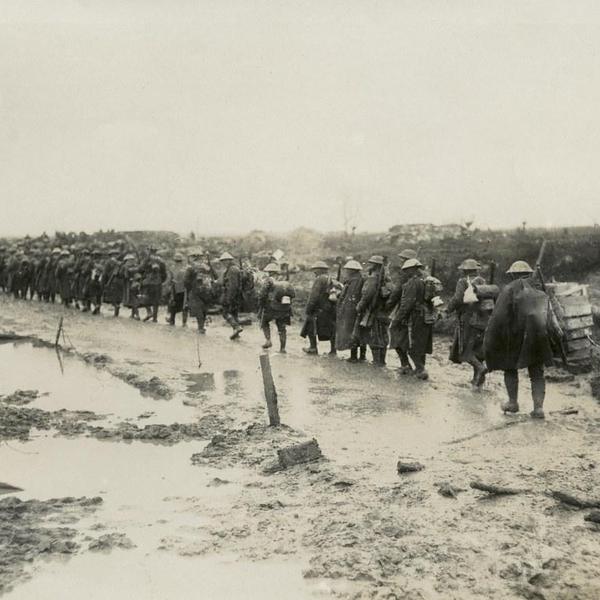
Top photo credit: American soldiers march a group of German prisoners along a beachhead in Northern France after which they will be sent to England. June 6, 1944. (U.S. Army Signal Corps Photographic Files/public domain)

Marines know we don't kill unarmed survivors for a reason

Military Industrial Complex

As the Trump Administration continues to kill so-called Venezuelan "narco terrorists" through "non-international armed conflict" (whatever that means), it is clear it is doing so without Congressional authorization and in defiance of international law.

Perhaps worse, through these actions, the administration is demonstrating wanton disregard for centuries of Western battlefield precedent, customs, and traditions that righteously seek to preserve as many lives during war as possible.

keep reading Show less
Amanda Sloat
Top photo credit: Amanda Sloat, with Department of State, in 2015. (VOA photo/Wikimedia Commons)

Pranked Biden official exposes lie that Ukraine war was inevitable

Europe

When it comes to the Ukraine war, there have long been two realities. One is propagated by former Biden administration officials in speeches and media interviews, in which Russian President Vladimir Putin’s illegal invasion had nothing to do with NATO’s U.S.-led expansion into the now shattered country, there was nothing that could have been done to prevent what was an inevitable imperialist land-grab, and that negotiations once the war started to try to end the killing were not only impossible, but morally wrong.

Then there is the other, polar opposite reality that occasionally slips through when officials think few people are listening, and which was recently summed up by former Special Assistant to the President and Senior Director for Europe at the National Security Council Amanda Sloat, in an interview with Russian pranksters whom she believed were aides to Ukrainian President Volodymyr Zelensky.

keep reading Show less
US military generals admirals
Top photo credit: Senior military leaders look on as U.S. President Donald Trump (not pictured) speaks at Marine Corps Base Quantico, in Quantico, Virginia September 30, 2025. Andrew Harnik/Pool via REUTERS

Slash military commands & four-stars, but don't do it halfway

Military Industrial Complex

The White House published its 2025 National Security Strategy on December 4. Today there are reports that the Pentagon is determined to develop new combatant commands to replace the bloated unified command plan outlined in current law.

The plan hasn't been made public yet, but according to the Washington Post:

keep reading Show less
google cta
Want more of our stories on Google?
Click here to make us a Preferred Source.

LATEST

QIOSK

Newsletter

Subscribe now to our weekly round-up and don't miss a beat with your favorite RS contributors and reporters, as well as staff analysis, opinion, and news promoting a positive, non-partisan vision of U.S. foreign policy.