

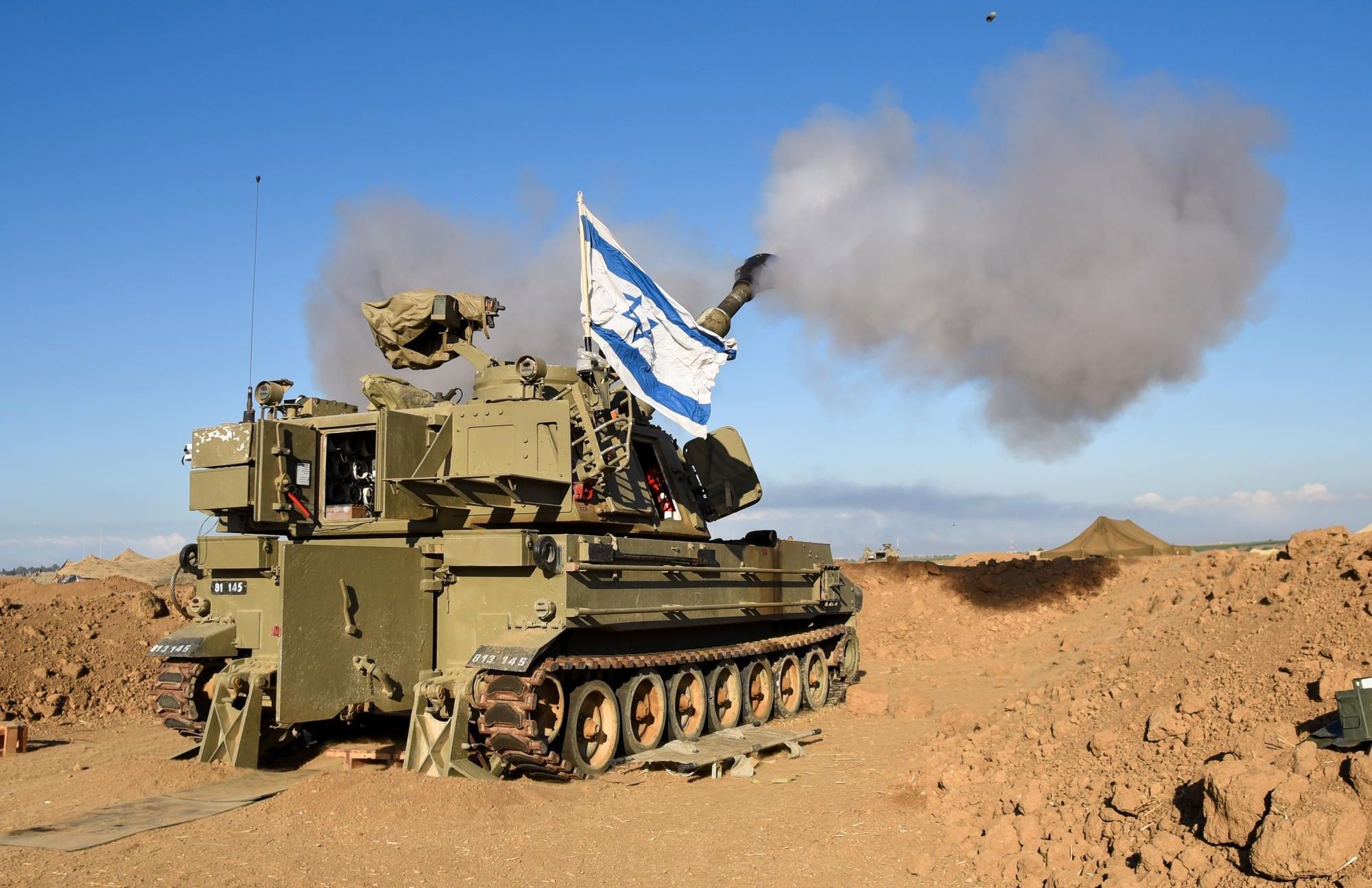
There is no ceasefire in the Gaza Strip, even though an agreement reached on October 9 supposedly established one.
The Israeli assault on the Strip continues, albeit at a reduced pace from what it was for most of the past two years. By one count, Israel has violated the ceasefire agreement 591 times between October 10 and December 2 with a combination of air and artillery attacks and direct shootings. The Ministry of Health in Gaza reports that during this period, 347 Palestinians have been killed and 889 injured. The pattern of casualties including women and children as well as journalists continues.
Meanwhile, it is hard to find any documented Israeli casualties in the Gaza Strip during the same period, beyond an early shooting incident at Rafah in which Israel says a soldier was killed and Hamas says it had nothing to do with it.
The rules of engagement that Israel has given itself during this “ceasefire” are illustrated by the killing of two Palestinians last weekend along the “yellow line” ceasefire boundary near Khan Younis. The Israeli military said its forces had “identified two suspects" who “conducted suspicious activities,” after which “the air force, directed by forces on the ground, eliminated the suspects in order to remove the threat.” The “threat” consisted of two boys, ages 9 and 10, who had left their home to gather wood.
The same pattern of Israeli conduct prevails today in Lebanon, where a ceasefire agreement was reached in November 2024. The United Nations Interim Force in Lebanon (UNIFIL) has recorded more than 7,500 airspace violations and nearly 2,500 ground violations by Israel in what the U.N. special rapporteur describes as a “total disregard for the ceasefire agreement.”
The Israeli attitude toward ceasefires was also displayed after an agreement for a ceasefire in Gaza and partial prisoner exchange was reached in January of this year. Israel welcomed some released hostages and used the breather for its military forces before ending the ceasefire and resuming its full-scale assault in March. The Israeli government evidently had no intention of ever implementing the later phases of that agreement.
Apart from agreeing to a ceasefire, there was no involvement by Hamas or any other Palestinians in the current 20-point “peace plan” for Gaza. The Trump administration constructed it, with the amount of input from Israel left unsaid but with a result that heavily favors Israel. Hamas thus rejects the plan, citing among other things how it leaves Palestinians under foreign rule.
In Gaza, that foreign rule would involve an international body headed by a firm backer of Israel: Donald Trump. The one other named prospective member of this supervisory body is former British Prime Minister Tony Blair, who is a controversial figure among Arabs for reasons involving both his abetting of the U.S. invasion of Iraq in 2003 and his later performance as an international envoy addressing the Israeli-Palestinian conflict.
Hamas also cites other respects in which the plan strongly tilts against Palestinian interests, including ones involving a prospective international stabilization force. “Assigning the international force with tasks and roles inside the Gaza Strip, including disarming the resistance,” states Hamas, “strips it of its neutrality, and turns it into a party to the conflict in favor of the occupation.”
Given that the plan heavily favors Israel, one might think that the government of Prime Minister Benjamin Netanyahu would be more inclined to complete its implementation than it was with the January agreement. But one of the chief ways in which it favors Israel is to permit Israel to continue to occupy parts of the Gaza Strip indefinitely if certain other conditions are not meant, and to leave it to Israel to decide if those conditions are met. The plan lays the groundwork for Israel to declare that it must continue not only occupation but also its lethal military operations.
The chief stated condition is disarmament of Hamas, which Netanyahu emphasizes in his rhetoric. Given that Hamas has indicated its willingness to forgo a direct governing role in Gaza, complete disarmament would come close to effectively accomplishing Netanyahu’s earlier stated goal of “destroying” Hamas.
It is not surprising that a target of destruction is unwilling to surrender all its arms. It is especially unsurprising in the case of Hamas, given that it had no role in writing the current plan, that this document talks about a “guarantee” that Hamas comply with its obligations while saying nothing about responding to rampant Israeli violations, and that Israel has inflicted death and destruction that are many orders of magnitude greater than anything Hamas has done.
Meanwhile, the Trump administration is having significant difficulty recruiting countries to participate in the proposed international stabilization force. The chief reason for hesitation among would-be participants is that there still are ongoing military operations in Gaza rather than a real ceasefire to monitor or enforce.
Governments especially do not want to get involved in trying to disarm Hamas. If two years of brutal warfare by Israel could not accomplish that objective, then a smaller and weaker international force would not either. Moreover, Arab countries especially, but also other Muslim-majority countries, do not want to be seen doing Israel’s dirty work.
Netanyahu’s motivations for continuing warfare remain mostly unchanged. His request for a pardon to end the corruption case against him potentially could weaken one motivation, but the idea of such a pardon, despite President Trump’s endorsement, is controversial within Israel, and there is no assurance that President Isaac Herzog will grant it.
In any event, Netanyahu staying in power means keeping together a right-wing coalition that includes extremists who will stop at nothing short of complete ethnic cleansing of Palestinians. One reflection of this is Israel’s recent announcement that it is willing to reopen the Rafah crossing between the Gaza Strip and Egypt — but only for Palestinians to leave Gaza, not to re-enter it.
Concentrated attention and follow-up by the United States conceivably could rescue parts of the 20-point plan, but the Trump administration is unlikely to provide such attention. Most of the high-level negotiating bandwidth is taken up at the moment by the Russia-Ukraine war, with both special envoy Steve Witkoff and the president’s son-in-law Jared Kushner, who previously had focused almost entirely on the Middle East, recently conferring with Vladimir Putin in Moscow.
If Trump’s interest in international agreements returns to the Middle East, it might be not to Israel-Palestine but rather to Iran, which, despite the continuing distrust heightened by the Israeli and U.S. aggression against Iran in June, has indicated its commitment to diplomacy and interest in negotiating a new nuclear agreement.
Trump is not big on follow-up. He is interested far more in signing or touting anything he can label as a peace agreement, regardless of its effectiveness. He is likely to value anything new on Ukraine or Iran more than the work required to bring real peace to Gaza.
The prospect is thus for no peace in that miserable territory, with no actual ceasefire taking hold and little likelihood that most of the 20-point plan will be implemented. More broadly, there will be no peace between Israel and the Palestinians as long as the former subjugates the latter.
The one new twist to this familiar sad story is the likelihood of a long-term division of the Gaza Strip along the yellow line, with Israel directly occupying slightly more than half of the Strip, including most of the land where agriculture is possible. Israel has been erecting infrastructure along the yellow line with the look of permanence.
What both the Israeli government and the Trump administration seem to have in mind is to support the argument that Palestinians have a better life under Israeli rule than they would in any territory governed by the likes of Hamas. Further to this argument, the Trump administration has announced its intention to construct residential compounds on the Israeli side of the Strip that would be an improvement over the combination of tents, rubble, and mud that have become the homes of many Gazans.
The other side of this strategy of split-territory contrast is to keep the non-Israeli side miserable. In furtherance of this objective, Israel is still restricting humanitarian aid. According to the United Nations Office of Project Services, only about 20 percent of the aid trucks that were supposed to have been admitted to Gaza under the ceasefire agreement have been let in.
- Ceasefire collapse expands Israel's endless and boundary-less war ›
- Gaza ceasefire hanging by a thread ›
- The Gaza ceasefire is falling apart ›
- Congress, you have a chance to implement Trump Gaza plan right | Responsible Statecraft ›
- As expected, Netanyahu back demanding more war with Iran ›