

The U.S. intelligence agencies’ Annual Threat Assessment (ATA) is billed as an opportunity “for the American people to receive an unvarnished and unbiased account of the real and present dangers that our nation faces.”
That’s according to Sen. Tom Cotton (R-Ark), chair of the Senate Select Committee on Intelligence, who personally presided over a public hearing this year to hear its conclusions.
It’s too bad neither he nor almost any other senator who sits on the committee seemed to pay attention to it, if current discourse over the Israel-Iran war is anything to go by.
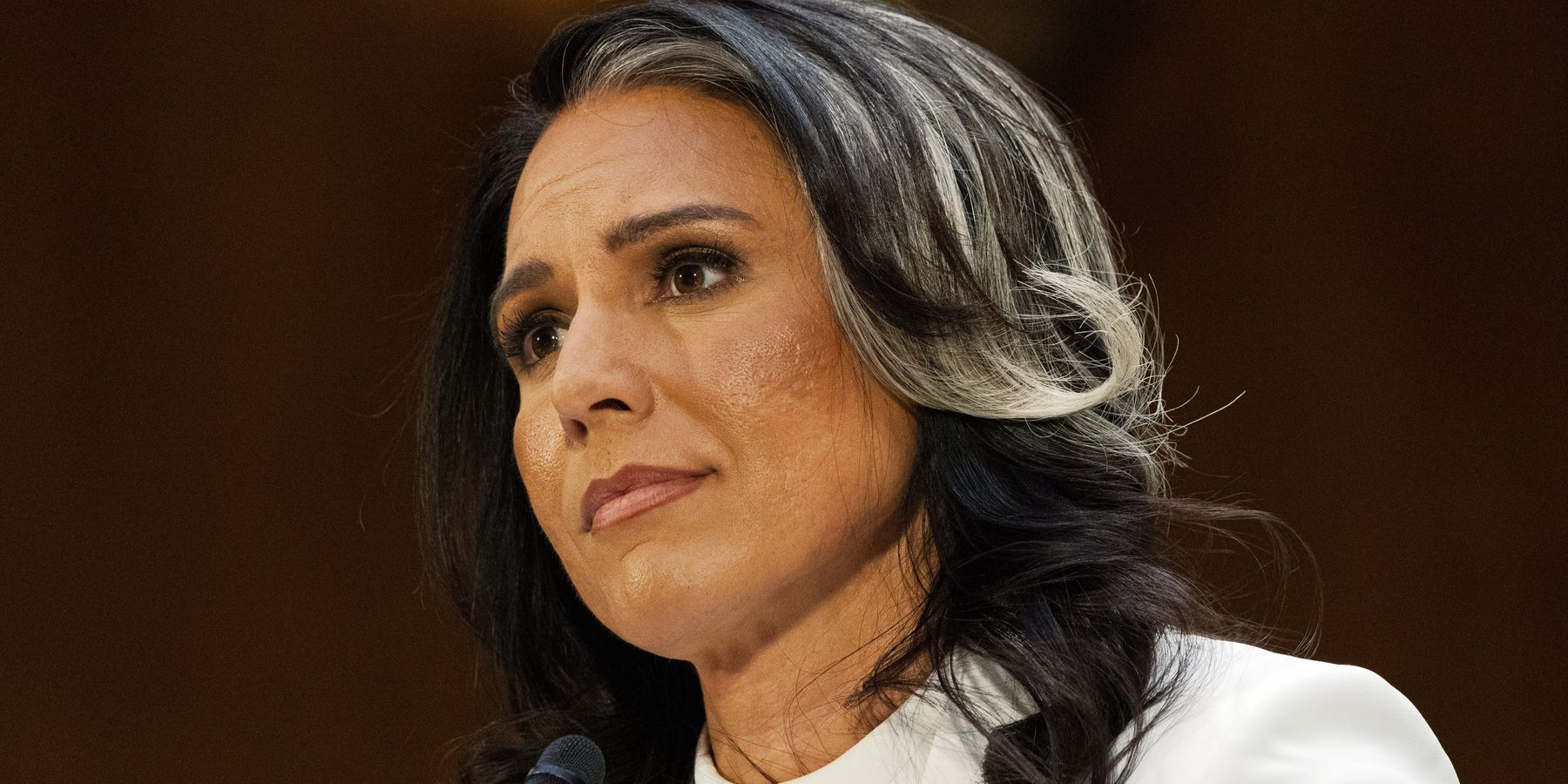
On March 25, Director of National Intelligence (DNI) Tulsi Gabbard delivered the U.S. Intelligence Community’s (IC) collective conclusions covering a broad swath of national security issues and geographic areas — including the threat posed by Iran and its possible development of a nuclear weapon.
“The IC continues to assess that Iran is not building a nuclear weapon and Supreme Leader Khamenei has not authorized the nuclear weapons program that he suspended in 2003,” she told the committee bluntly. Gabbard was echoing an assessment that U.S. intelligence agencies have been making since 2007.
Yet despite this testimony, most of the committee members have issued statements over the past days and weeks that have entirely ignored this assessment, instead painting a picture of an Iran speeding toward a nuclear bomb, and Israel’s self-proclaimed “preemptive” war against Iran as an unavoidable and understandable act of self-defense.
That includes Cotton himself, who has since hearing that testimony repeatedly issued statements and given interviews that make reference to Iran’s supposed “development of nuclear weapons,” its “nuclear weapons program,” and that it was “on the path to nuclear weapons.”
In a recent Face the Nation interview, Cotton equated Iran’s uranium enrichment with a “nuclear weapons program.” A week ago, he claimed that Defense Secretary Pete Hegseth “confirmed that Iran’s terrorist regime is actively working towards a nuclear weapon,” wildly twisting Hegseth’s actual, heavily qualified response to a point-blank question about whether Tehran was building a nuke: “There are plenty of indications that they have been moving their way toward something that looks a lot like a nuclear weapon.”
This week, Sen. Todd Young (R-Ind.) went further and actually cited his position “as a member of the Intelligence Committee” to make the charge that “independent experts had “time and time again” determined that Iran was “using that program for military purposes” and “very quickly rushing towards the development, we have to assume, of a nuclear weapon” — even though Young had been told three months earlier that U.S. intelligence agencies believe the exact opposite.
Elsewhere, Young has pointed to “Iran’s nuclear ambitions” to justify backing Israel’s attack.
“This Iranian regime has clearly been preparing to make nuclear weapons for years,” read a statement from Sen. Mike Rounds (R-S.D.), who, as Israel launched its attack, said that “Iran cannot have a nuclear weapon, it’s just simply gotten to that point.”
Sen. James Lankford (R-Okla.) has similarly called the nuclear program “a very real threat to the United States,” and, while tweeting out his support of the Israeli war, claimed Iranian leaders had “advanced their nuclear weapon capacity,” insisting they “cannot have a nuclear weapon.”
“A nuclear Iran was always an unacceptable outcome,” tweeted Sen. Ted Budd (R-N.C.), who backed Israel “tak[ing] action to ensure Iran could not add a nuclear weapon to its arsenal.” Meanwhile, Sen. John Cornyn (R-Texas) has reposted a spate of tweets claiming that Iran was close to obtaining a nuclear weapon and needed to be immediately neutralized, and at one point approvingly quoted Trump that “you can’t have peace if Iran has a nuclear weapon.”
It was little better on the Democratic side of the aisle. “It’s unacceptable for Iran to have a nuclear weapon,” tweeted Sen. Mark Kelly (D-Ariz.) as Israeli bombs rained down on Tehran. Elsewhere, Kelly has said that Iran has “been on this trajectory for a while, to be able to build a nuclear weapon,” and suggested he might back a direct U.S. attack on Iran’s underground nuclear facilities, because he “would like to see Iran's nuclear capability to be completely disarmed.”
Sen. Ron Wyden (D-Ore.), a longtime Democratic hawk on Iran, referenced “Iran’s nuclear ambitions” in the same breadth that he announced his support for “Israel’s right to defend itself” last week.
“I have long believed that the Iranian regime must not acquire a nuclear weapon,” said Sen. Michael Bennet (D-Colo.), but “Iran has proceeded rapidly with its nuclear program,” necessitating self-defense from Israel. Sen. Kirsten Gillibrand (D-NY) warned in the midst of the war that “Iran has been developing nuclear capability,” and that because “ it must never be allowed to obtain a nuclear weapon,” she would “always support Israel’s right to defend itself.”
These 10 senators constituted the majority of those who attended the Intelligence Committee hearing that day and heard Gabbard’s testimony, which said the exact opposite of what many of them are saying now.
Those senators who were absent, and so presumably would have been later briefed on what had been reported in the hearing, mostly all still ended up using the same misleading rhetoric about an Iran inexorably barreling toward a nuclear weapon, including Sens. Susan Collins (R-Maine) (“We know for a fact that the Iranians are increasingly enriching uranium for the purpose of developing a nuclear weapon”), Jim Risch (R-ID) (“I pray for the people of Israel and support its right to defend itself against a nuclear Iran”), Roger Wicker (R-Miss.) (“Iran’s sprint to become a nuclear threat to America and our allies”), and Chuck Schumer (D-N.Y.), (“Iran cannot have a nuclear weapon”).
Only a few, specifically Sens. Angus King (I-Maine), Jerry Moran (D-Kan.), and Jon Ossoff (D-Ga.) simply haven’t put out any public statements on the issue at all. Sen. Jack Reed (D-R.I.), meanwhile, has been highly critical of what he called Israel’s “reckless escalation,” and has warned that “the drive for nuclear weapons, I think, by the Iranians, might ironically even be accelerated” by the attack.
Meanwhile, as the Trump administration considered heeding Israeli Prime Minister Benjamin Netanyahu’s appeal to join Israel’s attack, additional cold water was poured on these claims. Four sources told CNN that intelligence agencies continue to believe Iran was not actively pursuing a nuke and that, even if they were, it would be three years away, while the Wall Street Journal reported that U.S. officials had rejected Israeli intelligence that supposedly proved Iran’s nuclear ambitions.
Trump himself has dismissed Gabbard’s testimony (“I don’t care what she said”) and reportedly excluded the more war-skeptical DNI from a critical national security meeting over the weekend (that was later clarified to say the DNI was on National Guard duty over the weekend).
All of it paints a very worrisome picture of a Washington driving headlong into a new Middle East war — one where lawmakers and the president have actively chosen to ignore the intelligence they have been provided by their own intelligence community.
Editor's note: Story has been corrected to reflect the meeting DNI Gabbard missed and why.
- Israel is not winning. Trump must not cave to new demands for help. ›
- Is Israel's favorite US general helping to push us into war? ›