Follow us on social

Diplomacy Watch Putin Trump Zelenskyy Ukraine

Diplomacy Watch: Are Kyiv protests pent-up anger against Zelensky?

Even EU leadership lashed out over the president's anti-corruption legislation, after which he was forced to back-peddle

Reporting | QiOSK

As uneventful diplomatic talks in Istanbul wrap up with little more than talk of a prisoners of war swap and a push for more meetings, Ukrainian President Volodymyr Zelensky apparently has another problem on his hands — his own people.

This week, the largest protests against the Zelensky government since the war started rocked major Ukrainian cities. Ukrainians protesting the new law, which Zelensky says curtails Russian influence, but critics say strips key anti-corruption bodies, the National Anti-Corruption Bureau (NABU) and the Specialized Anti-Corruption Prosecutor’s Office (SAPO), of their independence from the Ukrainian government. Namely, Ukraine's prosecutor general, appointed by Zelensky, would receive new powers over NABU and SAPO in the process.

European Commission president Ursula von der Leyen even suggested the legislation, which she says conflicts with Europe’s “respect for the rule of law,” could hinder Ukraine’s EU eligibility.

Reeling from the backlash, Zelensky has been quick to backpedal. He handed a new anti-corruption bill to Ukraine’s Parliament on Thursday, which will re-establish NABU and SAPO’s independence from the Ukrainian government if it becomes law. The Parliament will consider the new legislation next week.

"Everyone has heard what people are saying these days... on social media, to each other, on the streets. It's not falling on deaf ears," Zelensky said in an address Wednesday evening.

Some protestors say they will back down if Zelensky changes course on his new law. But others see a unique opportunity to demonstrate broader frustrations with the government, its history of corruption, and handling of the war. This may spell further political trouble for Zelensky.

“If people are out protesting now, it's not because they admire and support NABU and SAPO... It's because this spark makes it permissible to express pent-up anger at Zelensky, his team and daily grotesque, in-your-face corruption,” Almut Rochowanski, activist and Quincy Institute non-resident fellow, wrote on X.

“Until now, expressing criticism of Zelensky has felt awkward, unpatriotic and in fact dangerous. They'd rather criticize some lower-level figure for this or that failure. In this sense, the elimination of NABU and SAPO's independence functions as a strawman,” she wrote.

In other Ukraine war news this week:

Citing the Telegram account of Russian-appointed local official Vladimir Saldo, Al Jazeera reported that a Ukrainian drone strike hit a private bus in Russian-occupied Kherson. The attack killed three people and, according to Saldo, three more are injured and “in serious condition.”

The Netherlands will "substantially contribute" towards Patriot air defense system deliveries to Ukraine, according to Newsweek. Dutch Defense Minister Ruben Brekelmans wrote on X Monday that details regarding these Patriot deliveries "will be worked out soon.” According to DW, Germany has also pledged to provide 5 Patriot missile systems to Kyiv.

Now that Trump has established a 50 day deadline for Russia to end the Ukraine war, the New York Times reports that Republican lawmakers previously pushing a Russia sanctions package, which would have slapped 500% tariffs on countries buying Russian energy, have paused such efforts for the time being. Trump said he would impose a 100% tariff if his demands aren’t met.

From State Department:

At the State Department Press briefing on July 22, spokesperson Tammy Bruce explained that Trump’s 50 day deadline for Russia to attain peace in Ukraine is not “static.” Rather, she said this deadline is subject to the ebbs and flows of the war and its negotiations.

“I would caution, when the President notes a block of time or a window, that it could be any time in that window. We’ve already seen that in one instance. There is — at the same time, with negotiations — as I mentioned before without going into the details — if there’s a genuine negotiation happening and it is in – it’s in motion, then things can change rapidly; that the day you set up a window, two days later it can be different because of the conversations that have been had,” Bruce explained.

“We’ve seen him give windows before, and he’s acted very quickly within a block, and I think that’s why [the deadline Trump set] matters.”
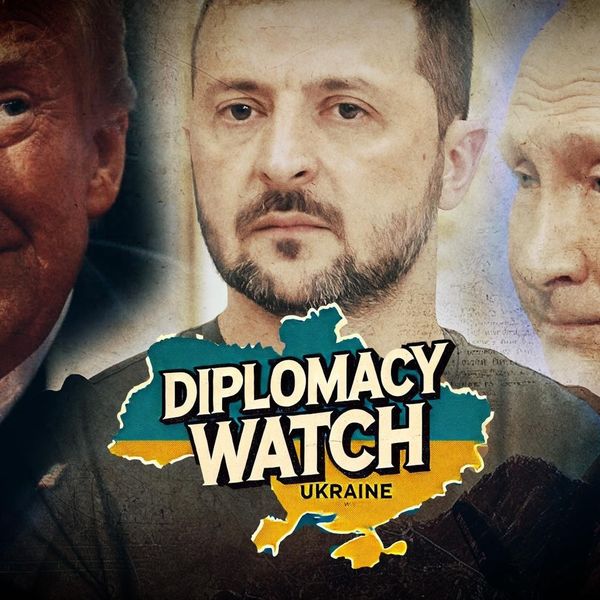
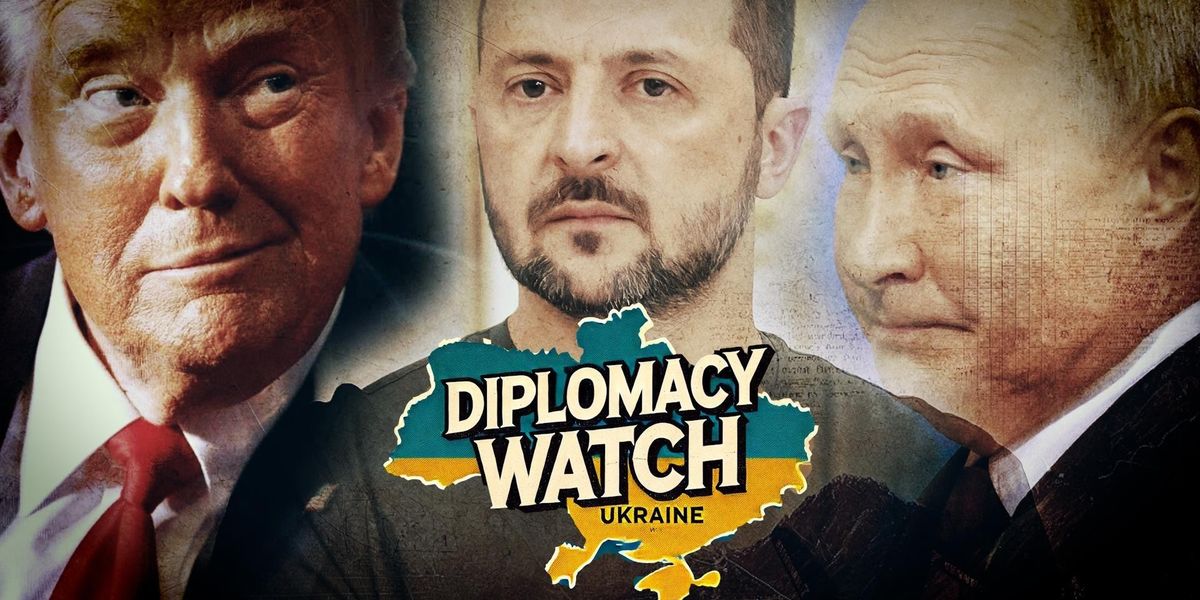
Top Photo: Trump, Zelenskyy, and Putin with Ukraine graphic. Credit, Khody Akhavi
Reporting | QiOSK
Trump ASEAN
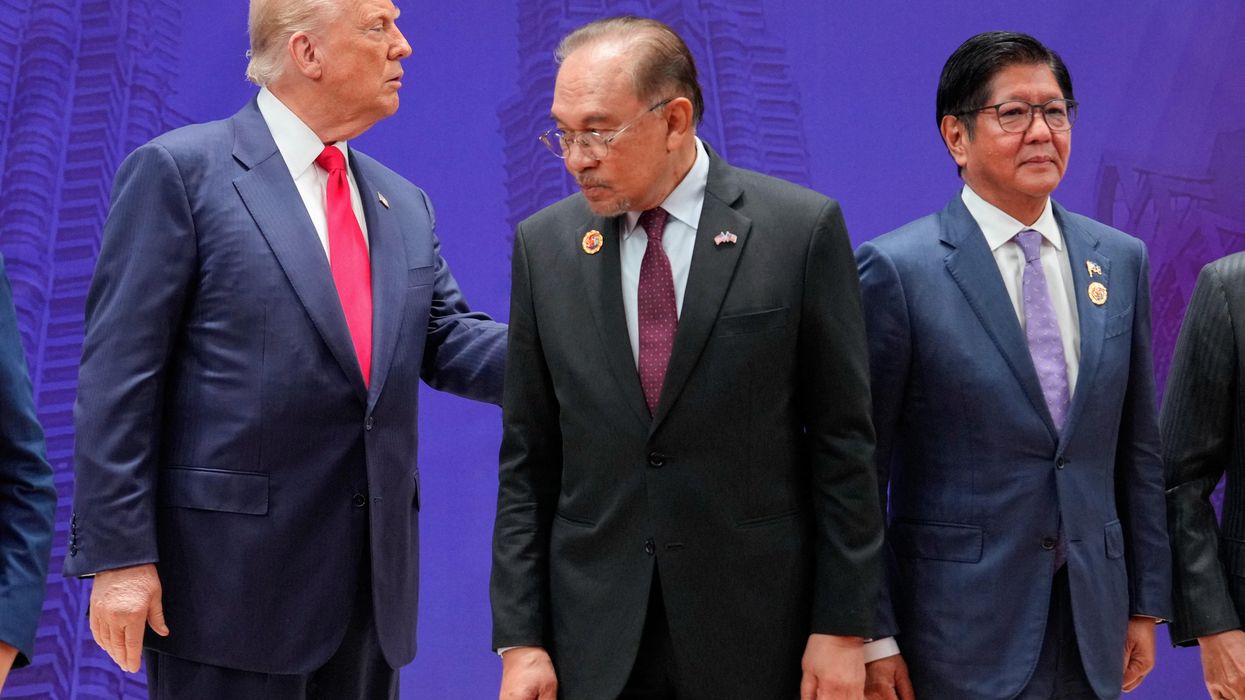
Top photo credit: U.S. President Donald Trump looks at Philippine President Ferdinand Marcos Jr., next to Malaysian Prime Minister Anwar Ibrahim when posing for a family photo with leaders at the ASEAN Summit in Kuala Lumpur, Malaysia, October 26, 2025. Vincent Thian/Pool via REUTERS

‘America First’ meets ‘ASEAN Way’ in Kuala Lumpur

Asia-Pacific

The 2025 ASEAN and East Asia Summits in Kuala Lumpur beginning today are set to be consequential multilateral gatherings — defining not only ASEAN’s internal cohesion but also the shape of U.S.–China relations in the Indo-Pacific.

President Donald Trump’s participation will be the first by a U.S. president in an ASEAN-led summit since 2022. President Biden skipped the last two such summits in 2023 and 2024, sending then-Vice President Harris instead.

keep readingShow less
iran, china, russia
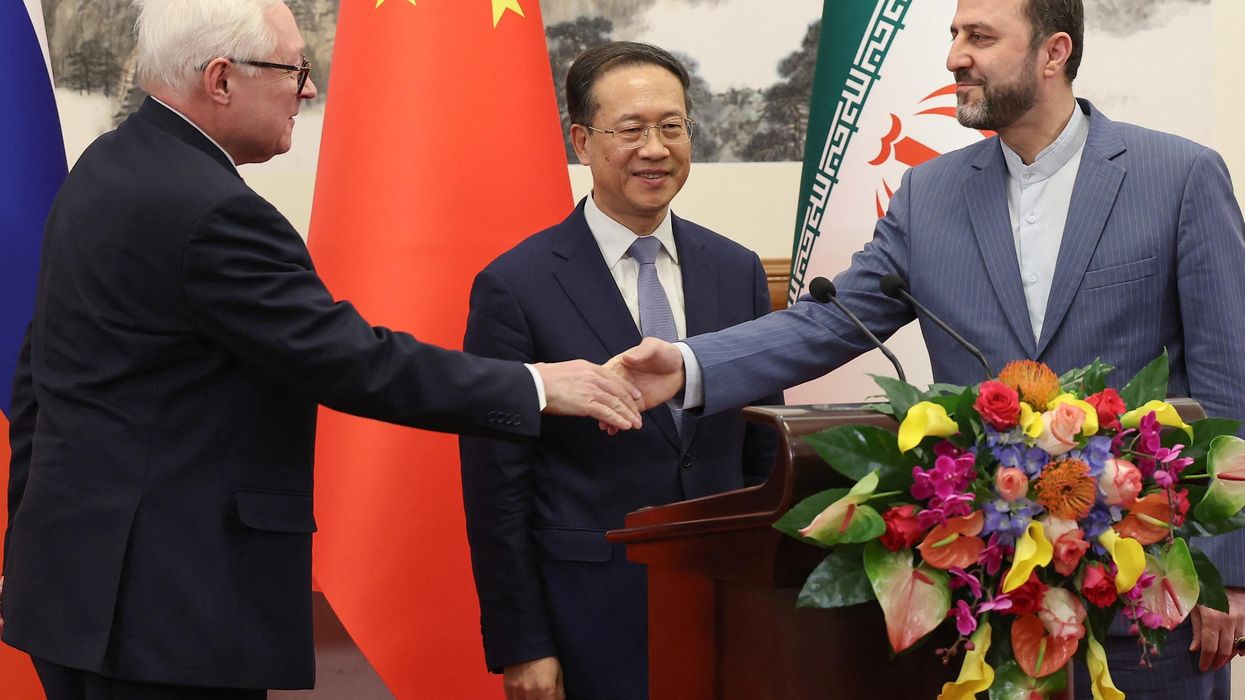
Top photo credit: Top image credit: Russian Deputy Foreign Minister Sergei Ryabkov and and Iranian Deputy Foreign Minister Kazem Gharibabadi shake hands as Chinese Vice Foreign Minister Ma Zhaoxu looks on during their meet with reporters after their meeting at Diaoyutai State Guest House on March 14, 2025 in Beijing, China. Lintao Zhang/Pool via REUTERS

'Annulled'! Russia won't abide snapback sanctions on Iran

Middle East

“A raider attack on the U.N. Security Council.” This was the explosive accusation leveled by Russian Deputy Foreign Minister Sergey Ryabkov this week. His target was the U.N. Secretariat and Western powers, whom he blamed for what Russia sees as an illegitimate attempt to restore the nuclear-related international sanctions on Iran.

Beyond the fiery rhetoric, Ryabkov’s statement contained a message: Russia, he said, now considers all pre-2015 U.N. sanctions on Iran, snapped back by the European signatories of the 2015 nuclear deal (JCPOA) — the United Kingdom, France, Germany — “annulled.” Moscow will deepen its military-technical cooperation with Tehran accordingly, according to Ryabkov.

This is more than a diplomatic spat; it is the formal announcement of a split in international legal reality. The world’s major powers are now operating under two irreconcilable interpretations of international law. On one side, the United States, the United Kingdom, France, and Germany assert that the sanctions snapback mechanism of the JCPOA was legitimately triggered for Iran’s alleged violations. On the other, Iran, Russia, and China reject this as an illegitimate procedural act.

This schism was not inevitable, and its origin reveals a profound incongruence. The Western powers that most frequently appeal to the sanctity of the "rules-based international order" and international law have, in this instance, taken an action whose effects fundamentally undermine it. By pushing through a legal maneuver that a significant part of the Security Council considers illegitimate, they have ushered the world into a new and more dangerous state. The predictable, if imperfect, framework of universally recognized Security Council decisions is being replaced by a system where legal facts are determined by political interests espoused by competing power blocs.

This rupture followed a deliberate Western choice to reject compromises in a stand-off with Iran. While Iran was in a technical violation of the provisions of the JCPOA — by, notably, amassing a stockpile of highly enriched uranium (up to 60% as opposed to the 3.67% for a civilian use permissible under the JCPOA), there was a chance to avert the crisis. In the critical weeks leading to the snapback, Iran had signaled concessions in talks with the International Atomic Energy Agency in Cairo, in terms of renewing cooperation with the U.N. nuclear watchdog’s inspectors.

keep readingShow less
On Ukraine and Venezuela, Trump needs to dump the sycophants
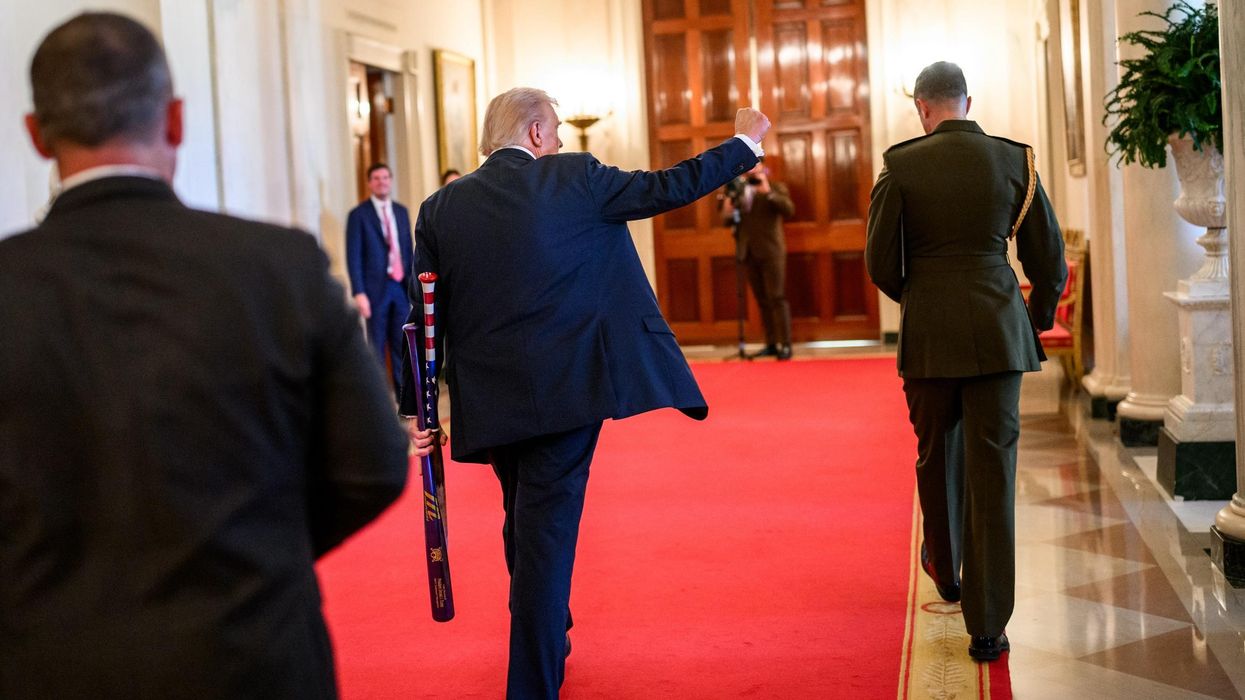
Top Photo Credit: (Official White House Photo by Molly Riley)

On Ukraine and Venezuela, Trump needs to dump the sycophants

Europe

While diplomats labored to produce the Dayton Accords in 1995, then-Secretary of Defense Bill Perry advised, “No agreement is better than a bad agreement.” Given that Washington’s allies in London, Paris, Berlin and Warsaw are opposed to any outcome that might end the war in Ukraine, no agreement may be preferable. But for President Trump, there is no point in equating the illusion of peace in Ukraine with a meaningless ceasefire that settles nothing.

Today, Ukraine is mired in corruption, starting at the very highest levels of the administration in Kyiv. Sending $175 billion of borrowed money there "for however long it takes" has turned out to be worse than reckless. The U.S. national sovereign debt is surging to nearly $38 trillion and rising by $425 billion with each passing month. President Trump needs to turn his attention away from funding Joe Biden’s wars and instead focus on the faltering American economy.

keep readingShow less

LATEST

QIOSK

Newsletter

Subscribe now to our weekly round-up and don't miss a beat with your favorite RS contributors and reporters, as well as staff analysis, opinion, and news promoting a positive, non-partisan vision of U.S. foreign policy.