

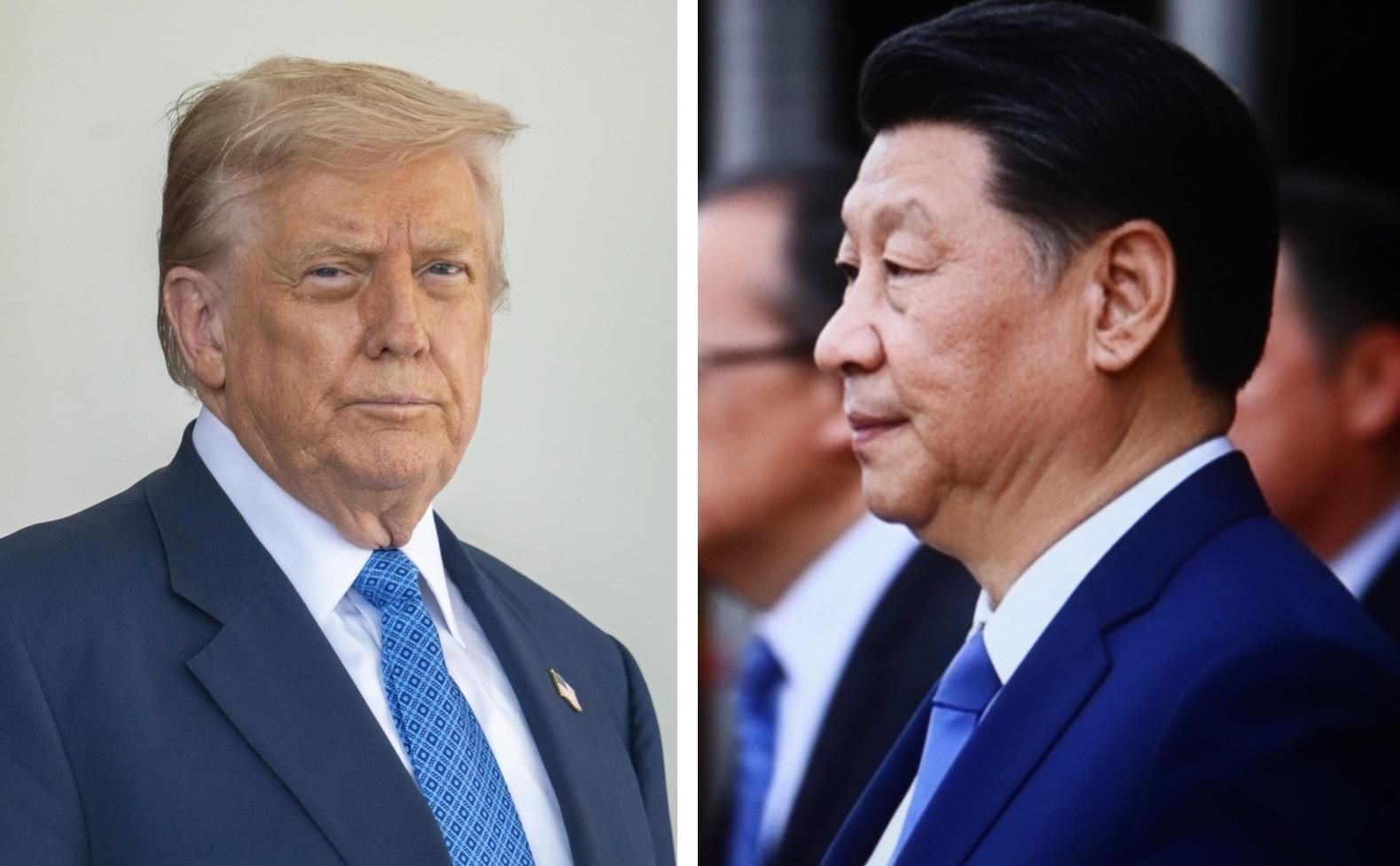
On Thursday, President Donald Trump is expected to meet with Chinese leader Xi Jinping on the sidelines of the APEC Summit in Seoul, where they will aim to calm escalating trade tensions and even explore striking a “Big Deal” between the world’s two superpowers.
The stakes could not be higher. The package reportedly under discussion could span fentanyl controls, trade, export restrictions, Chinese students, and even China’s civil-military fusion strategy. It would be the most ambitious effort in years to reset relations between Washington and Beijing. And it could succeed — or collapse — under the weight of its own ambition.
Start with fentanyl. Synthetic opioids now kill more Americans each year than car crashes or gun violence. Much of the supply chain apparently begins in China, where chemical precursors flow into global markets with little oversight.
If Beijing were to meaningfully crack down, the human impact would be enormous. Thousands of American families could be spared the devastation of overdose. But here lies the dilemma: unfortunately China has treated drug enforcement as a bargaining chip. Any cooperation is likely to come at a price — tariff relief, technology access, or concessions elsewhere. In other words, Beijing may save American lives, but only on terms that also advance its own strategic goals.
Trade is another pillar. The U.S. deficit with China remains stubbornly high, fueled by state subsidies and market barriers. And China’s move to place export controls on its rare earths — effectively mimicking America’s foreign direct product rule on valuable minerals — has infuriated the president, spurring new threats of a 100% tariff on Chinese goods. But there’s a relatively straightforward way to ensure these tensions do not explode into overly-harmful restrictionism: some good dealmaking. Trump has always thrived on the language of deals, and this negotiation would give him a chance to frame himself as the one leader willing to go toe-to-toe with Beijing.
The outline is familiar: more access for American exporters, more purchases of U.S. goods by China. But the memory of the 2020 “Phase One” agreement hangs over the talks. Then, China promised sweeping purchases it never delivered. Without credible enforcement, a new trade deal risks being little more than a press release. The rumor mill is filled with all sorts of strange concoctions such as China buying 500 new Boeing airplanes and in return the U.S. accepts 600,000 PRC students.
The hardest piece of this puzzle may be technology. Washington has tightened export controls on semiconductors and advanced AI tools, citing fears that China’s civil-military fusion blurs the line between private innovation and state power. Beijing calls it containment; Washington calls it self-defense.
It is difficult to imagine a neat compromise here. One side sees survival; the other sees supremacy. At best, diplomats might carve out limited areas of cooperation — say, on medical AI or clean energy — while drawing firmer red lines elsewhere. Activation of the renewed STA by launching 2-3 modest initiatives for the research collaboration under a policy of “smart openness” could be a worthwhile trust-building approach. It must be realized, however, that the tech issue alone could sink any broader bargain.
Trump, for his part, relishes spectacle. A head-to-head negotiation framed as the art of the deal on a global stage, would play to his instincts. But style cannot substitute for substance. If the summit produces vague promises, the political bounce will fade fast, and the structural tensions in all likelihood will return.
Why would Xi even entertain such a deal? The answer lies in China’s own headwinds. Post-Covid, China’s economy largely has remained in the doldrums. The property sector remains in crisis. Global investors are wary. A meaningful truce with Washington, even a partial one, could stabilize markets, stimulate new foreign investment, and buy time for new domestic reforms contained in China’s new 15th Five Year Plan.
But Xi cannot appear weak. As with President Trump, every concession must look like reciprocity, not capitulation. China will frame fentanyl controls as a contribution to global security, trade adjustments as a growth engine, and any export talks as sovereignty preserved. The choreography will matter almost as much as the substance.
Bundling so many issues together is bold — but risky. A breakthrough on fentanyl could be derailed by gridlock on tech or rare earths. A trade concession could be overshadowed by continued military mistrust. Negotiations of this scale often collapse because success in one area is held hostage to failure in another.
Diplomatic history offers a lesson: steady incrementalism works better. The Cold War was managed through step-by-step arms agreements, not sweeping resets. The original Iran nuclear deal focused narrowly on enrichment, not regional behavior. Grand bargains may make headlines, but they rarely hold.
Still, the urgency is real. Fentanyl is killing Americans. Trade frictions are undermining the global economy, broadly defined. Technological rivalry is fueling fears of conflict. If Washington and Beijing cannot find even partial common ground, the alternative is a spiral of mistrust that further drags the world toward confrontation and even an economic crash.
For ordinary Americans, the stakes are tangible. A mother in Ohio who loses her son to an overdose does not care about tariffs. A farmer in Iowa who can’t sell soybeans to China doesn’t care about semiconductor rules. A deal that alleviates these pressures would resonate far beyond the Beltway.
For the world, the stakes are even larger. If the U.S. and China can manage rivalry without sliding into war, it sets a precedent for great-power competition in the 21st century. If not, the rest of the globe will be forced to navigate an increasingly unstable order.
The Seoul talks will test whether both governments still see value in diplomacy, not just confrontation. Success will not mean overall friendship. It will mean coexistence: guardrails, enforcement, and partial agreements that prevent the relationship from careening into crisis.
As things now stand, the temptation for Trump and Xi seemingly will be to aim for headlines. But what matters more is durability. Better a modest deal that sticks than a sweeping one that collapses. The world doesn’t need theatrics. It needs a foundation for managing the most consequential relationship of our time.
The world’s leaders are watching with bated breath.