
Follow us on social

google cta
Donald Trump Davos 2026

Trump: We got a $1.5 trillion military budget. He’s (kinda) right.

His boast to Davos today wasn't off the mark if he combines these overflowing pots of national security funding

Analysis | QiOSK
google cta
google cta

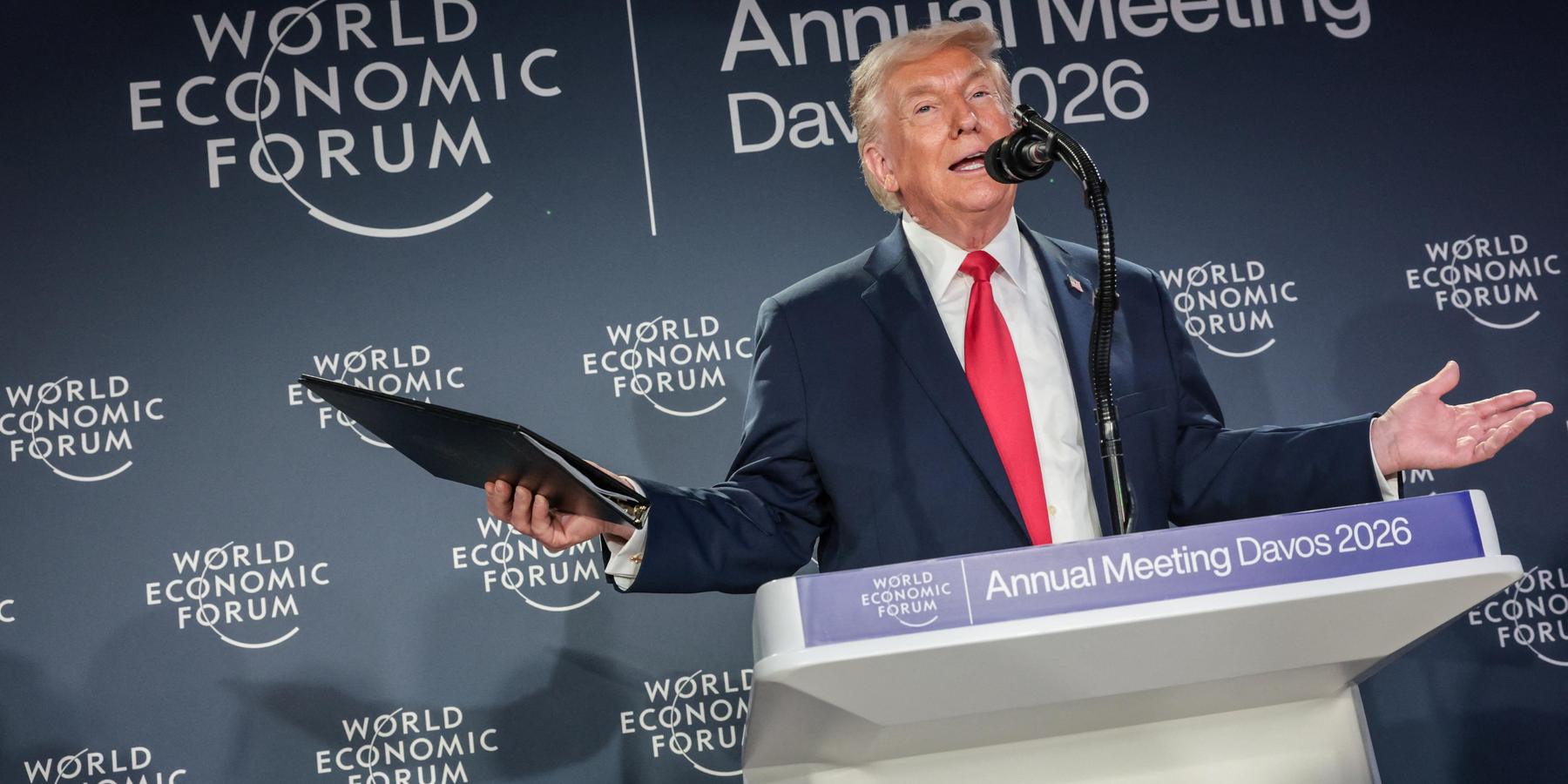
“I rebuilt the military in my first term and continue to do so today. We have a budget of $1.5 trillion,” claimed President Donald Trump in a provocative, meandering, and at times outright baffling speech at the Davos Economic Forum today.

While fact-checkers eviscerated scores of Trump’s misleading statements in the speech, this $1.5 trillion military budget claim went largely uncontested. Yet, this would seemingly have been one of the easiest myths to debunk. After all, the Pentagon currently has a trillion dollar budget (wow, someone should really write a book about that!) and it was just two weeks ago that Trump announced, via Truth Social post, that he’d be seeking (read: did not currently have) a $1.5 trillion military budget.

Critics, myself included, pointed out the enormous amount of taxpayer money this would waste, while doing little, if anything, to make the average American any safer. At the very least, it would contribute $5.8 trillion over the next ten years to the already skyrocketing U.S. national debt, according to the Committee for a Responsible Federal Budget.

But, there’s another way of looking at the numbers, and, from this point-of-view, Trump is absolutely right — the U.S. is already spending more than $1.5 trillion on defense. The fact is that most Americans —and even most foreign policy wonks — grossly undercount the amount of money our government spends on the national security state. This is precisely what some of the most ardent critics of wasteful U.S. military spending have been arguing for years.

For example in 2024, Winslow Wheeler, who previously analyzed the budget process for both parties in the Senate and at the Government Accountability Office, put the “real” national security budget closer to $2 trillion dollars, when including things like veterans care and defense spending’s impact on the national debt. By a similar accounting, the Institute for Policy Studies found that nearly two-thirds of the entire federal government’s discretionary budget — which doesn’t include big-ticket items like Social Security and Medicare/Medicaid — is spent on militarism and war.

Using today’s budget figures and this more accurate accounting of “defense” spending, it’s very easy to prove Trump right. Outside of the trillion dollar defense budget, even if you only add in what we spent in 2025 on clearly national security focused agencies — like the Department of Veterans Affairs ($401 billion), the Department of Homeland Security ($111 billion), and the Director of National Intelligence ($73 billion) — you arrive at a nearly $1.6 trillion budget for U.S. national security.

So, Mr. President, you were right — the U.S. already has a national security budget well above $1.5 trillion dollars. Congratulations! Now there is no need to give any additional taxpayer dollars to a Pentagon bureaucracy that has never once passed a full financial audit, right?...Right?


Top photo credit: U.S. President Donald Trump speaks during a reception with business leaders, at the 56th annual World Economic Forum (WEF), in Davos, Switzerland, January 21, 2026. REUTERS/Jonathan Ernst
google cta
Analysis | QiOSK
America First
Top photo credit: Gemini AI

The death of 'America First'

Washington Politics

In 2019, John Bolton described how he defined “America First."

"The idea that actually protecting America was the highest priority,” he said. A fair, though vague, point by one of the most hawkish men in Washington at the time.

keep readingShow less
nuclear weapons testing
A mushroom cloud expands over the Bikini Atoll during a U.S. nuclear weapons test in 1946. (Shutterstock/ Everett Collection)

Nuke treaty loss a 'colossal' failure that could lead to nuclear arms race

Global Crises

On February 13th, 2025, President Trump said something few expected to hear. He said, “There's no reason for us to be building brand-new nuclear weapons. We already have so many. . . You could destroy the world 50 times over, 100 times over. And here we are building new nuclear weapons . . . We’re all spending a lot of money that we could be spending on other things that are actually, hopefully, much more productive.”

I could not agree more with that statement. But with today’s expiration of the New START Treaty, we face the very real possibility of a new nuclear arms race — something that, to my knowledge, neither the President, Vice President, nor any other senior U.S. official has meaningfully discussed.

keep readingShow less
Witkoff Kushner Trump
Top image credit: U.S. Special Envoy Steve Witkoff looks on during a meeting with U.S. President Donald Trump and Israeli Prime Minister Benjamin Netanyahu, at Trump's Mar-a-Lago club in Palm Beach, Florida, U.S., December 29, 2025. REUTERS/Jonathan Ernst

As US-Iran talks resume, will Israel play spoiler (again)?

Middle East

This Friday, the latest chapter in the long, fraught history of U.S.-Iran negotiations will take place in Oman. Iran’s foreign minister Abbas Araghchi and President Trump’s Special Envoy Steve Witkoff will meet in an effort to stave off a war between the U.S. and Iran.

The negotiations were originally planned as a multilateral forum in Istanbul, with an array of regional Arab and Muslim countries present, apart from the U.S. and Iran — Turkey, Qatar, Oman, and Saudi Arabia.

keep readingShow less
google cta
Want more of our stories on Google?
Click here to make us a Preferred Source.

LATEST

QIOSK

Newsletter

Subscribe now to our weekly round-up and don't miss a beat with your favorite RS contributors and reporters, as well as staff analysis, opinion, and news promoting a positive, non-partisan vision of U.S. foreign policy.