

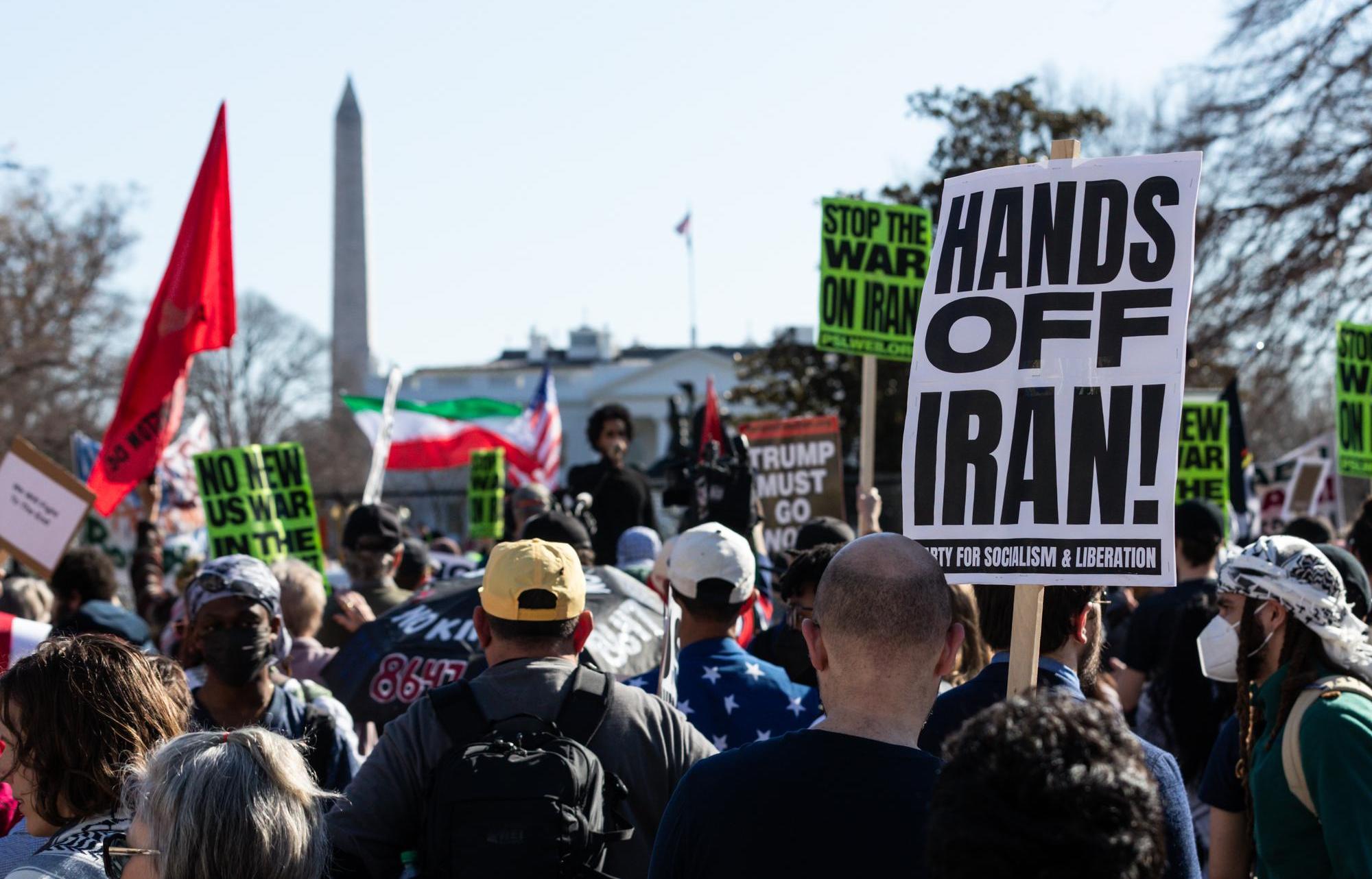
Now that President Trump has launched an illegal, unprovoked war of choice on Iran, the next question inevitably becomes: how does this end? Or, what are some off ramps Trump can take to end it before the situation turns out of control?
There are three broad scenarios; the first and most likely is that Trump continues this until he gets some sort of regime implosion and then declares victory, while also washing his hands of whatever follows.
This has been very clear in internal conversations: no one wants to take responsibility for the aftermath. This is essentially the difference between regime change and regime collapse.
That’s why they didn’t want to do an Iraq War-style regime change where you are actively trying to install a new government. If you do that, its track record becomes your track record.
Indeed, if the U.S.manages to kill a lot of the different leaders of the current system, there could be some sort of an implosion. Trump could declare victory even though you would likely have in that case severe instability, or potentially civil war.
Another scenario is that the Iranians continue to strike back and outlast Trump. The Iranian onslaught would start to become too costly for the United States with casualty rates increasing (possibly even on the American side), inflation worsens, and global markets become destabilized.
And then the pressure on Trump internationally, from the American public, and from his own base would start to become so strong that he would have to look for an exit.
At that point, he may actually take the deal that was on the table: a deal that is better than what Barack Obama managed to secure, and that Trump nevertheless rejected. He may take that and suddenly declare it a victory, saying: “Thanks to my bombing campaign, we achieved this.”
There is also a third scenario, that is the least likely, in which after a couple of rounds of attacks, both sides may feel they can go back to the negotiating table.
They might even go back to the same agreement that was on the table during the most recent talks. And both sides could frame that as a win. Trump can claim he bombed Iran and was very successful. The Iranians can claim they struck back and were very successful. And then they come to some sort of agreement.
However that would be difficult because there’s now absolutely no trust between the U.S. and Iran.
But even if they did come to some form of agreement, it would be extremely difficult to implement, it would likely not endure, and it wouldn’t be anything more than essentially a ceasefire with a pretense of having a deal beyond that.
Meanwhile, Israel’s interest is in pushing the narrative that the negotiations were a ruse from the outset, and that this attack was already planned — because that narrative destroys America’s credibility as a diplomatic force, as a negotiator.
And the more you push the narrative that diplomacy was a lie from the outset, the more easily you can avoid any future negotiations.
I’m not convinced it really was a ruse from the beginning. There were elements in the U.S. government who were sincere about the diplomatic path, but ultimately Trump fell for the type of pressure that he has proven himself to be far too susceptible to.
None of that makes what happened forgivable. It doesn’t make it legal. It doesn’t make it strategic. But we do have to recognize this: nothing would serve Israeli interests more than to completely destroy America’s credibility as a negotiating partner.
This article was adapted from Trita Parsi’s remarks during an appearance on Breaking Points.- Trump’s demand for Iran's surrender will only guarantee war ›
- No, even a 'small attack' on Iran will lead to war ›
- Three U.S. service members killed in 'Operation Epic Fury': CENTCOM | Responsible Statecraft ›
- Symposium: What happens after Iran's sudden 'decapitation' | Responsible Statecraft ›
- Trump's ill-fated attempt to copy Israel's 'mowing the grass' strategy | Responsible Statecraft ›
- Senior US official resigns in protest of Iran war ›