

In the months that led up to the Iraq War, the Bush administration went to extraordinary lengths to convince the world of the need to oust Iraqi dictator Saddam Hussein. Leading officials laid out their case in public, sharing what they claimed was evidence that Iraq was moving rapidly toward the deployment of chemical, biological and nuclear weapons. When U.S. tanks rolled across the border, everyone knew the justification: the U.S. was determined to thwart Iraq’s development of weapons of mass destruction, however fictitious that threat would later prove to be.
In the months that led up to the Iran War, the Trump administration took a different tack. President Trump spoke only occasionally of Iran, offering a smattering of justifications for growing U.S. tensions with the country. He claimed without evidence that Iran was rebuilding its nuclear program after the U.S.-Israeli attack last June and even developing missiles that could strike the United States. But he insisted that Tehran could make a deal with seven magic words: “we will never have a nuclear weapon.”
It has now been a day since the U.S. and Israel launched a bombing campaign aimed at overthrowing the Iranian regime. Iranian Supreme Leader Ali Khamenei is dead, as are many of his highest-ranking deputies. Iran sits at its most significant historical turning point since the revolution of 1979.
Yet the reasons behind the extraordinary turn of events remain unclear. So why, exactly, did the administration launch a regime change war in Iran? For Harrison Berger of the American Conservative, the answer is clear: because Israel wanted it to. “There's nothing about this that was done on behalf of the United States,” Berger said during a Sunday panel sponsored by J Street, a progressive pro-Israel organization. “This was all on behalf of Israel.”
The arguments for war amount to “putting Israel first,” Berger argued, saying that Iranian missiles pose no direct threat to the U.S. Multiple non-nuclear-weapon states have civilian enrichment programs, he added, but the U.S. only demands an end to the civilian program in Iran. “The only reason we hear that Iran's nuclear program is a threat to the United States is to provide a pretext for the war that we're now doing,” he said.
Most Americans oppose war with Iran, but pro-Israel media figures like David Ellison or “oligarchs” like Trump megadonor Miriam Adelson pushed the administration to embrace the conflict, Berger argued. “That's why we're seeing this action.”
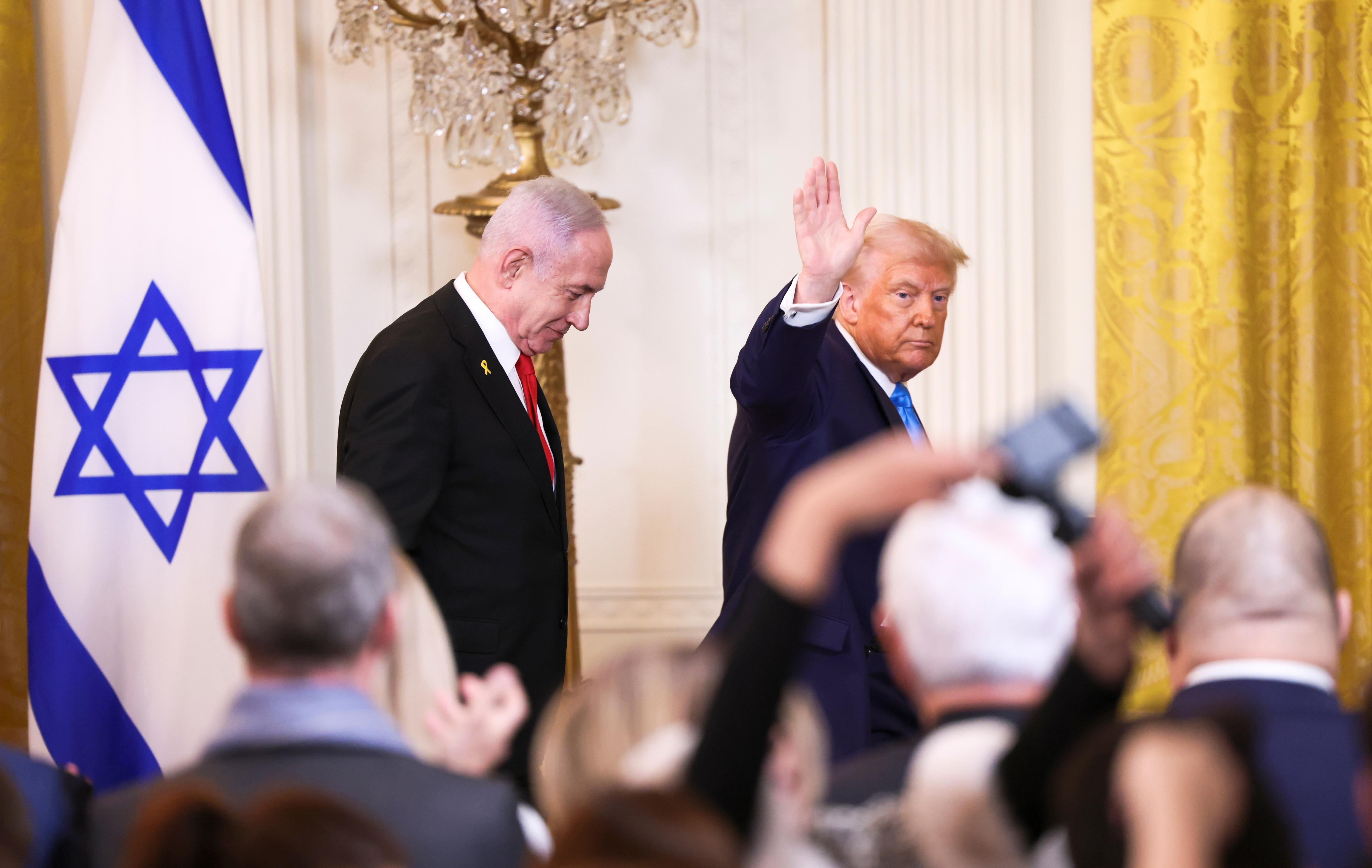
Bolstering this case is a recent piece from the Washington Post, which reported that Israeli and Saudi officials led “a weeks-long lobbying effort” to persuade Trump to launch the war. Israeli Prime Minister Benjamin Netanyahu gestured at this himself when he said Sunday that, by attacking Iran, Trump has helped accomplish “what I have yearned to do for 40 years.”
But pinning all the blame on Israel “kind of lets the U.S. off the hook,” argued Matt Duss, the executive vice president of the Center for International Policy and a former adviser to Sen. Bernie Sanders (I-Vt.). For Duss, the real problem is a “faction in the United States and in Israel that share a vision of a U.S.-Israel relationship that supports continuing U.S. military hegemony in the Middle East.” This group “sees Israel as essentially the U.S.'s sheriff in the region,” he said.
Speaking to RS after the panel, Duss acknowledged that “Israel's concern about the ballistic missiles” was the proximate cause for the attack. “They don't threaten the U.S.; they threaten Israel,” he said. “But I think just putting it all on Israel is analytically wrong.”
Amy Rutkin, a former adviser to Rep. Jerrold Nadler (D-N.Y.), put it in starker terms. While Democrats are right to oppose the war, “it is super dangerous for anybody to suggest, no offense, that Iran didn't present a material threat,” Rutkin said. “We are deeply vulnerable to Republican attacks when we don’t talk about that.”
This debate will take on increased importance in the coming days as Congress debates whether to rein in Trump’s military campaign through a war powers resolution. Republicans largely appear opposed to the resolution, while most Democrats have expressed support for it.
But some Democratic lawmakers, including House Minority Leader Hakeem Jeffries, have kept open the possibility that they will back the war if Trump can provide a clear rationale for it based on U.S. interests. Given the razor thin margins in both houses, these members could decide whether the war powers resolution fails.
Sen. Chris Van Hollen (D-Md.) made the case for why Democrats should oppose the war in a speech at J Street’s conference on Sunday morning. “We should not be sending Americans to war for the political ambitions of [Israeli] Prime Minister [Benjamin] Netanyahu and the Saudi crown prince,” Van Hollen said.
“President Trump put American lives at risk and lost American lives on this huge roll of the dice,” he continued. “Americans are dying and people need to be held accountable for their votes for this war of choice.”
- Israel is luring the US into a trap ›
- Israel's war on Iran broke the nuclear non-proliferation treaty ›
- Symposium: What happens after Iran's sudden 'decapitation' | Responsible Statecraft ›
- How Maduro overthrow was key node in US-Israeli war on Iran | Responsible Statecraft ›
- Senate unable to halt Trump’s war on Iran ›
- How decapitation could lead to 'dismembering' of the Iranian state ›
- Senior US official resigns in protest of Iran war ›
- Dems push Trump to acknowledge Israeli nukes | Responsible Statecraft ›
- Ex-CENTCOM chief to give keynote at lavish Israeli-American gala | Responsible Statecraft ›
- Sen. Van Hollen: Iran war is illegal and we cannot fund another dime | Responsible Statecraft ›