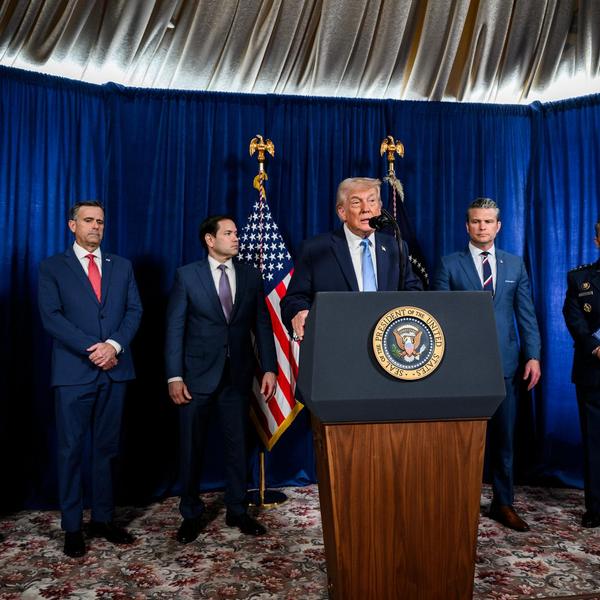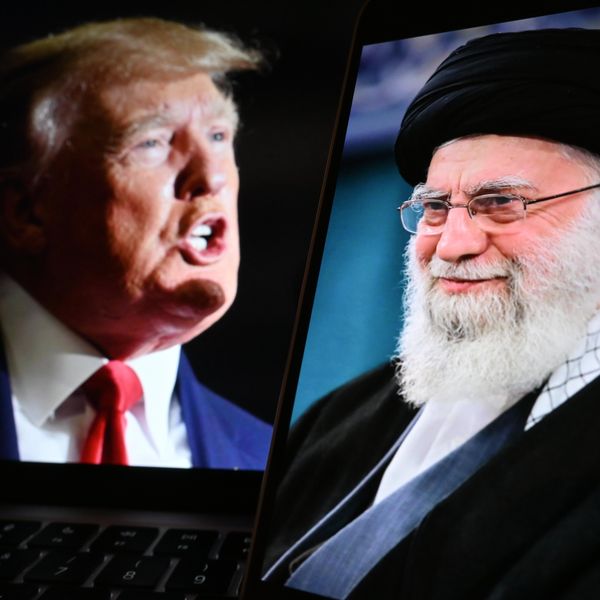
President Donald Trump’s October 29 announcement that the United States will restart nuclear weapons testing after more than 30 years marks a dangerous turning point in international security.
The decision lacks technical justification and appears solely driven by geopolitical posturing.
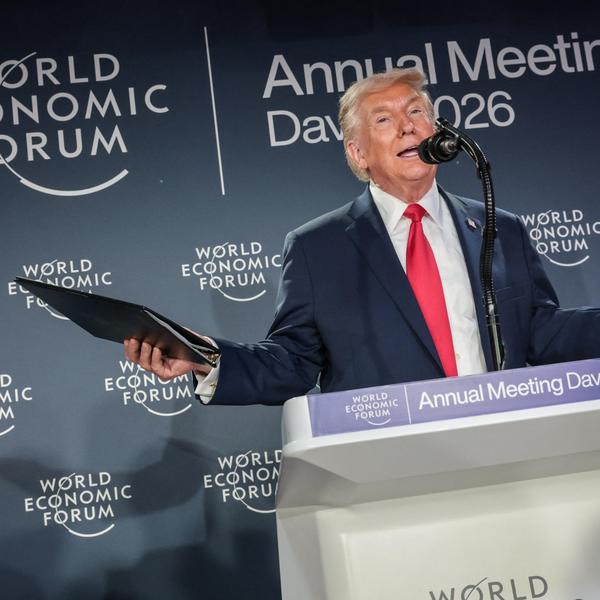
Trump’s declaration comes after months of nuclear threats. The president ordered the moving of nuclear submarines to Russia’s shores back in August and again in October 2025. Just hours before meeting with Chinese President Xi Jinping in South Korea, Trump declared that “because of other countries testing programs, I have instructed the Department of War to start testing our Nuclear Weapons on an equal basis.”
It is not clear what he means, since other countries are not nuclear testing, but if the U.S. goes forward with it, such testing would end a moratorium that has been in place since 1992. There is also a question about whether he is calling for the resumption of nuclear explosive testing (conducted by the Department of Energy) or testing nuclear-capable weapons (conducted by the Pentagon).
Nevertheless the decision would threaten continued strategic stability and risks triggering a disastrous arms race.
Responding to Russia
Trump’s announcement follows Russia’s October 21 test of the Burevestnik nuclear-powered cruise missile in the Novaya Zemlya archipelago in the Arctic. According to Russia’s Chief of General Staff Valery Gerasimov, the missile was airborne for 15 hours and traveled 14,000 kilometers.
This context of the Russian test is crucial, but Russia did not detonate a nuclear weapon. This test, like Russia’s the test of the Poseidon nuclear-powered torpedo a week later, involved nuclear-powered delivery systems, and are considered nuclear-capable, but do not constitute a nuclear weapons test. Russia hasn’t conducted a nuclear weapons test since 1990. While these new delivery systems are worrying, they do not constitute a resumption of nuclear testing of the kind that Trump now proposes.
The timing of President Trump’s announcement could not be worse for nuclear arms control. The New Strategic Arms Reduction Treaty (New START), the last agreement limiting U.S. and Russian nuclear weapons, expires in February 2026. For over a decade, New START has kept a cap on deployed warheads and compelled both sides to transparency through data exchanges and inspections. If this agreement expires, there would be no binding limits on the two countries’ nuclear arsenals.
Russian President Vladimir Putin said in September 2025 that Moscow would be willing to extend New START’s quantitative limits for a year, as long as Washington reciprocates and “does not take steps that undermine or violate the existing balance of deterrence potentials.” President Trump called Putin’s proposal “a good idea.” Now, with this move to resume testing, Trump is threatening the global nuclear balance.
Russia will not take this lightly. Russian Deputy Foreign Minister Sergey Ryabkov warned in October 2025 that “if a country with the capability makes the erroneous decision to conduct nuclear tests, and Washington is clearly in our focus, then we will retaliate immediately.” Putin echoed the same sentiment that Moscow would respond to nuclear tests.
Signaling to China
China has been building up its nuclear arsenal, doubling from about 300 warheads in 2020 to around 600 in 2025. Beijing’s proposed 15th Five Year Plan links deterrence to “global strategic balance and stability.” However, Beijing hasn’t tested a nuclear weapon since 1996. China’s 2025 Victory Day parade rolled out five missile systems that could hit the U.S. mainland. American analysts believe China could have over 1,000 warheads by 2030. Still, growing the arsenal and upgrading missiles isn’t the same as explosive nuclear testing.
China maintains that it won’t break its moratorium on nuclear tests and supports the Comprehensive Nuclear-Test-Ban Treaty, even though it hasn’t ratified it. In October 2025, China’s Foreign Ministry spokesperson Guo Jiakun called China a “responsible nuclear-armed state” and reaffirmed the pledge. Now, Trump’s decision puts China in a tight spot: stick to restraint while the U.S. challenges international norms or initiate its own testing program to keep up.
The need for restraint and diplomacy
Trump’s move looks like another round of “escalate to deescalate”: the idea that ramping up the threat forces rivals to come to the table on U.S. terms. However, resuming nuclear testing isn’t just a bargaining chip. It’s a gamble that risks undoing decades of restraint, and the world could be a lot less stable because of it.
Bringing back nuclear weapons testing appears to be aimed at bringing Russia and China to the negotiation table for a trilateral arms control agreement, something Trump keeps pushing for. However, Beijing has argued that its nuclear stockpile is way too small to be part of any trilateral arms control deal.
Crucially, this decision runs counter to the principles of restraint and diplomacy. Instead of using America’s overwhelming advantage in conventional military power and nuclear deterrence to push for diplomatic negotiations, the administration seems set on flexing its muscles. A restraint-based foreign policy would instead focus on reducing nuclear dangers through diplomacy, maintaining the taboo against nuclear use, and building verification regimes.
The U.S. maintains approximately 5,177 nuclear warheads, second only to Russia’s 5,459. China has just 600. Moreover, American scientists can now use advanced computer modeling to check if the bombs still work without explosive testing. So, there’s no technical reason to start testing again. Restarting nuclear tests now would almost definitely push Russia and China to do the same. Other nuclear-armed states might follow. It may also provide states that aspire to nuclear-armed status justification to develop their own nuclear weapons programs.
The test of President Trump’s “escalate to deescalate” approach will come in the months ahead. If Russia and China answer with their own tests, nuclear restraint could go out the window. What follows isn’t just another arms race. It’s something more complex, riskier, and a whole lot more dangerous than the Cold War, a competition that nearly ended humanity.
- Why aren't Harris and Trump talking about nuclear weapons? ›
- Trump on New Start nuke treaty with Russia: if 'it expires it expires' | Responsible Statecraft ›