
Follow us on social

google cta
Africa trade

House passes sweeping ‘duty free’ pact for African imports

This is one of those rare measures in which the Trump administration is supporting tax breaks, not tariffs, for the Global South

Reporting | QiOSK
google cta
google cta

Yesterday, the House of Representatives passed a bill that would extend the African Growth and Opportunity Act (AGOA) for three years, through the end of 2028. Known as the AGOA Extension Act, the bill was introduced in the House by Representative Jason Smith (R-Mo.) in early December. It passed the House with wide bipartisan support, with 340 members voting in favor and 54 opposed.

AGOA — a preferential trade agreement between the United States and certain eligible countries in sub-Saharan Africa — allows over 1,800 products from these countries to enter the United States duty free, including in the leading African export industries of textiles and oil. It was last renewed in 2015 for 10 years, and expired at the end of September 2025.

The bill, which would offer qualifying products that have been imported since AGOA’s expiration retroactive tariff benefits, now heads to the Senate. If passed there, it will arrive at President Trump's desk for him to sign into law. Although the president has largely opposed free and preferential trade deals that provide tariff benefits for non-Americans, the president has come out in support of short-term AGOA renewal while debates take place over the agreement’s details and its long-term future.

Smith’s bill was the second of two introduced last year seeking to extend AGOA. The other was introduced by Senator John Kennedy (R-La). Though mostly similar to Smith’s bill, Kennedy’s included a provision that would mandate a review of the United States’ bilateral relationship with South Africa. This follows on last year’s rift between President Trump and South African President Cyril Ramaphosa, during which Trump accused the South African government of expropriating land from white South Africans without fair compensation as well as failing to stop a genocide against the country’s white population, for which there is no evidence.

Originally passed by Congress in 2000 and signed into law by President Clinton, AGOA’s success has been debated in recent years amid questions about what an AGOA renewal should look like, or even if it should be renewed at all. The preferential trade deal has largely failed to meet the heavy expectations placed upon it in its early years, evinced in part by the fact that exports from Africa to the United States have failed to increase substantially in the two-and-a-half decades since the agreement’s inception.

But AGOA remains the United States’ most visible effort to support Africa’s economic goals. In a world of great power competition, with the Chinese investing heavily in China’s trade and infrastructure development, losing AGOA would signal further American retreat from a continent questioning the United States’ commitment as a partner. Since Trump took office, he has frustrated many Africans by shuttering the United States Agency for International Development, implementing widespread tariffs (some of which apply to goods that would otherwise enter the U.S. duty free through AGOA), and instituting a travel ban, which bans or restricts travel to the United States from 26 African countries.


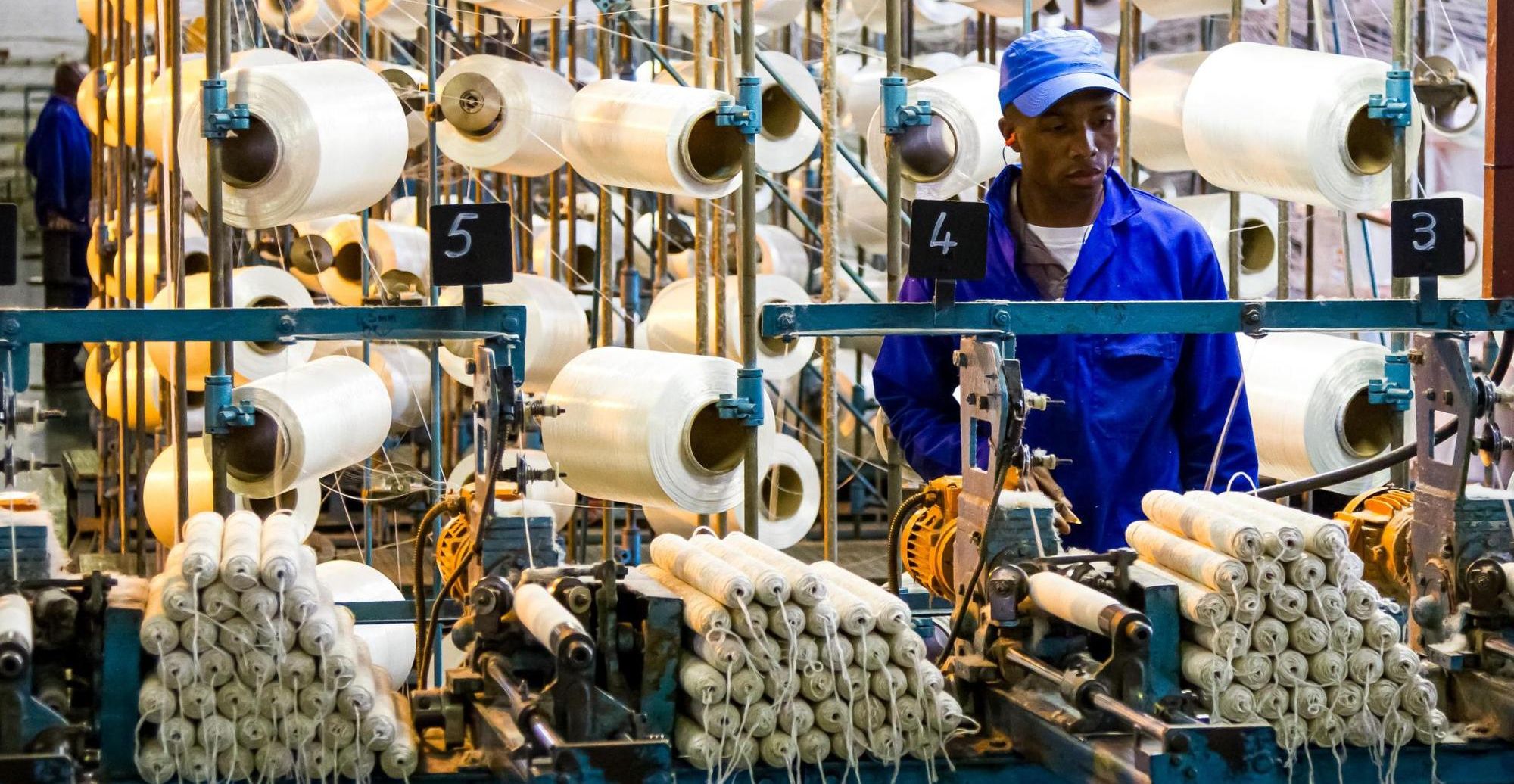
Top photo credit: Factory worker on a copwinder weft assembly line loom in South Africa. (shutterstock/sunshine seeds)
google cta
Reporting | QiOSK
G7 Summit
Top photo credit: May 21, 2023, Hiroshima, Hiroshima, Japan: (From R to L) Comoros' President Azali Assoumani, World Trade Organization (WTO) Director-General Ngozi Okonjo-Iweala, Australia's Prime Minister Anthony Albanese and India's Prime Minister Narendra Modi at the G7 summit in Hiroshima, Japan. (Credit Image: © POOL via ZUMA Press Wire)

Middle Powers are setting the table so they won't be 'on the menu'

Asia-Pacific

The global order was already fragmenting before Donald Trump returned to the White House. But the upended “rules” of global economic and foreign policies have now reached a point of no return.

What has changed is not direction, but speed. Canadian Prime Minister Mark Carney’s remarks in Davos last month — “Middle powers must act together, because if we’re not at the table, we’re on the menu” — captured the consequences of not acting quickly. And Carney is not alone in those fears.

keep readingShow less
Vice President JD Vance Azerbaijan Armenia
U.S. Vice President JD Vance gets out of a car before boarding Air Force Two upon departure for Azerbaijan, at Zvartnots International Airport in Yerevan, Armenia, February 10, 2026. REUTERS/Kevin Lamarque/Pool

VP Vance’s timely TRIPP to the South Caucasus

Washington Politics

Vice President JD Vance’s regional tour to Armenia and Azerbaijan this week — the highest level visit by an American official to the South Caucasus since Vice President Joe Biden went to Georgia in 2009 — demonstrates that Washington is not ignoring Yerevan and Baku and is taking an active role in their normalization process.

Vance’s stop in Armenia included an announcement that Yerevan has procured $11 million in U.S. defense systems — a first — in particular Shield AI’s V-BAT, an ISR unmanned aircraft system. It was also announced that the second stage of a groundbreaking AI supercomputer project led by Firebird, a U.S.-based AI cloud and infrastructure company, would commence after having secured American licensing for the sale and delivery of an additional 41,000 NVIDIA GB300 graphics processing units.

keep readingShow less
United Nations
Monitors at the United Nations General Assembly hall display the results of a vote on a resolution condemning the annexation of parts of Ukraine by Russia, amid Russia's invasion of Ukraine, at the United Nations Headquarters in New York City, New York, U.S., October 12, 2022. REUTERS/David 'Dee' Delgado||

We're burying the rules based order. But what's next?

Global Crises

In a Davos speech widely praised for its intellectual rigor and willingness to confront established truths, Canadian Prime Minister Mark Carney finally laid the fiction of the “rules-based international order” to rest.

The “rules-based order” — or RBIO — was never a neutral description of the post-World War II system of international law and multilateral institutions. Rather, it was a discourse born out of insecurity over the West’s decline and unwillingness to share power. Aimed at preserving the power structures of the past by shaping the norms and standards of the future, the RBIO was invariably something that needed to be “defended” against those who were accused of opposing it, rather than an inclusive system that governed relations between all states.

keep readingShow less
google cta
Want more of our stories on Google?
Click here to make us a Preferred Source.

LATEST

QIOSK

Newsletter

Subscribe now to our weekly round-up and don't miss a beat with your favorite RS contributors and reporters, as well as staff analysis, opinion, and news promoting a positive, non-partisan vision of U.S. foreign policy.