
Follow us on social

google cta
AI chips china USA

Bipartisan outrage after Trump greenlights Nvidia chips to China

Today’s announcement came as lawmakers were meeting to discuss how Beijing's AI progress was a threat to US national security


Reporting | QiOSK
google cta
google cta

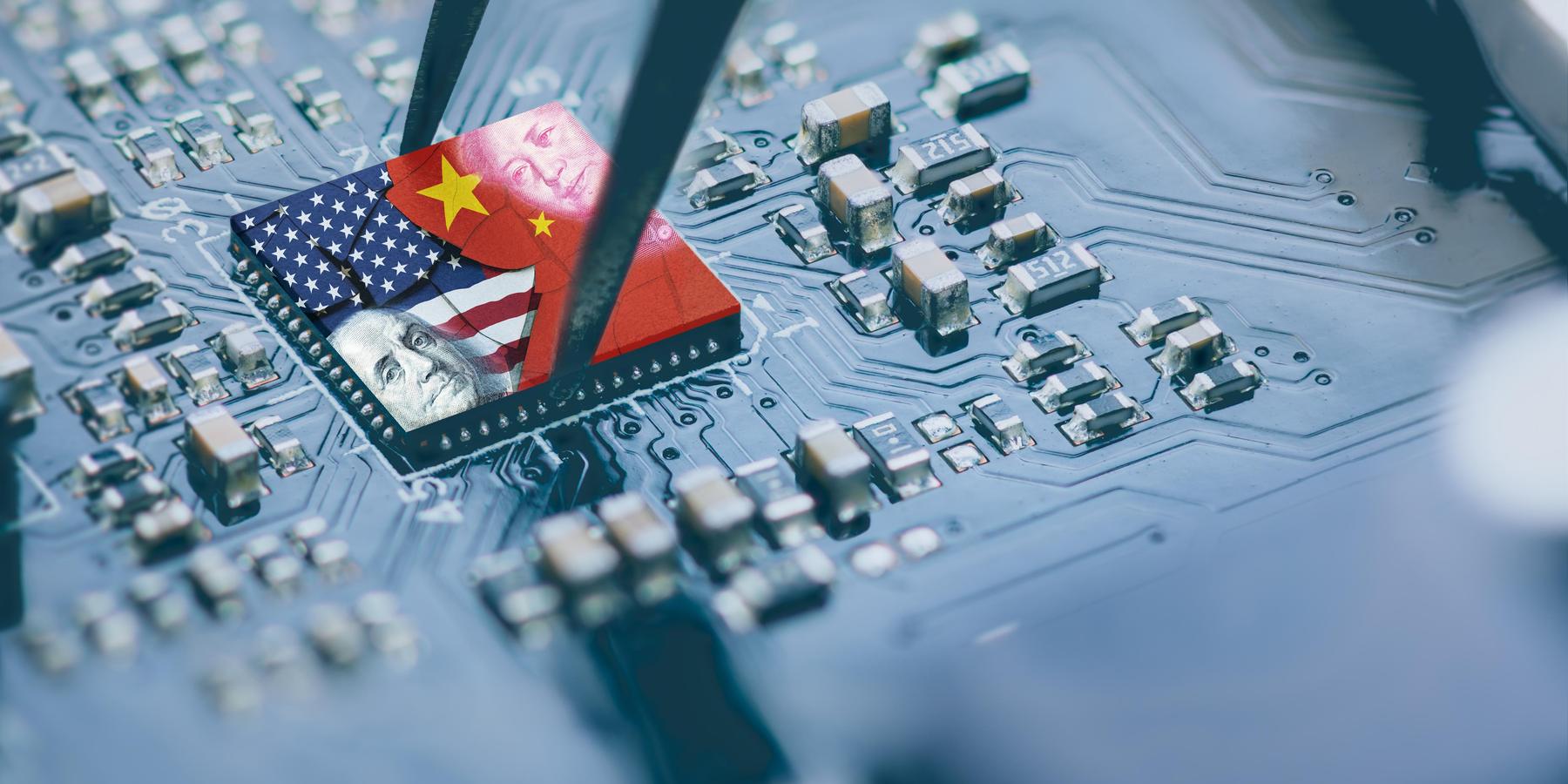
With no little irony, the Trump administration announced late yesterday that it had approved Nvidia H200 chip exports to China, which are essential to China’s AI programs — just before the House Committee on Foreign Affairs held a hearing about the danger of China's AI advancements to U.S. national security.

The hearing discussed the necessity of winning the AI arms race against China and the imminent threats that would be sure to follow should this race be lost.

“The stakes could not be higher,” Rep. Andy Barr (R-Ky.) told the hearing. “Whoever wins the artificial intelligence race will gain an edge in economic power, military dominance, technological leadership and global influence. This is the defining competition of the century.”

When Trump announced the sales last month, he said they would be exported to China "under conditions that allow for continued strong National Security,” but many are wondering if that is truly the case.

Defense Secretary Pete Hegseth, while announcing a new AI Acceleration Strategy earlier this month, said that AI will redefine the character of war over the next decade. Meanwhile, a former White House and Commerce Department official acknowledged to the Financial Times that access to this chip would allow China to take great strides in an already tight race.

“Unfettered access to the H200 would allow China to build frontier-scale AI supercomputers to develop the most powerful AI systems, just at a moderately higher cost relative to cutting-edge Blackwell chips,” the official told the Financial Times. “It would also arm Chinese cloud providers to compete globally with US hyperscalers.”

With today’s announcement, safety measures that had not been previously established were also released, including requirements that chips be reviewed by a third-party testing lab to confirm their technical AI capabilities before being shipped, and regulations that ensure China cannot receive more than 50% of the total amount of chips sold to American customers.

Chinese customers purchasing the chips will also need to demonstrate "sufficient security procedures" and will be barred from using the chips for military purposes.

Still, there are questions of whether these conditions will stop the so-called most consequential arms race in recent history.

“The outcome of this race directly affects military competitiveness of the United States of America versus China,” said Rep. Brian Mast (R-Fla), who chaired the hearing. “It is that black and white, and because AI works to improve other AI, this is a very unique race where the further you get ahead, the further you get ahead.”

Many lawmakers, including those in attendance at the hearing, expressed confusion and outrage about this move by Trump. Rep. Gabe Amo (D-R.I.) said at the hearing that the approval of sales will “empower China” and “handicap the United State’s AI superiority.”

“He's sabotaging our national security by auctioning off our most advanced technology to the highest bidder, and his aggression towards Venezuela and Greenland is creating a dangerous permission structure for Chinese and Russian aggression towards Taiwan and Ukraine,” Amo said.


Top photo credit: (William Potter/Shutterstock)
google cta
Reporting | QiOSK
G7 Summit
Top photo credit: May 21, 2023, Hiroshima, Hiroshima, Japan: (From R to L) Comoros' President Azali Assoumani, World Trade Organization (WTO) Director-General Ngozi Okonjo-Iweala, Australia's Prime Minister Anthony Albanese and India's Prime Minister Narendra Modi at the G7 summit in Hiroshima, Japan. (Credit Image: © POOL via ZUMA Press Wire)

Middle Powers are setting the table so they won't be 'on the menu'

Asia-Pacific

The global order was already fragmenting before Donald Trump returned to the White House. But the upended “rules” of global economic and foreign policies have now reached a point of no return.

What has changed is not direction, but speed. Canadian Prime Minister Mark Carney’s remarks in Davos last month — “Middle powers must act together, because if we’re not at the table, we’re on the menu” — captured the consequences of not acting quickly. And Carney is not alone in those fears.

keep readingShow less
Vice President JD Vance Azerbaijan Armenia
U.S. Vice President JD Vance gets out of a car before boarding Air Force Two upon departure for Azerbaijan, at Zvartnots International Airport in Yerevan, Armenia, February 10, 2026. REUTERS/Kevin Lamarque/Pool

VP Vance’s timely TRIPP to the South Caucasus

Washington Politics

Vice President JD Vance’s regional tour to Armenia and Azerbaijan this week — the highest level visit by an American official to the South Caucasus since Vice President Joe Biden went to Georgia in 2009 — demonstrates that Washington is not ignoring Yerevan and Baku and is taking an active role in their normalization process.

Vance’s stop in Armenia included an announcement that Yerevan has procured $11 million in U.S. defense systems — a first — in particular Shield AI’s V-BAT, an ISR unmanned aircraft system. It was also announced that the second stage of a groundbreaking AI supercomputer project led by Firebird, a U.S.-based AI cloud and infrastructure company, would commence after having secured American licensing for the sale and delivery of an additional 41,000 NVIDIA GB300 graphics processing units.

keep readingShow less
United Nations
Monitors at the United Nations General Assembly hall display the results of a vote on a resolution condemning the annexation of parts of Ukraine by Russia, amid Russia's invasion of Ukraine, at the United Nations Headquarters in New York City, New York, U.S., October 12, 2022. REUTERS/David 'Dee' Delgado||

We're burying the rules based order. But what's next?

Global Crises

In a Davos speech widely praised for its intellectual rigor and willingness to confront established truths, Canadian Prime Minister Mark Carney finally laid the fiction of the “rules-based international order” to rest.

The “rules-based order” — or RBIO — was never a neutral description of the post-World War II system of international law and multilateral institutions. Rather, it was a discourse born out of insecurity over the West’s decline and unwillingness to share power. Aimed at preserving the power structures of the past by shaping the norms and standards of the future, the RBIO was invariably something that needed to be “defended” against those who were accused of opposing it, rather than an inclusive system that governed relations between all states.

keep readingShow less
google cta
Want more of our stories on Google?
Click here to make us a Preferred Source.

LATEST

QIOSK

Newsletter

Subscribe now to our weekly round-up and don't miss a beat with your favorite RS contributors and reporters, as well as staff analysis, opinion, and news promoting a positive, non-partisan vision of U.S. foreign policy.