

In a Davos speech widely praised for its intellectual rigor and willingness to confront established truths, Canadian Prime Minister Mark Carney finally laid the fiction of the “rules-based international order” to rest.
The “rules-based order” — or RBIO — was never a neutral description of the post-World War II system of international law and multilateral institutions. Rather, it was a discourse born out of insecurity over the West’s decline and unwillingness to share power. Aimed at preserving the power structures of the past by shaping the norms and standards of the future, the RBIO was invariably something that needed to be “defended” against those who were accused of opposing it, rather than an inclusive system that governed relations between all states.
Burying the false RBIO narrative is an important first step. It can temper the trend toward bloc formation and de-emphasize the counterproductive “democracies vs. autocracies” discourse of recent years — something that was never an accurate description of the emerging global political landscape to begin with. But this only provides a short-term fix. Discarding the RBIO should not be used as an excuse for gradually moving away from the law-centered multilateral system for which there is no comprehensive replacement.
As great power rivalry has deepened over the past decade, international law and global cooperation have suffered. If Carney’s speech serves to build momentum for a middle-power coalition dedicated to renewing and reforming multilateralism, then this would be extremely welcome. But if the purpose of this coalition is merely to pool resources to better survive an uncertain world, then we will not have fundamentally deviated from the current path toward the law of the jungle.
Carney’s remarks provide some cause for optimism. He called for Western states to act consistently by applying “the same standards to allies and rivals.” This may signal a renewed commitment to upholding international law, assuaging fears that retiring the RBIO discourse will not serve as an excuse to pursue cynical pragmatism. Carney also argued against building a “world of fortresses” and committed to pursuing forms of international cooperation that include “the vast majority of nations.”
The “fundamental values” that Carney outlined are relatively minimalistic: respect for sovereignty, territorial integrity, and the basic principles concerning the use of force found in the UN Charter. That said, he also gave a nod to human rights and sustainable development, suggesting that the “variable geometry” — or “different coalitions for different issues” — that he called for will not be an excuse to pursue an international order based on mere coexistence rather than shared goals.
Given how often norms surrounding the use of force have been violated since the end of the Cold War, recommitting to respecting them in word and in deed is no small matter. Moreover, after many decades in which Western countries reserved for themselves the right to set the terms of international engagement and even the very standard of civilization, variable geometry can serve as a stabilizing force. In place of lecturing others through megaphone diplomacy, forging ad hoc partnerships with not always likeminded states is the new name of the game.
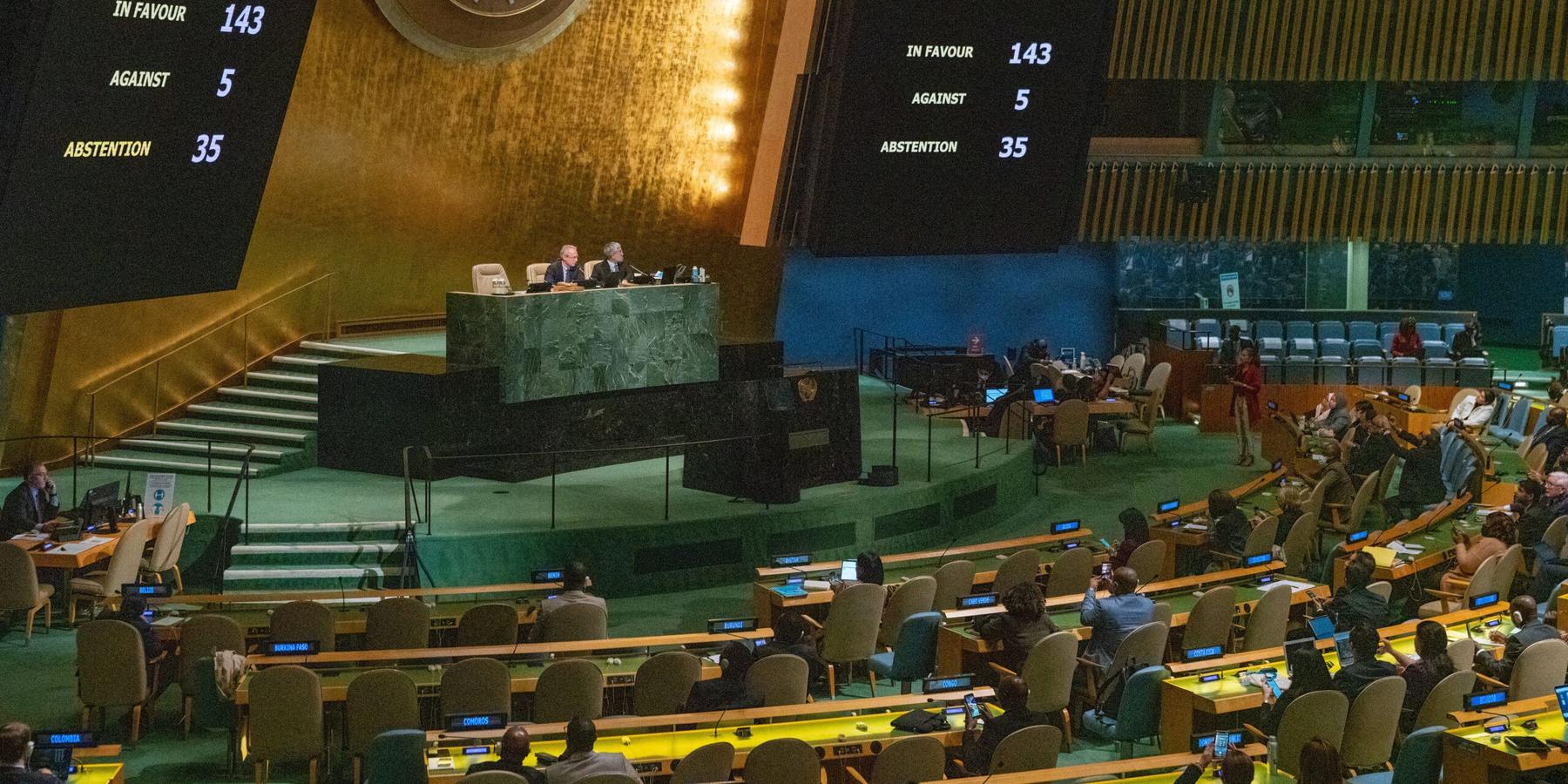
However, one issue that did not feature in Carney’s remarks was multilateral reform. The prime minister asserted that his vision was not “naive multilateralism” and would not rely on “diminished institutions.” But while multilateralism may have been associated with utopia building in the post-Cold War era, for many states today it is a form of realpolitik, providing the platform and protection necessary for them to secure their sovereignty and develop their societies.
Carney’s prescriptions rest on his assertion that “we are in the midst of a rupture, not a transition.” But this is only true if we believe that Western hegemony was synonymous with the postwar international order, which it never fully was.
The Soviet Union and China were among the founding powers of the United Nations. Efforts from Third World countries were responsible for the codification of norms such as human rights and self-determination. Yes, the postwar order has gone through several phases — from confrontation to détente to globalization. But the core institutional architecture of the order, centered on the United Nations, has remained in place, even if powerful actors have sometimes preferred to work around it.
As the “Alliance for Multilateralism” during Donald Trump’s first term demonstrated, rhetorical support for global cooperation cannot, on its own, arrest the trend toward international disorder. If multilateral bodies are not reformed to become more inclusive and effective — if they do not come to resemble the world of the future rather than the world of 1945 — then their legitimacy will decline and their relevance will fade away. And contrary to conventional wisdom, with sufficient creativity and political will, rendering the UN fit for the purpose of ensuring peace and security is in fact possible.
States often shy away from the topic of multilateral reform given the difficult political compromises that are inevitably involved. Reforming critical fora such as the UN Security Council — the premier body tasked with upholding international peace and security — is often viewed as a fool’s errand given the veto power that the P5 countries can exercise over any changes to the UN Charter.
But great power rivalry may actually make multilateral reform more rather than less likely, granted that middle powers form a coalition along the lines called for by Carney. In competition with one another for influence in the Global South, the United States, Russia and China may not wish to be seen as the obstacle to a more inclusive order. And if the influence of the Security Council is allowed to decline, the biggest losers will be the P5 countries that occupy a privileged position on the Council.
Rather than P5 obstructionism, one of the main obstacles to reform has been disagreement among all UN members over whether and how to expand the permanent membership of the Council. Some are wary of a scenario in which the Council becomes even more paralyzed than it is today, or where a regional rival comes to occupy a permanent seat. This could be addressed by creating a pool of countries with longer and recurring terms, aimed at compensating those states that fail to obtain a permanent seat and rendering it easier for smaller countries to get elected to non-permanent ones.
To ensure international stability, great powers will need to establish guardrails in their relations amongst themselves. But middle powers will need to make a substantive contribution of their own. They need to secure global support for a compelling vision of multilateral reform that illustrates how a reinvigorated multilateralism can work — and then rally that coalition together to place strong collective pressure on the great powers to embrace reform.
With so much uncertainty about the future, multi-alignment or “variable geometry” may be prudent statecraft. But successfully hedging your bets also requires saving the law-centered multilateral system rather than allowing it to collapse. Taking down the sign of the “rules-based order,” as Carney described it, is one thing. But little will have been achieved unless it is replaced with a better sign.
- ‘America First’ meets ‘ASEAN Way’ in Kuala Lumpur ›
- Two speeches and a US-Canada crackup at Davos ›
- Middle Powers are setting the table so they won't be 'on the menu' | Responsible Statecraft ›