

Wednesday’s talks between American, Danish, and Greenlandic officials exposed the unbridgeable gulf between President Trump’s territorial ambitions and respect for sovereignty.
Trump now claims the U.S. needs Greenland to support the Golden Dome missile defense initiative. Meanwhile, European leaders are sending a small number of troops to Greenland.
On Wednesday, Vice President J.D. Vance and Secretary of State Marco Rubio sat down with Danish Foreign Minister Lars Løkke Rasmussen and Greenlandic Foreign Minister Vivian Motzfeldt, attempting to find common ground on what has become a surreal crisis.
“There was a fundamental disagreement,” Rasmussen told reporters afterward. Rasmussen said he was unable to change Trump’s position: “It’s clear that the president has this wish of conquering over Greenland.” His Greenlandic counterpart, Vivian Motzfeldt, reiterated her compatriots’ firm stance: “Greenland does not want to be owned by, governed by or part of the United States.”
The meeting, arranged after a week of escalating threats from Trump, was supposed to defuse tensions. Instead, the president is unmoved in his determination to seize Greenland. While the parties agreed to establish a “high-level working group” to continue discussions, this seems to be nothing more than a stalling tactic. The president continues to insist that Greenland must be “in the hands of the U.S…. anything less than that is unacceptable.”
The Golden Dome pretext
With the narrative of “Russian and Chinese ships off the coast” falling apart, the White House has pivoted to a new rationale: the Golden Dome. Trump is now emphasizing that full control of Greenland is “vital” for his proposed multi-layer missile defense system designed to intercept hypersonic and ballistic threats. “NATO should be leading the way for us to get it,” Trump insisted. “IF WE DON’T, RUSSIA OR CHINA WILL, AND THAT IS NOT GOING TO HAPPEN!”
Vice President Vance reinforced this position, arguing that “the entire missile defense infrastructure is partially dependent on Greenland.” While there is no denying the strategic value of the island, the U.S. Space Force already operates the Pituffik Space Base with full radar coverage.
Experts dismiss Trump’s claim that annexation is required for Golden Dome to work, arguing that the existing agreements, specifically the 1951 Greenland Defense Agreement, already permit the project’s expansion and any necessary modernization on the island.
The Golden Dome argument appears to be bureaucratic cover for an ideological desire to expand the map. As Rasmussen pointed out, there is zero evidence of Russian or Chinese interest in colonizing the island, rendering the administration’s preemption argument moot.
The $700 billion question
Rubio has been tasked with coming up with a proposal to purchase Greenland, estimated to cost $700 billion. While Rubio tells Congress that the military threats are merely rhetoric to pressure Denmark, the financial offer is being presented as serious.
Danish Foreign Minister Rasmussen shot down the idea with a stinging rebuke of the American social model: “There’s no way that the U.S. will pay for a Scandinavian welfare system and Greenland,” said Rasmussen. “You haven’t introduced a Scandinavian welfare system in your own country.”
Greenland’s answer is just as firm. Prime Minister Jens-Frederik Nielsen stated Tuesday, “We choose Denmark. We choose NATO, the Kingdom of Denmark and the EU.” The 34-year old Greenlandic leader is walking a tightrope. As a pro-business leader, Nielsen wants American investment, but he refuses to let Greenland be treated like a prize to be acquired.
When asked for a response to Nielsen’s loyalty to the current order, Trump turned to personal intimidation: “I disagree with him. I don’t know who he is... but that’s going to be a big problem for him.”
All of this just shows the administration’s fundamental misunderstanding, or willful ignorance, of Greenland’s constitutional status. Even if Copenhagen wanted to sell Greenland, it lacks the legal authority. The 2009 Self-Government Act gives Greenlanders the final say on their future.
Congress fractures
The crisis has bled into Congress. On the expansionist right, Senator Randy Fine (R-Fla.) has introduced a legal framework for Greenland to be recognized as the 51st state. “Greenland is not a distant outpost we can afford to ignore — it is a vital national security asset,” Fine declared, arguing that control of the island equals control of Arctic shipping lanes.
In response, Representative Jimmy Gomez (D-CA) introduced the “Greenland Sovereignty Protection Act.” This bill would block federal funds from being used to “invade, annex, purchase, or otherwise acquire” the island. The bill would also prohibit funding for troop surges or influence campaigns aimed at affecting Greenlandic opinion. Gomez warned that threatening allies “weakens international law and puts NATO at risk.”
Republicans aren’t united on this. Representative Thomas Massie (R-Ky.) joked, “Psst, Denmark… Tell this administration the Epstein files are in Greenland… they’ll lose all interest.” Senators Lisa Murkowski (R-Alaska) and Ruben Gallego (D-Ariz.) and Representatives Ro Khanna (D-Calif.) and Don Bacon (R-Neb.) introduced a Sense of Congress bill affirming the U.S.’ partnership with Denmark and Greenland and recognizing America’s responsibility to comply with treaty obligations and solve any disputes peacefully.
Sen. Murkowski and Jeanne Shaheen (D-N.H). introduced the “NATO Unity Protection Act” to prohibit the use of DoD or State Department funds to blockade, occupy, annex or otherwise assert control over the sovereign territory of a NATO member state. Even House Speaker Mike Johnson tried to cool things off, stating, “All this stuff about military action... I don’t think anybody’s seriously considering that. And in the Congress, we’re certainly not.”
Europe's symbolic stand
The Danish government has confirmed that Danish soldiers would shoot back if invaded. Denmark allocated $6.5 billion last year to boost its military presence in the Arctic. After Trump brushed off Denmark’s defenses as “two dogsleds,” the Danish Armed Forces and European allies announced increases in their military presence in Greenland.
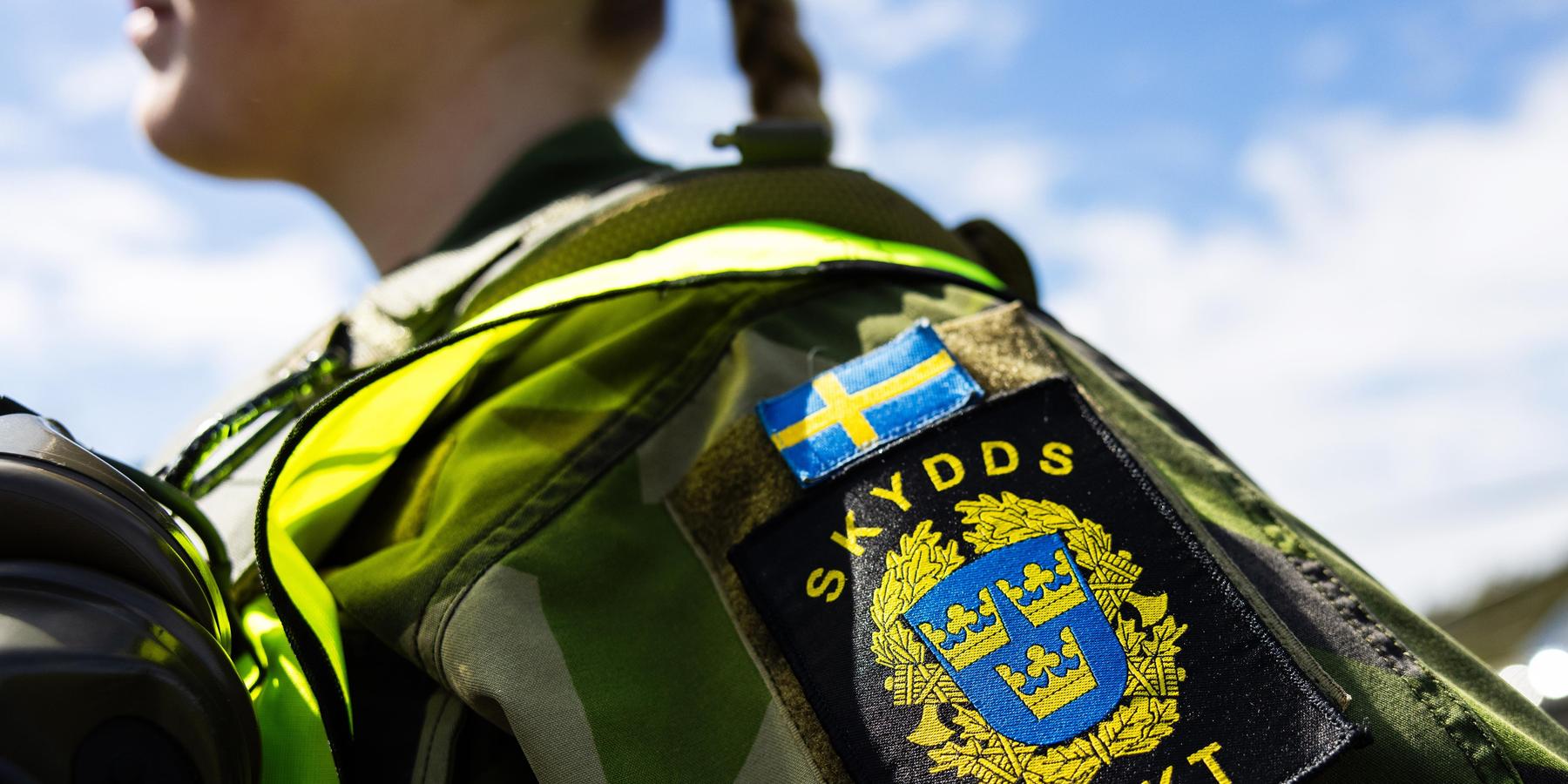
To send a message, a group of European countries is sending a small, symbolic force to Greenland. Germany has sent a 13-person reconnaissance team; France has redeployed 15 soldiers; Sweden is sending officers; Norway, the Netherlands and the UK have contributed single-digit personnel. The White House has stated that European troops in Greenland won’t change Trump’s mind.
These forces, barely 30 personnel in total, obviously cannot defeat the 200 U.S. troops already stationed at Pituffik, let alone any reinforcements. Rather, their purpose is political. As one French diplomat noted, “We’ll show the U.S. that NATO is present.” With European troops on the ground, any U.S. incursion becomes an attack on Germany, France, and the UK simultaneously.
The rhetoric from European capitals is apocalyptic. Danish Prime Minister Mette Frederiksen and EU Defense Commissioner Andrius Kubilius have warned that American military action against a NATO member state would mean the end of the alliance. Polish Prime Minister Donald Tusk went even further, stating that such an attack would be “the end of the world as we know it.”
What happens next
The “high-level working group” will convene in Copenhagen next month, but expectations are minimal. The administration seems committed to acquisition despite the diplomatic dead end. There is a clear off-ramp, but it requires the White House to accept that sovereignty is not a transaction.
Legitimate security concerns regarding the Golden Dome can be addressed through the 1951 Defense Agreement, which has served U.S. interests for 75 years. As for critical minerals, the U.S. should pursue access through commercial diplomacy and joint ventures that respect Greenland’s high environmental standards.
The handful of European soldiers now stationed in Greenland won’t stop American military action if Trump decides to attack. But their presence raises a question every American should ponder: How did we become the threat our own allies need protection from?
- Is Greenland next? Denmark says, not so fast. ›
- Tech billionaires behind Greenland bid want to build 'freedom cities' ›
- On Greenland, Trump wants to be like Polk | Responsible Statecraft ›
- Davos fracas hints at how Europe could fight economic warfare too | Responsible Statecraft ›