

The West likes to inflate the cost of Russian weapons as a way to suggest Moscow is in a financial bind and manipulate the narrative of a looming Ukraine victory — while also masking real inefficiencies in the U.S. defense industry.
By assuming Russian weapons have input costs similar to U.S. systems or conflating export prices with Russia’s internal costs, Western estimates produce misleading figures. These inflated costs bolster the narrative that the strain on Moscow is tremendous, while downplaying the increasing challenges for Ukraine and NATO to effectively counter Russia’s relatively inexpensive missiles and drones.
Moreover, these estimates obscure a stark reality: due to difficulties in expanding production of prohibitively costly Western missiles, combined with low real-world missile interception rates, even if the U.S. and Europe sent all their air defense missiles to Ukraine, they would fall far short of being able to stop most Russian missile and drone attacks.
Overstated costs, underestimated resilience
Western media and think tanks have consistently framed Russian missile expenditures to imply unsustainability. For example, Forbes Ukraine estimated Russia spent $7.5 billion on missiles in the war’s first two months — 8.7 percent of Russia’s 2022 defense budget. A Newsweek article, citing Forbes Ukraine, reported that an August 19, 2024 attack on Ukraine’s energy infrastructure cost Moscow $1.3 billion. In the same article, the Institute for the Study of War stated that Russia “is likely unable to sustain such large-scale missile and drone strikes with regularity.” Yet, Russia’s sustained high-tempo operations over the past six months cannot help but cast doubt on this assessment.
Many of the articles emphasizing the high cost of Russia’s massive missile and drone strikes rely on missile cost estimates from an October 2022 Forbes Ukraine article estimating some key Russian missile costs including the Kh-101 at $13 million, the Kalibr at $6.5 million, the Iskander at $3 million, the P-800 Oniks at $1.25 million, the Kh-22 at $1 million, and the Tochka-U at $0.3 million.
While some of the Forbes UA cost estimates seem reasonable, most of them seem to arrive at costs suspiciously close to what U.S. taxpayers would pay for a comparable missile. Finding such costs not credible, Defense Express Ukraine made a good faith effort to come up with more realistic missile cost estimates, including the Kh-101 at $1.2 million; the Kalibr, approximately $1 million; the Iskander R-500, $1 million; the Iskander 9M723 ballistic, $2 million; and the replacement for the legendary SS-N-22 “Sunburn, supersonic anti-ship cruise missile,” approximately $3 million.
While Defense UA does not give an estimate for the Kinzhal (Kh-47M2) hypersonic missile, given that it is essentially an air-launched variant of the Iskander 9M723, the cost should be similar, about $2 million.
Still to be fair, the Russian military budget’s lack of transparency means that in most cases one has to guesstimate. However, with input costs for weapons production and development being much lower than those for the United States, one would expect Russian missiles to be less expensive than the production of U.S. or Western European ones. Russian defense manufacturing labor costs average $1,200 per worker per month, compared to at least $4,000 for U.S. workers. Materials like steel, titanium, and composites are also less expensive in Russia. Russia’s defense industry prioritizes mass production and efficiency, unlike the U.S defense industry, where profitability and shareholder returns are of greater importance.
When it comes to weapon systems development, Russia typically adopts an evolutionary approach, incrementally improving existing systems, while the U.S. is far more likely to pursue revolutionary designs incorporating unproven technologies, inflating costs.
For example, Russia’s battle-tested Kh-47M2 Kinzhal hypersonic missile builds on proven platforms, while the United States has yet to field a hypersonic missile due to projects like the U.S. AGM-183 Air-Launched Rapid Response Weapon (ARRW) program, which began in 2018. It took a much riskier approach and is now over budget, behind schedule, and in danger of being canceled after over $1 billion invested.
But even if it is not totally canceled and is eventually fielded, the ARRW, at $15 million to $18 million each, will be many times more expensive per missile than the Kinzhal, will have a similar range, and does not pack the same punch. Yes, its unpowered glide vehicle will be more maneuverable than the Kinzhal, but using that maneuverability can significantly impact its terminal impact velocity and range.
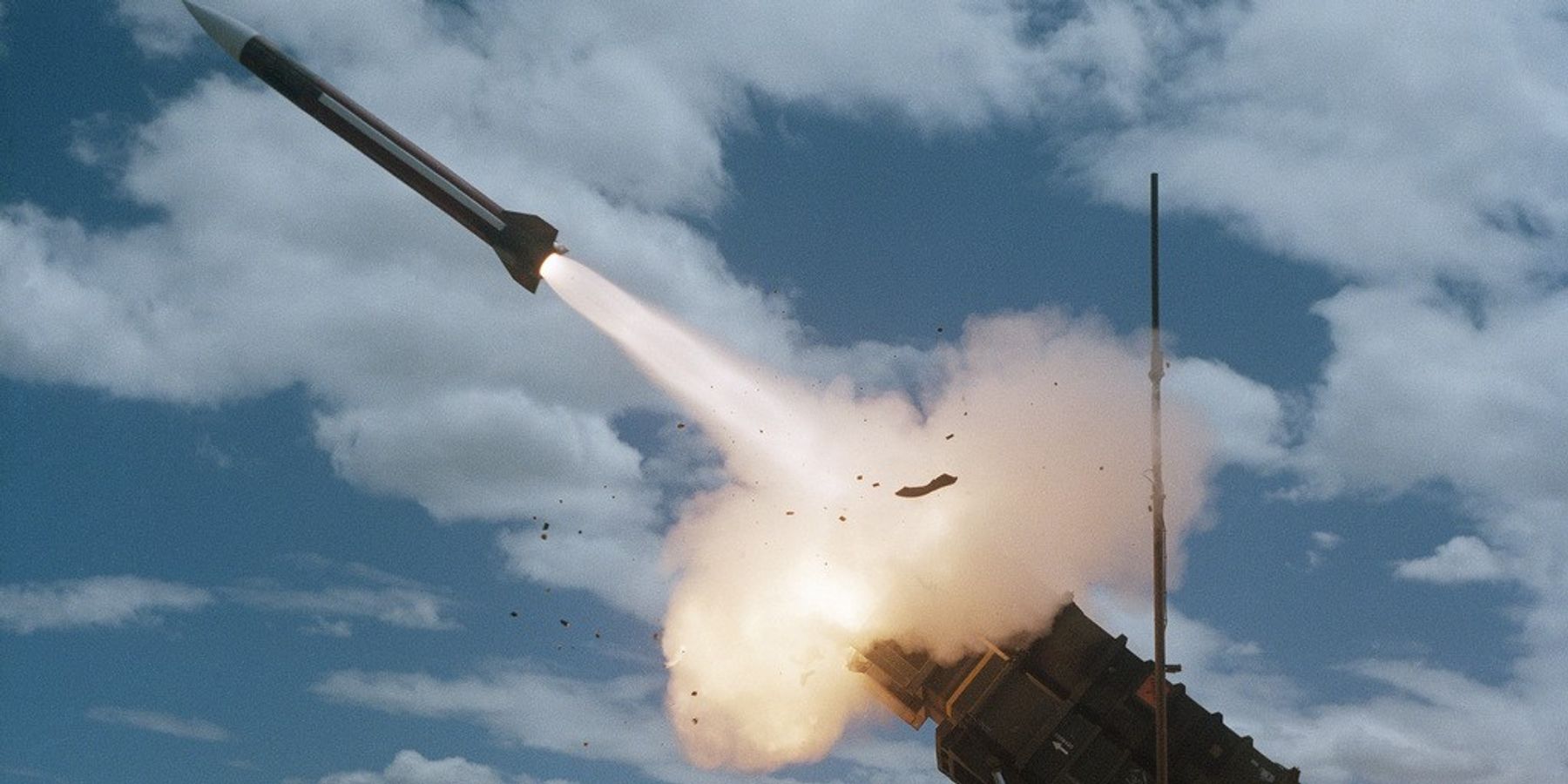
Another example is the American PAC-3 MSE Patriot interceptor and Russia’s S-400 9M96E2 interceptor. Both are highly agile short-range missiles with similar ranges of about 100 km and both use active radar to track and hit their targets. Both have interception speeds of about Mach 5. Yet the PAC 3 MSE missile costs $4 million-$6 million and the estimated cost of the 9M96E2 missile is between $500,000 and $1 million.
But how do they perform? An October 2, 2025 Financial Times article gives a big hint, reporting that the Patriot interceptor rate stood at 37% in August, was slashed in the month of September to just 6%. Of course it is standard operating procedure to overstate interception rates. But even if you buy the initial 37%, it was taking five interceptors to reach a 90 percent chance of intercepting one Kinzhal. At 6%, that goes up to 38 Patriot interceptors needed.
According to Military Watch magazine and other publications, on May 16, 2023, a Patriot System system/radar and at least one of its launchers were destroyed by a Kinzhal hypersonic missile despite launching 32 Patriot interceptors in an effort to protect itself. Unsurprisingly, this particular report has been contested, but given the long history of governments and vendors grossly overestimating air defense effectiveness, lack of transparency/veracity on actual Ukrainian losses, and the incredible interception rates regularly reported by Ukraine Air Force, the report cannot be dismissed out of hand.
We don’t have much objective information on the 9M96E2’s performance, but Russia also has a history of hyping the performance of its S-400 air defense systems. Still, even if the 9M96E2 is as ineffective as the Patriot interceptors, it costs a whole lot less.
By overstating Russian missile costs, Western analysts exaggerate Russia’s financial strain, while providing cover for exorbitant missile prices being charged by Western defense contractors. This distortion obscures the reality that Russia’s cost-effective missile production provides a big advantage in sustainability, while high Western missile costs, combined with U.S. difficulties in rapidly expanding missile production, is a huge disadvantage in any kind of sustained conflict, and could be a fatal disadvantage in going up against a peer competitor that can throw thousands of missiles at our ships and even attack U.S. based military facilities.
- US missile depletion from Houthi, Israel conflicts may shock you ›
- US depleted its missiles in Ukraine, Israel. Now it wants more fast. ›