

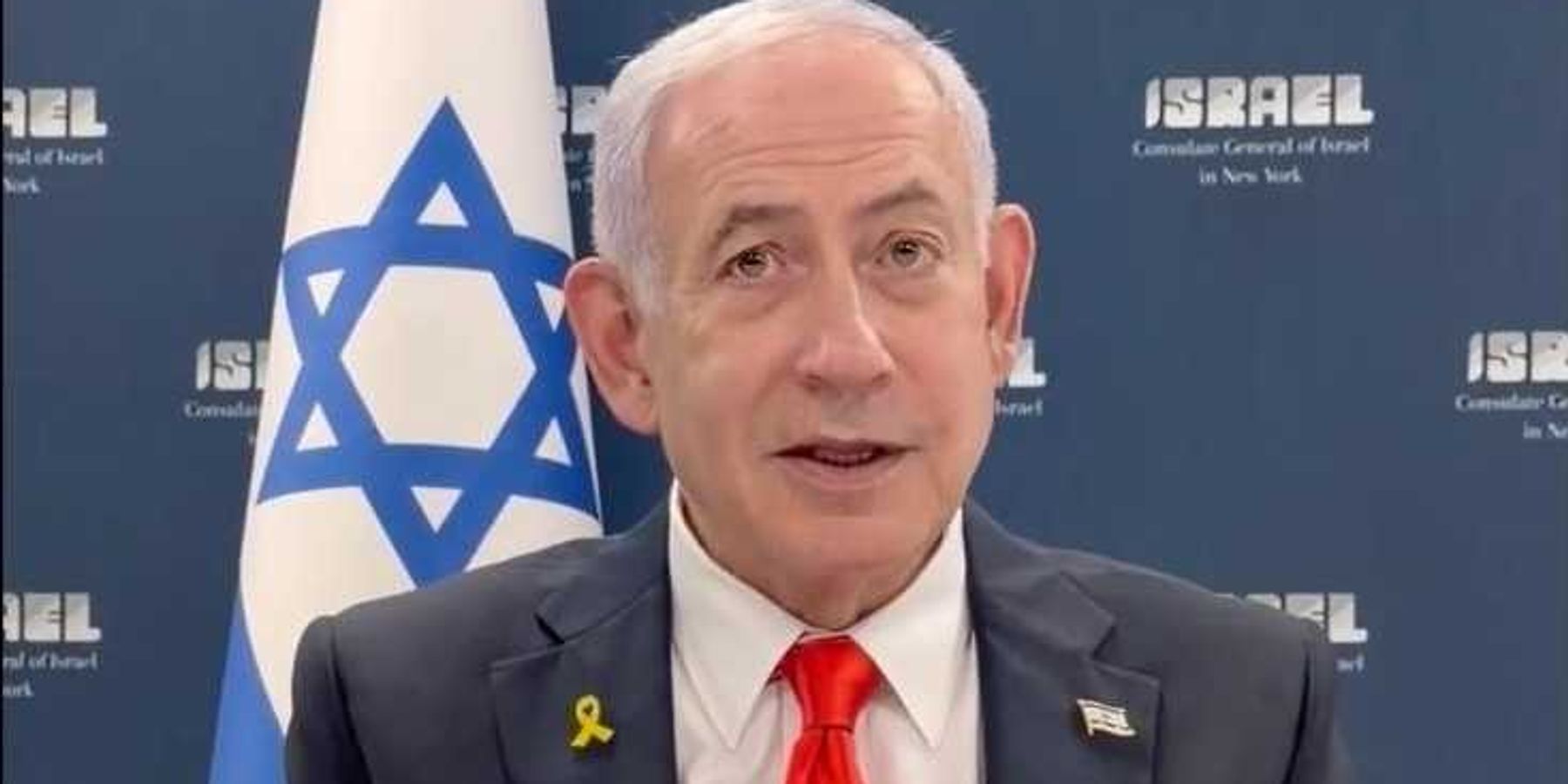
In a meeting dedicated to harnessing pro-Israel media energy on Friday, Israeli Prime Minister Benjamin Netanyahu alluded to a cohort of Israel’s influencers. “We have to fight back. How do we fight back? Our influencers. I think you should also talk to them if you have a chance, to that community, they are very important.”
Being paid by Israel to post on social media is also very lucrative. According to previously unreported recent documents, these influencers are likely being paid around $7,000 per post on social media such as Tik Tok and Instagram on behalf of Israel.
Bridges Partners, a firm working for the Israeli Ministry of Foreign Affairs, sent a series of invoices for its “Influencer Campaign” to Havas Media Group Germany, an international media group working for Israel. The invoices detailed a sum of $900,000, starting in June and slated to end in November, for a cohort of 14-18 influencers to create content.
The document, which was filed under the Foreign Agents Registration Act, notes that the funding is for both “payments for influencers and production,” but does not provide a breakdown between the two. When taking into account the administrative production costs through Sept. 16 — legal fees, banking fees, marketing fees, and other project services noted in a separate document — that leaves an estimated sum of $552,946 for the influencers between June and September of this year.
The firm estimated that the cohort was expected to produce 75-90 posts in that time. Doing the math, that would be $6,143 per post on the low end. On the high end, each influencer could be making as much as $7,372 per post.
It is not clear which influencers are participating in the program. Havas, the firm overseeing Bridges Partners’ work, did not respond to multiple requests for comment about the project, which influencers are participating in the program, or how much each is paid.
Bridges Partners’ founders are Yair Levi and Uri Steinberg, who each own a 50% stake in the firm. Bridges Partners describes its work as assisting with “promoting cultural interchange between United States and Israel.”
The firm, which lists its business address in the Capitol Hill neighborhood of Washington D.C., has also enlisted the help of a former major in the IDF spokesperson unit, Nadav Shtrauchler. For legal counsel, Levi and Steinberg have turned to Pillsbury Winthrop Shaw Pittman, a firm that previously worked for controversial Israeli spyware company NSO Group.
The Bridges Partners campaign is titled “Esther Project," a name which bears resemblance to the Heritage Foundation's “Project Esther," a campaign to fight anti-semitism by branding critics of Israel as part of a terrorist support network. A Heritage spokesperson informed Responsible Statecraft that "there is no connection between The Heritage Foundation’s Project Esther announced October 2024 and Bridge Partner’s Esther Project."
- Israel’s covert info bots targeting America met with hypocritical silence ›
- Israel wants to train ChatGPT to be more pro-Israel ›
- Who are the 'influencers' Israel is paying $7k per post? | Responsible Statecraft ›
- Israel wants to hire Chris Pratt and Steph Curry | Responsible Statecraft ›
- Groups demand Israeli influencers register as foreign agents | Responsible Statecraft ›