

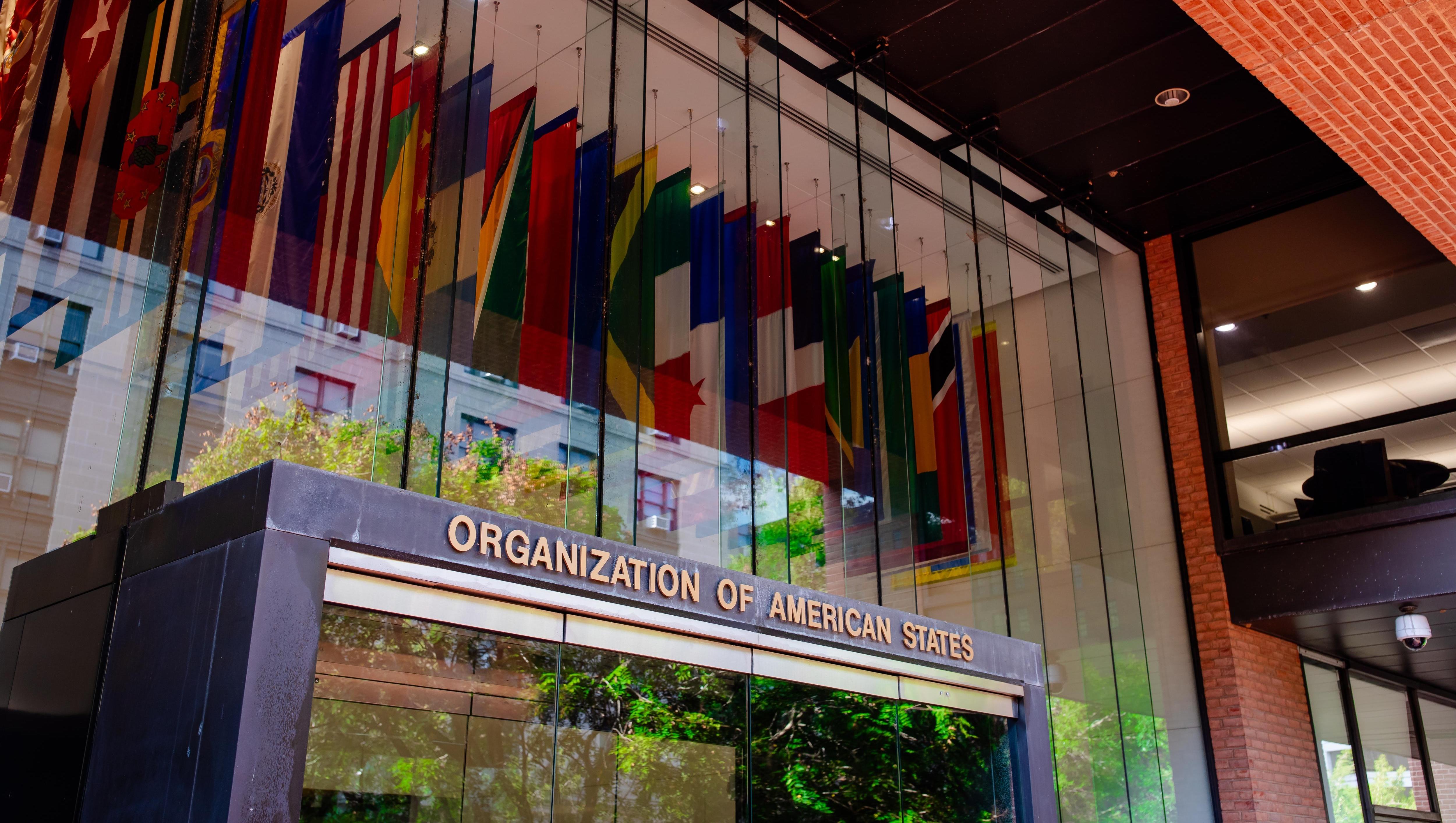
On January 7, the White House announced its plans to withdraw from 66 international bodies whose work it had deemed inconsistent with U.S. national interests.
While many of these organizations were international in nature, three of them were specific to the Americas — the Inter-American Institute for Global Change Research, the Pan American Institute of Geography and History, and the U.N.’s Economic Commission for Latin America and the Caribbean. The decision came on the heels of the Dominican Republic postponing the X Summit of the Americas last year following disagreements over who would be invited and ensuing boycotts.
These parallel developments raise important questions about how the region and the United States view their relationship. In fact, when Colombian President Gustavo Petro announced his intent to boycott the X Summit of the Americas, he not only railed against the exclusion of other countries, but also proposed an alternative — a special Summit between the United States and the Community of Latin American and Caribbean States, known by its Spanish acronym, CELAC. This alternative format would mirror how Latin American and Caribbean leaders engage with other external powers such as the European Union and China — both of which held such a Summit in 2025.
Given the current U.S. administration’s pushback against multilateralism and the historic proliferation of regional organizations driven by different ideological positions, leaders across the Americas have an opportunity to reexamine regional governance mechanisms. In doing so, they would also revisit a historical question of whether the United States should be understood as an integral part of the Americas, or as an external power operating within the hemisphere.
Historical context
The question of inclusion within the Americas has a long history dating back to initial discussions about regional cooperation and integration. While the Americas have a long history of Pan Americanism and efforts to integrate the hemisphere, there have been important differences between countries and their histories.
In fact, in 1826, when Simón Bolivar brought together the leaders of Latin America’s newly independent nations for the Congress of Panama, there were open debates over whether to invite the United States. Brazil and Canada, two countries with different colonial legacies, were not yet independent and thus not invited. While the United States was ultimately invited, debate persisted over its inclusion in integration efforts.
By the late 1880s, the United States viewed its position as firmly within the Americas, hosting the First Pan American Conference in 1889-1890, which would lead to the establishment of the Inter-American System and the predecessor to the Washington-based Organization of American States (OAS). However, Washington’s hemispheric commitment wavered throughout the 20th century. While there were times where the United States embraced its position within the Americas — such as during FDR’s Good Neighbor Policy — there were others when Washington would engage with Latin America and the Caribbean through the lens of great power competition rather than as a member of a shared neighborhood. The United States’ on-and-off-again relationship would lead Latin American and Caribbean to create their own alternative organizations.
Regional pushback on US influence
CELAC is often cited as the clearest example of the region’s post-hegemonic experimentation: an attempt to build a regional body that deliberately excluded the United States and Canada. Created in 2010, CELAC’s founding idea was straightforward but ambitious: strengthen regional integration through an autonomous voice for Latin America and the Caribbean.
But sustaining that vision has proved difficult. Political polarization has repeatedly undermined CELAC, which failed to hold summits from 2018 to 2020. Brazil’s withdrawal in 2020, under former President Jair Bolsonaro, reflected the discomfort of some governments sitting alongside Cuba, Venezuela, and Nicaragua. Even after Brazil’s return under President Luiz Inacio Lula da Silva, internal divisions persisted.
Despite these fractures, CELAC has become a platform for Latin America and the Caribbean to engage with extra-hemispheric powers, most notably China and the European Union. The establishment of the China–CELAC Forum in 2014 opened a new channel for comprehensive cooperation and made CELAC a vehicle for negotiating with global actors outside the traditional U.S.-led architecture. But the organization’s weaknesses were again visible in the most recent EU–CELAC meeting in Colombia last November, which was overshadowed by absences on both sides, including European Commission President Ursula von der Leyen and several Latin American heads of state.
CELAC’s trajectory reveals a deeper truth about regional politics in the Americas. Even in a forum created explicitly to operate in Washington’s absence, Latin America often confronts its own divisions, reflecting the unresolved question over whether the United States is part of the Americas or an external power.
Inside or outside?
Today there are more than 40 regional organizations and forums in the Western Hemisphere. These range from well-established bodies like the OAS to less formal bodies like CELAC and to specific functional groups like the Pan American Health Organization. The United States is a member of 11 organizations — including its role as a non-borrowing member in the Inter-American Development Bank — and an observer in three more.
There are advantages for both the United States and Latin America and the Caribbean in including the United States as part of the region. On the one hand, regional organizations can help channel U.S. leverage and identify shared challenges. Washington has also historically helped to fund these organizations when it sees them as part of a shared community agenda, while using these forums to shape regional integration in ways that served its interests. At the same time, it provides a forum for Washington to shape regional developments and, in some cases, counter the influence of external powers, most recently China.
However, regional organizations and forums can only do so much to bring the United States into the regional community if Washington is not consistently responsive to regional priorities. Yet, as the failure of CELAC’s 2018-2020 summits highlight, simply excluding the United States does not resolve intra-regional differences, which limit the effectiveness of collective action.
With the Trump administration pushing a more active foreign policy in the Western Hemisphere through the Trump Corollary while actively pulling away from regional and global institutions, leaders in the region are faced with a unique opportunity. While the situation poses challenges for regional integration efforts, it also poses the opportunity to rethink regional governance structures. The lack of regional cohesion spurred the proliferation of regional bodies that undermined each institution’s effectiveness.
The right-ward electoral swing in the region removes some of the ideological schisms between Latin American states while also aligning it more closely with Washington. As funding challenges the survival of many regional bodies, leaders can look at where and how they can consolidate regional bodies toward pillars that incorporate the United States and ones that promote that sub-regional cooperation more effectively — thus balancing the dynamics of inclusion and exclusion of the U.S. within the Americas.
- Paradoxically, 'Donroe Doctrine' could put US interests at risk ›
- Trump's 'Monroe Doctrine 2.0' completely misreads Latin America ›