

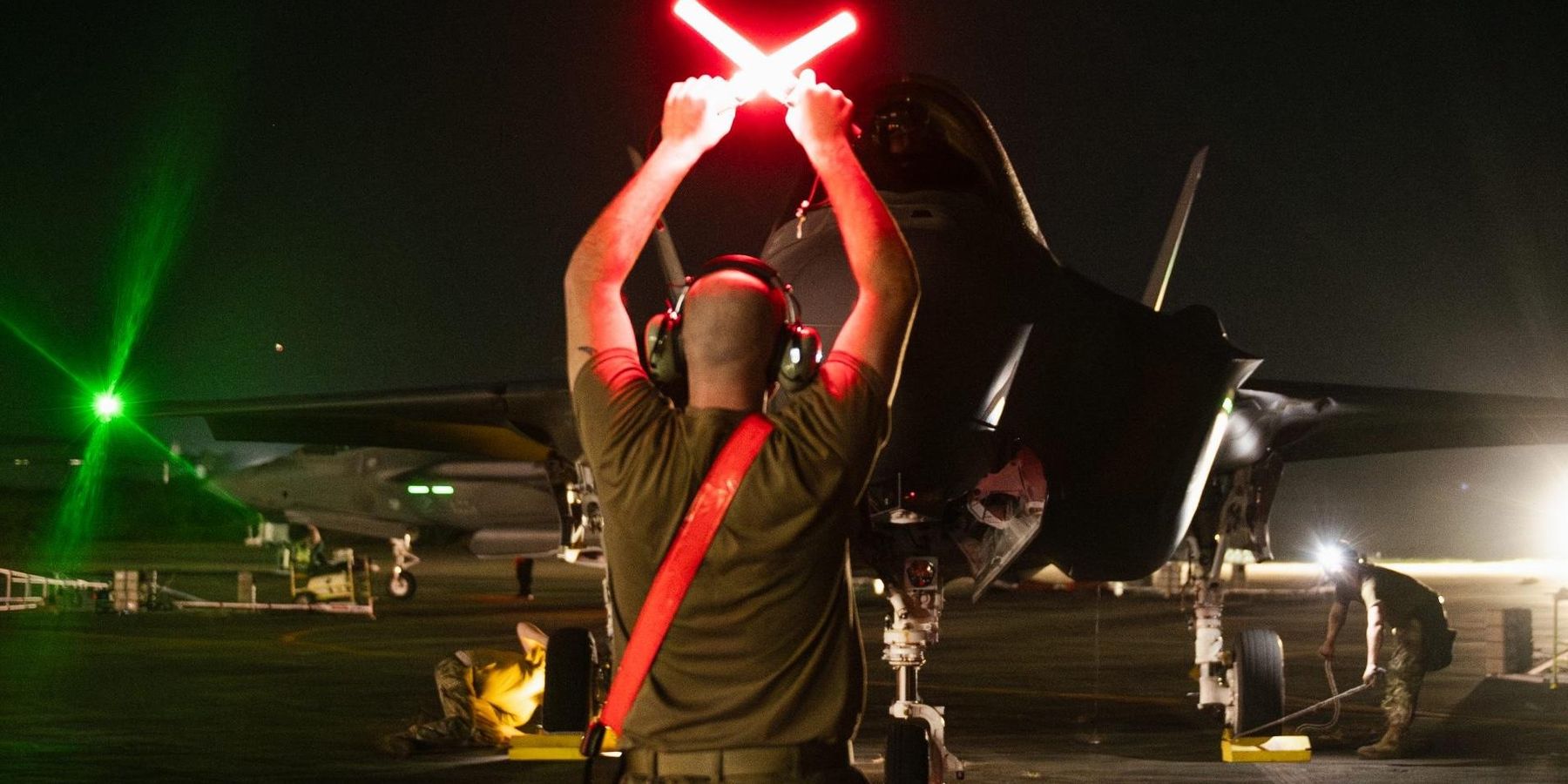
The U.S. military certainly put on an impressive display Saturday during the raid to capture Nicolás Maduro.
It’s a testament to the professionalism of the staff and operators that they were able to design such a complex operation, coordinating ground and naval forces with all the supporting air, communications, and logistical elements. The 140-minute operation apparently went off without a significant hitch as evidenced by the fact that the mission was accomplished without losing a single American.
Senior civilian and military leaders also showed courage in ordering such an audacious plan. They certainly channeled the spirit of the movie “Patton,” with the line mistakenly attributed to Frederick the Great: “L’audace, l’audace, toujours l’audace” (audacity, audacity, always audacity).
The same leaders should now embrace the spirit of another iconic movie quote. During the first game of the season in the second-greatest baseball movie of all time, “Major League,” the character Willie Mays Hayes makes a basket catch at center field. Upon returning to the dugout, his manager shakes the outfielder’s hand and tells him, “Nice catch Hayes, don’t ever f&%#ing do it again!” (“Bull Durham” is No. 1.)
In some way, the success of Operation Absolute Resolve makes the episode more dangerous than if the mission had failed. That is because success can lead to overconfidence — and costly mistakes.
In the wake of a spectacular military operation involving a lot of fancy aircraft and special forces, it is easy to start believing that warfare is nothing more than the proper application of technology. But what happened in Venezuela is the exception, not the rule.
Wars rarely unfold as either side anticipated. If you disagree, ask the French about the Maginot Line, or Vladimir Putin about the march to Kyiv. Better yet, ask Maduro how his air defenses and Praetorian Guard performed over the weekend.
The same is true for the more limited use of force. For every raid on Entebbe there is an Operation Eagle Claw, the botched 1980 hostage rescue operation in Iran.
The high chance of setbacks matters — and not only because a failure might undermine a tactical objective. More significant is the risk of accidental escalation. Undoubtedly, the Pentagon developed tactical-level contingency plans for Operation Absolute Resolve, including a potential response to a downed helicopter or captured soldiers. But what about contingency plans at the strategic level of war? If U.S. commandos had failed to locate or apprehend Maduro, what would leaders in Washington have done next?
President Trump and his advisers wanted to remove the leader of Venezuela, drag him to New York City to stand trial for alleged drug trafficking, and give greater access for U.S. companies to the world’s largest oil reserves. To achieve those objectives, they were unwilling to commit to a Normandy-style invasion involving massed troops, so the military presented an alternative that relied mainly on aviation and special forces teams. The strike force went in with a bang to blind the enemy and then commandos were flown in to capture Maduro and his wife and leave the Venezuelan capital, all in less than three hours.
But had that precision operation failed, the president would have faced a dilemma. And therein lies the real danger with a mission of this kind.
Any military action not only burns readiness, but also political capital. If the Maduro raid failed, would the president have simply walked away, with the Venezuelan leader fulminating against U.S. imperialism and dancing on state television? Or would he have escalated by ordering an invasion and risking the lives of young infantry soldiers, with uncertain consequences in a country twice the size of California, including territory patrolled by armed militias and battle-hardened Colombian guerrillas?
That question should be debated before any administration contemplates any military action. The threshold for moving ahead should be the infantry standard. That is to say, a president who greenlights a surgical strike must either be willing to fail, or otherwise willing to send in ground forces to achieve the strategic objective.
Worryingly, the good planning, good conditions, and good fortune that permitted Maduro’s smooth capture appear to have tempted Trump to test his luck again. He has previously threatened to seize the Panama Canal and, in the days following the raid in Caracas, he has threatened military action against three more countries in Latin America: Colombia, Cuba, and Mexico.
In at least two of those cases, he seems to have regime change in mind. He warned the Colombian president, whom the United States sanctioned in October for alleged drug running, to “watch his ass.” And he described Cuba’s government as “ready to fall.” In Mexico, his apparent goals are only slightly more modest: crushing multibillion dollar drug cartels.
Any military operation in any of those countries could easily go south, and lead to far costlier U.S. involvement than anyone anticipated. Unlike the Venezuelan military, for example, Colombia’s armed forces are battle-tested, U.S.-trained, and employ U.S.-made weapons.
In a previous era, for better or worse, the United States was willing to shoulder far greater military burdens in the Americas. Beginning in 1912, the United States occupied Nicaragua on and off for more than 20 years. Today, notwithstanding the return of the Monroe Doctrine, the U.S. public does not have the stomach for that type of commitment, and nor does Trump. He should consider that as he evaluates other potential targets for what he is told will be short-duration, surgical strikes.
- 'Running Venezuela'? Hegemony is one thing, dominance is another. ›
- With Venezuela, Trump poised to make mistake of epic proportions ›