

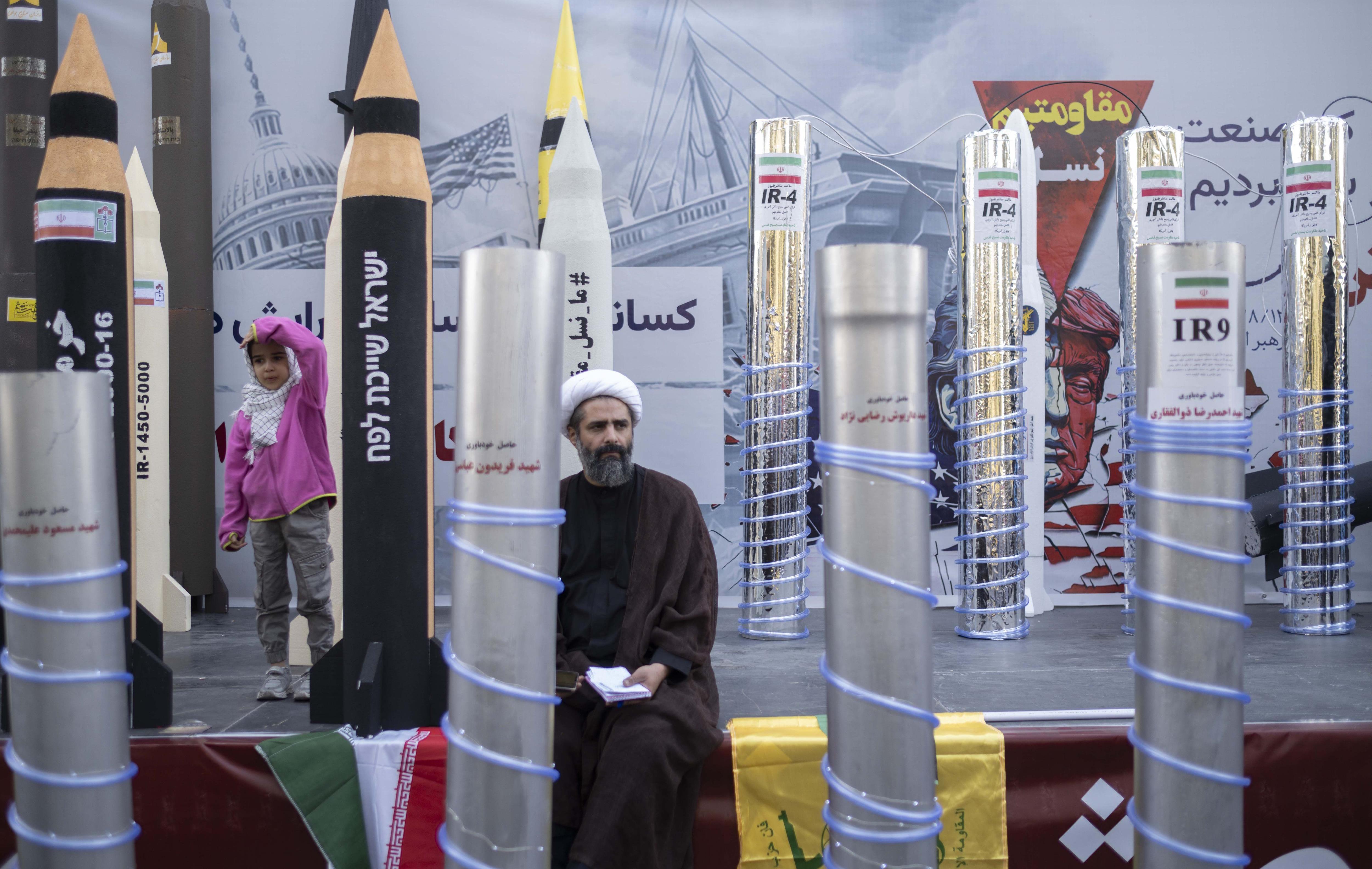
Washington is once again flirting with a familiar temptation: the belief that enough pressure, and if necessary, military force, can bend Iran to its will. The Trump administration appears ready to move beyond containment toward forcing collapse. Before treating Iran as the next candidate for forced transformation, policymakers should ask a question they have consistently failed to answer in the Middle East: “what follows regime change?”
The record is sobering. In the past two decades, regime change in the region has yielded state fragmentation, authoritarian restoration, or prolonged conflict. Iraq remains fractured despite two decades of U.S. investment. Egypt’s democratic opening collapsed within a year. Libya, Syria, and Yemen spiraled into civil wars whose spillover persists. In each case, removing a regime proved far easier than constructing a viable successor. Iran would not be the exception. It would be the rule — at a scale that dwarfs anything the region has experienced.
Yet, the USS Abraham Lincoln carrier strike group has moved towards the Persian Gulf, accompanied by destroyers armed with cruise missiles. The Pentagon has ordered partial evacuations from facilities across the Gulf. This military posture has assembled even as the ostensible reason for intervention has collapsed. In January, massive protests swept Iran. The Trump administration signaled support, with the president telling demonstrators “help is on its way.” Iranian security forces responded with what human rights organizations describe as a massacre, killing thousands. The protests have been crushed. The regime has reasserted control.
And just this week, the president issued more threats, telling Tehran that it better make a deal over its nuclear program or “the next attack will be far worse.” So what justifies military action now? If the goal is destroying Iran’s nuclear program, the United States already struck Fordow, Natanz, and Esfahan last June — and the IAEA confirms Iran has not restarted enrichment at the struck sites. If the aim, then, is regime change, Washington should understand what it is courting.
The Islamic Republic is not a brittle regime poised for collapse. A nation of 90 million with robust security institutions, Iran has a coercive apparatus designed to withstand crisis. The Revolutionary Guards number in the hundreds of thousands and can call on additional paramilitary forces, including the Basij, a paramilitary volunteer militia. The January 2026 crackdown demonstrated this capacity: security forces killed thousands of protesters in a matter of days, and the regime reasserted control.
A post-revolutionary Iran would more likely resemble the violent internal conflicts of the French Revolution than a peaceful democratic transition. When the coercive apparatus splinters and multiple factions claim legitimacy, politics becomes a contest over force that is followed by purges, counterrevolution, and a drive for order that often ends in a new authoritarian settlement.
Nearly five decades in power have woven the regime’s institutions into every layer of Iranian society. Its collapse would not yield a smooth transition.
The opposition abroad is splintered, estranged from political realities inside Iran, and ill-equipped to manage a country of this size and complexity. Washington’s hope that a grateful, pro-American government would emerge from the Islamic Republic’s ashes reflects the same delusions that preceded the Iraq War. The most promising path to a stable post-Islamic Republic Iran would be negotiated transition, similar to South Africa’s managed transformation rather than France’s revolutionary upheaval. The obstacle is credibility. Who can guarantee regime insiders a future without revenge?
Whether regime change comes through internal collapse or external strikes, the implications for global nonproliferation are now clear — not hypothetical. In June 2025, Israel and the United States struck Iran’s nuclear facilities. For years, Iran positioned itself at the nuclear threshold: possessing the technical capability to build weapons while stopping short of production. That restraint did not protect it. The message to other threshold states is unambiguous. The past two decades have offered a brutal curriculum in nonproliferation. Libya abandoned its nuclear program in 2003 in exchange for normalized relations with the West; eight years later, NATO airstrikes helped rebels capture and kill Muammar Gaddafi. Ukraine gave up its nuclear weapons in 1994 in exchange for security guarantees; three decades later, Russia invaded. Iran exercised restraint at the threshold, and restraint was not enough.
The logical conclusion is evident: If abandoning a program invites regime change, surrendering weapons invites invasion, and stopping short of the bomb invites strikes, the calculus becomes unavoidable: only nuclear weapons guarantee security.
Saudi Arabia has made no secret of its nuclear ambitions. In September 2025 — three months after the strikes on Iran — Saudi Arabia and Pakistan signed a Strategic Mutual Defense Agreement. Pakistan’s defense minister stated explicitly that his country’s nuclear capabilities “will be made available” to Saudi Arabia. This marks the first time a nuclear-armed state outside the NPT has extended nuclear deterrence to another country. The scramble for alternatives is underway. A central paradox of military action against Iran is that an attack intended to prevent nuclear acquisition by one state could trigger the most significant wave of proliferation since the technology’s advent — raising questions from the Gulf to East Asia.
Even under optimistic assumptions, the regional consequences for regime change would be destabilizing beyond anything Washington has contemplated. Afghanistan, under Taliban control, shares a 572-mile border with Iran; Tehran has been a crucial interlocutor managing refugee flows, drug trafficking, and militant movements. Pakistan presents the most alarming scenario. The country’s border with Iran runs through Baluchistan, a restive region with active separatist movements on both sides. Instability in Iran would intensify Baluch nationalism, threatening Pakistan’s territorial integrity. A refugee crisis, separatist insurgency, and sectarian spillover could create conditions for state failure in a nuclear-armed country of 240 million.
Perhaps the greatest strategic blind spot in Washington’s Iran policy concerns America’s Gulf allies. Saudi Arabia, the UAE, and Bahrain long supported maximum pressure on Tehran. But their posture has shifted. Saudi Arabia and Qatar have urged restraint, lobbying the Trump administration against military escalation. Riyadh and Abu Dhabi have said they won’t allow their airspace to be used for an attack on Iran. This is not passive reluctance — it is active distancing. Gulf states do not want to be implicated in a war they cannot control and did not request. The shift reflects a hard-learned lesson: instability in Iran would not stay in Iran. As the Arab Spring demonstrated, revolutionary contagion does not respect borders or regime type.
This analysis does not serve as a defense of the Islamic Republic. The regime in Tehran is repressive, outdated, and misaligned with American interests. A more democratic and internationally integrated Iran would be far preferable. But preferences are not policies. The central issue is whether American efforts to accelerate the regime’s collapse would yield results superior to the current situation. Evidence from two decades of regime change in the Middle East suggests not.
American-sponsored regime change would not liberate Iran. It would set the region ablaze. The danger is that Washington narrows the paths to security — vindicating the logic of proliferation, with consequences it may find difficult to reverse.
- If Iranian regime collapses or is toppled, 'what's next?' ›
- First it was regime change, now they want to break Iran apart ›
- Colby: Israel fighting different war in Iran ›
- Why Trump's Iran regime change fantasies never stood a chance | Responsible Statecraft ›