

We still don’t know for sure if there are North Korean troops fighting in Russia against Ukrainian forces. Perhaps we never will. But Ukraine’s case for their presence was not made stronger by the sudden announcement on January 30 that they were gone.
Reports of North Korean troops joining Russia in the fight to expel Ukrainian forces from the Kursk region of Russia emerged in October. The U.S. State Department called their presence “a major escalation by Russia.” NATO Secretary General Mark Rutte called it a "significant escalation."
It was significant enough that it reportedly tipped the scales in favor of the Biden administration granting permission to Ukraine to fire U.S.-supplied long-range ATACMS missiles deeper into Russian territory.
Such an extraordinary change in U.S. policy should justify the requirement for extraordinary proof. But, beyond the statements of American, Ukrainian, and South Korean officials, there is still no verifiable proof that North Korean troops were ever actually fighting in Russia.
The case requires the establishment of motive. The U.S. says that the recruitment of North Korean troops shows Russia’s lack of manpower and desperation. "This is an indication that [Putin] may be [in even] more trouble than most people realize," then- Secretary of Defense Lloyd J. Austin said in October.
Reports suggested that the North Koreans supplemented troops in Kursk so Putin did not have to draw from the front lines in the Donbas. But others say Russia was able to bring in Russian troops from less intense areas of the fighting. “According to Ukrainian soldiers from different parts of the front, the Russian troops reinforcing Kursk were mainly pulled from Kherson and Zaporizhzhia,” Yurri Clavilier, a land analyst with the International Institute for Strategic Studies, told the BBC in November.
That story said 50,000 Russian troops were amassed in the Kursk region, but did not mention Koreans among them.
But U.S. intelligence says that it was North Korea that offered their troops to fight in Kursk, perhaps, as some have suggested, to acquire battlefield experience. They also say that Putin “quickly embraced the idea.”
The Pentagon and NATO claimed to have knowledge that the North Korean troops were highly trained soldiers drawn from an elite unit called the Storm Corps, and claimed to know their battlefield movements. They also said the North Koreans were disguised as Russians — but they have not provided physical proof that they were ever there.
The reported number of North Korean troops in the Kursk region before they reportedly left late last month has been steadily inflated, finally ballooning to 12,000. But aside from photos of captured soldiers the Ukrainian government has claimed are proof, witnesses appear scarce. On November 25, the Wall Street Journal reported that “Ukrainian officials say 10,000 North Korean troops have been deployed to the Kursk region,” then added that “no soldiers who talked to the Journal had encountered them in battle.”
A week later, the BBC was still reporting that “despite weeks of reports suggesting that as many as 10,000 North Korean troops have been sent to Kursk to join the Russian counter-offensive, the soldiers we’ve been in contact with have yet to encounter them.”
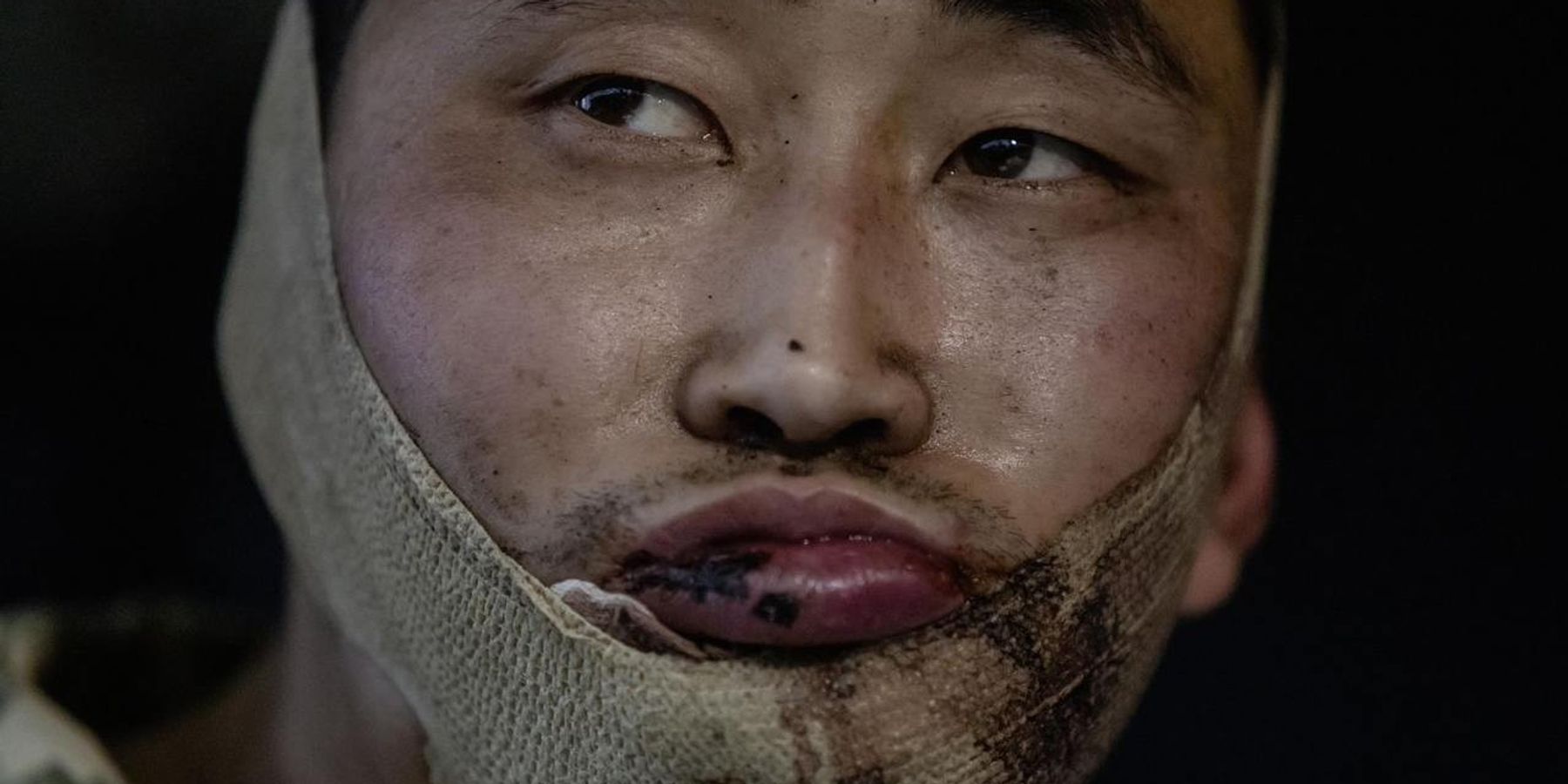
On January 11, Ukrainian President Volodomyr Zelensky announced that Ukraine had captured two North Korean soldiers in Kursk on Jan. 9 and brought them to Kiev where they were being questioned. No North Korean soldiers had been caught before, Zelensky explained, because “Russian forces and other North Korean military personnel usually execute their wounded to erase any evidence of North Korea’s involvement in the war.”
Zelensky posted a photo of each of the captured North Koreans, with one claiming, through interpreters, that he had been a member of the DPRK army since 2021, and the other testifying in writing (since his jaw was injured) that he had been in a sniper-reconnaissance unit since 2016. A brief video of the interrogation was released by Ukraine's Presidential Press Service, but the faces are blurred, the location blacked out, and the authenticity of the video has not been verified.
Anatol Lieven, director of the Eurasia Program at the Quincy Institute for Responsible Statecraft, suggests the Western media should request that Kiyiv “produce these supposed North Korean prisoners for journalists to interview. If they do, then the issue is proved. If not, it will be a strong indication that these prisoners do not in fact exist.”
Then, just days after the announcement of the capture, Ukrainian and American officials announced that the North Korean forces were gone.
It was reported in the Western and Ukraine media as an embarrassment to both North Korea and Russia. The North Koreans, in essence, had to be pulled off the front lines because they had sustained such heavy casualties. Ukraine’s commander-in-chief, General Oleksandr Syrsky said that the number of North Korean soldiers had been reduced by half. Kim Jong Un, the BBC reported, had incurred “an extraordinarily high cost” for helping Russian President Vladimir Putin push Ukrainian forces out of Kursk, and the Russians had supposedly squandered the elite soldiers with a lack of coordination and by “sending them forth in waves across fields studded with land mines to be mowed down by heavy Ukrainian fire.”
There are inconsistencies in the story of their reported exit, too.
On January 30, the New York Times reported that according to Ukrainian and American officials, North Korean troops “have not been seen at the front for about two weeks.” The next day, CNN reported that, according to Colonel Oleksandr Kindratenko, a spokesperson for the Ukrainian military’s Special Operations Forces, they have “not been observed for about three weeks.”
But on January 22, BBC cited General Syrsky as saying just that week that “North Korean soldiers were posing a significant problem for Ukrainian fighters on the front line.” Syrsky said that “11,000-12,000 highly motivated and well-prepared soldiers [were] conducting offensive actions.” That week began on January 19. But North Korean troops were said not to have been seen since two to three weeks before January 30: that would be January 9-16. Ukraine says the North Korean troops had not been seen since 3-10 days before that.
And cutting it awfully close, Zelensky claimed that the two North Korean soldiers were captured on January 9. But by January 31, CNN was already able to publish that the Ukrainian military’s Special Operations Forces had said that no North Korean soldiers had been seen “for about three weeks.”
American officials have kept that ambiguity open with the evidence-free claim that “the decision to pull the North Korean troops off the front line may not be a permanent one. It is possible that the North Koreans could return after receiving additional training or after the Russians come up with new ways of deploying them to avoid such heavy casualties.”
So, that rabbit — if it is a rabbit — can be pulled out of the hat again if needed. If North Korean troops really were in Kursk, and they really were wasted and decimated, then their presence didn’t justify the escalatory risk of granting permission to Ukraine to fire U.S. supplied long-range missiles deeper into Russian territory. If they really weren’t, then the whole affair was a sleight of hand to justify that decision.