
Follow us on social

google cta
Grok

Grok’s latest gig? A $200 million Pentagon contract

The DoD is paying AI power hitters top dollar to bolster its bottom line, even in the ‘warfighting domain’

Reporting | QiOSK
google cta
google cta

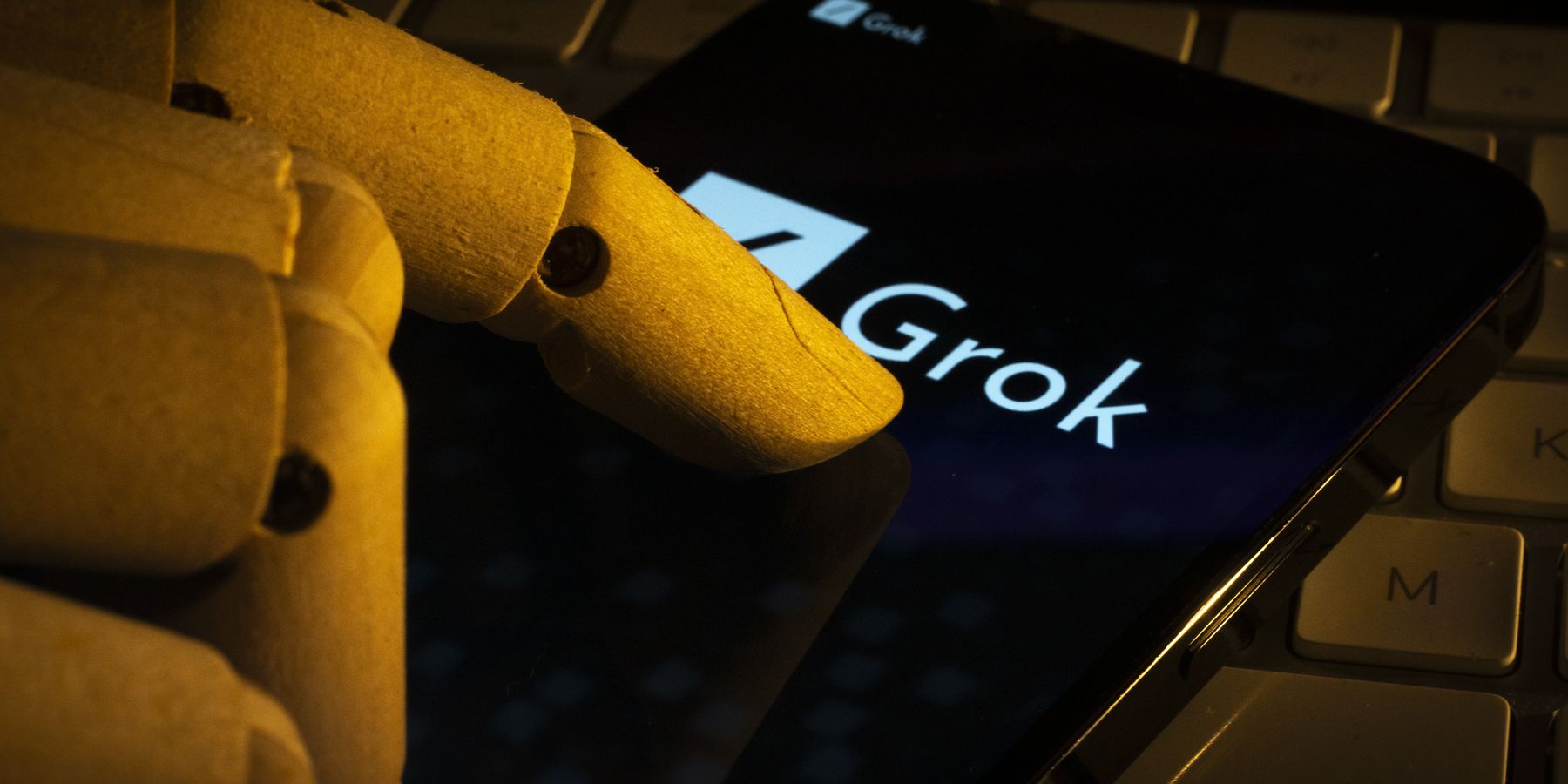
Last week, X’s AI-powered chatbot Grok publicly melted down. This week, xAI’s newly announced “Grok for government,” which repurposes Grok to serve myriad federal agencies, has secured a $200 million Department of Defense contract.

On Monday, the Department of Defense Chief Digital and Artificial Intelligence Office announced $200 million contracts for xAI, the company operating Grok on the social media platform X, and other prominent AI-forward or centric companies, including Anthropic, OpenAI, and Google, to “leverage the technology…of U.S. frontier AI companies to develop agentic AI workflows across a variety of mission areas”— including within the “warfighting domain.”

DoD Chief Digital and Artificial Intelligence Officer Dr. Doug Matty explained the DoD’s rationale for the contracts in the press release announcing them. But exactly how the initiative would bolster the DoD’s warfighting effort, and why hundreds of millions are needed for the initiative, still seems somewhat unclear.

“The adoption of AI is transforming the Department’s ability to support our warfighters and maintain strategic advantage over our adversaries,” DoD Chief Digital and Artificial Intelligence Officer Dr. Doug Matty said. “Leveraging commercially available solutions into an integrated capabilities approach will accelerate the use of advanced AI as part of our Joint mission essential tasks in our warfighting domain as well as intelligence, business, and enterprise information systems.”

Asked what the contracts might entail within the “warfighting domain,” a DoD official told RS: “DoD plans to leverage the talent and technology of U.S. frontier AI companies to develop agentic AI workflows across a variety of mission areas. The Department will not further elaborate on mission-specific use cases at this time.”

AI tools like Large Language Models (LLMs) have become popular since AI pioneer ChatGPT’s public debut in late 2022, with governments and federal agencies increasingly looking to incorporate AI into their operations.

But when it comes to war, practical and ethical concerns exist. First, the widespread application of AI technology within wartime contexts, by outsourcing warfighting and the decisions related to AI-powered tools may depersonalize warfighting and make it easier to get into conflict.

Meanwhile, AI-powered tools can also be unpredictable — Grok itself unexpectedly spiraled last week after changes to its code led to a public meltdown. They can be known to even pass off false information as true, leading to concerns its use within military contexts might lead to significant battlefield errors and even loss of life.

Deep tech companies have increasingly collaborated with the defense sector in recent years, especially relating to AI. For example, OpenAI dropped its ban on AI military applications in early 2024. Military operations during Israel’s war on Gaza and the war in Ukraine have also used AI, especially as a military targeting tool.


Top image credit: The xAI and Grok logos are seen in this illustration photo taken on 05 November, 2023 in Warsaw, Poland. Elon Musks's xAI company this week introduced Grok, its converstional AI which is says can match GPT 3.5 in performance. (Photo by Jaap Arriens/NurPhoto)NO USE FRANCE [Reuters Connect]
google cta
Reporting | QiOSK
Trump and Lindsey Graham
Top photo credit: U.S. President Donald Trump, with Secretary of Commerce Howard Lutnick and Senator Lindsey Graham (R-SC), speaks to reporters aboard Air Force One en route from Florida to Joint Base Andrews, Maryland, U.S., January 4, 2026. REUTERS/Jonathan Ernst

Does MAGA want Trump to ‘make regime change great again’?

Washington Politics

“We must abandon the failed policy of nation building and regime change that Hillary Clinton pushed in Iraq, Libya, Egypt and Syria,” then-candidate Donald Trump said in his acceptance speech at the Republican National Convention in 2016.

This wasn’t the first time he eschewed the foreign policies of his predecessors: “We’re not looking for regime change,” he said of Iran and North Korea during a press conference in 2019. “We’ve learned that lesson a long time ago.”

keep readingShow less
Toxic exposures US military bases
Military Base Toxic Exposure Map (Courtesy of Hill & Ponton)

Mapping toxic exposure on US military bases. Hint: There's a lot.

Military Industrial Complex

Toxic exposure during military service rarely behaves like a battlefield injury.

It does not arrive with a single moment of trauma or a clear line between cause and effect. Instead, it accumulates quietly over years. By the time symptoms appear, many veterans have already changed duty stations, left the military, moved across state lines, or lost access to the documents that might have made those connections easier to prove.

keep readingShow less
Iraq War memorial wall
Top photo credit: 506th Expeditionary Security Forces Squadron, paints names Nov. 25, 2009, on Kirkuk's memorial wall, located at the Leroy Webster DV pad on base. The memorial wall holds the names of all the servicemembers who lost their lives during Operation Iraqi Freedom since the start of the campaign in 2003. (Courtesy Photo | Airman 1st Class Tanja Kambel)

Trump’s quest to kick America's ‘Iraq War syndrome’

Latin America

American forces invaded Panama in 1989 to capture Manuel Noriega, a former U.S. ally whose rule over Panama was marred by drug trafficking, corruption and human rights abuses.

But experts point to another, perhaps just as critical goal: to cure the American public of “Vietnam syndrome,” which has been described as a national malaise and aversion of foreign interventions in the wake of the failed Vietnam War.

keep readingShow less
google cta
Want more of our stories on Google?
Click here to make us a Preferred Source.

LATEST

QIOSK

Newsletter

Subscribe now to our weekly round-up and don't miss a beat with your favorite RS contributors and reporters, as well as staff analysis, opinion, and news promoting a positive, non-partisan vision of U.S. foreign policy.