

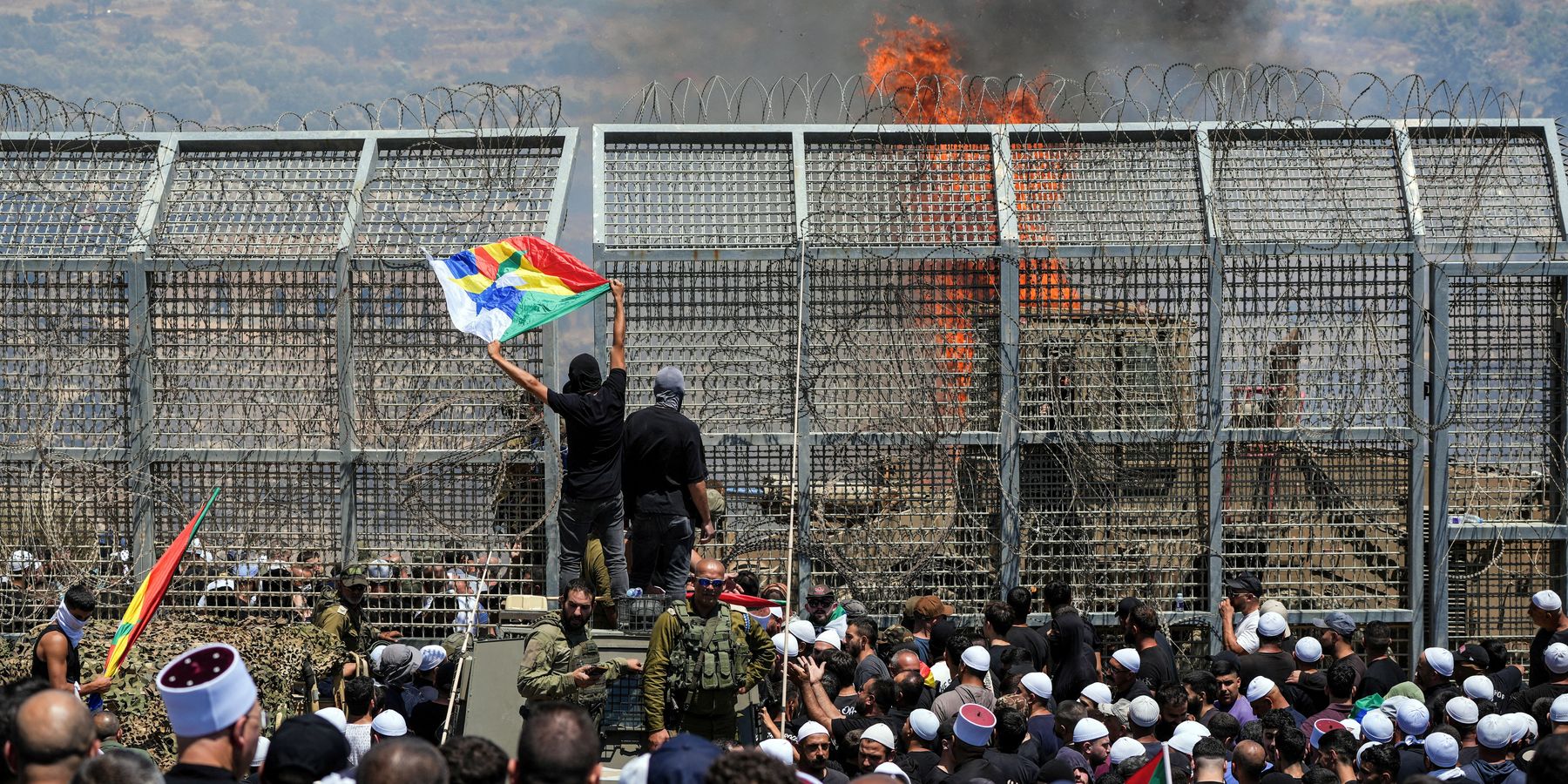
Israeli jets and drones hit Syria’s Defence Ministry compound and a second target near the presidential palace in central Damascus on July 16, causing a massive explosion and killing at least one and wounding 18, according to the Syrian Health Ministry.
Israel framed the attack as a warning to protect Syria’s Druze minority and warned that further “painful blows” would follow unless Syrian troops and allied militias withdraw from the south. Why would Israel bomb an important government building in Damascus purportedly on behalf of the Druze?
The Druze, a religious minority that is ethnically Arab, number about one million worldwide, roughly 700,000 of which live in Syria’s Suwayda governorate. Some 150,000 Druze hold Israeli citizenship and serve in the IDF, while another 20,000 Druze in the Israeli‑occupied Golan largely retain Syrian identity.
Parts of these constituencies have pressed Israeli Prime Minister Netanyahu to act but Israel has its own motivations, including the preservation of a Druze-dominated buffer zone in the south of Syria to insulate it from the new Syrian government which it views with great suspicion. Al-Sharaa’s government has adopted a congenial attitude towards Israel and expressed that it does not seek conflict. But the prevailing perspective in Israel is that al-Sharaa is attempting to consolidate power, and once he does, he may return to his jihadist roots.
This is one reason that immediately following the collapse of the Assad regime, Israel bombed much of Syria’s conventional military capacity. Another reason for the strike is that Israel likens itself as the protector of the Druze, both because there are Druze Israelis, and also because it supports Israel’s image as a multicultural society within a Jewish state.
Israel’s strike followed a week of heavy fighting in Suwayda that has left hundreds dead, including reported summary executions and a massacre at a hospital. The latest flare‑up began when Bedouin gunmen kidnapped and robbed a Druze vegetable merchant at an improvised checkpoint on the Damascus–Suwayda highway. Tit‑for‑tat abductions escalated into firefights, with Damascus insisting that it is fighting “outlaw gangs,” while Druze militias say government artillery and Bedouin auxiliaries have been firing indiscriminately.
A ceasefire announced late on July 15 collapsed within hours as artillery fire resumed. Druze cleric Sheikh Yousef Jarbou and Syria’s Interior Ministry announced a fresh truce midday on the 16th that allows government checkpoints to remain, although whether hard-line Druze factions will accept it remains unclear. The Druze faction led by Sheikh Hikmat al-Hijri released a statement that reaffirmed the community’s right to self-defense.
Simultaneously, Israel is redeploying forces: a military spokesman said units now operating in Gaza are being shifted to the Golan frontier and additional battalions are on standby for “several days of fighting” along the Syrian border.
This escalation threatens Washington’s nascent normalization track with Syria’s interim president, and former jihadist Ahmed al‑Sharaa. President Trump publicly courted Sharaa in Riyadh in May, providing sanctions relief and a future place in the Abraham Accords, a plan now in doubt after Israel’s strike on Damascus.
U.S. Special Envoy for Syria and Ambassador to Türkiye Thomas Barrack has been meeting regularly with Ahmad al-Sharaa and urging Syria’s minority groups to accept the authority of the central government in Damascus. With Israel signaling more action, the risk of a broader Israel‑Syria confrontation is rising fast, however, Washington appears to be working toward de-escalation in the background.
The Trump administration clearly wants the new government in Damascus to succeed as evidenced by its removal of all sanctions and strong statements of support for Syrian unification under Damascus. The fact Washington’s closest partner in the Middle East is now bombing Syria is not conducive to Washington’s aims there and it is likely scrambling to ensure things don’t go from bad to worse. Whether this strike in Damascus will shake the al-Sharaa government into withdrawing from Suwayda remains to be seen.
- Is Israel expanding territorial control toward Syria? ›
- Can Trump cool Turkey-Israel tensions over Syria? ›
- Shotgun wedding? Israel and Syria go to the altar ›
- Israel blindsides Trump in self-serving effort to break up Syria | Responsible Statecraft ›