

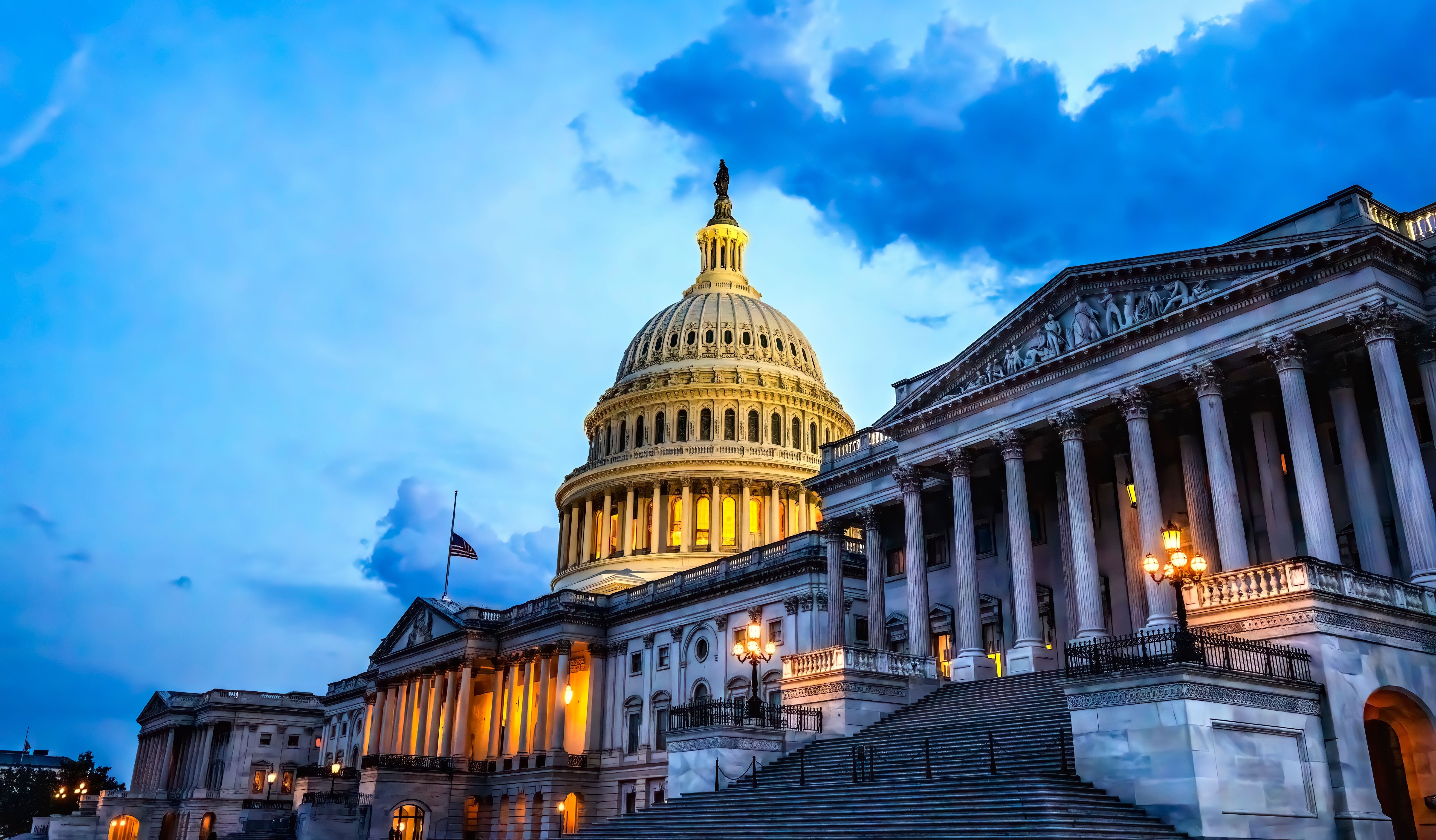
As early as next Tuesday, Congress will vote on two bills that will make it easier for the U.S. government and U.S. arms makers to push weapons out the door to foreign clients more quickly, with less time for congressional scrutiny, and, in some cases, with Congress not even being informed that the sales are happening.
At a time when arms sales are a centerpiece of U.S. foreign policy, for good or for ill, this is a misguided approach that will increase the risks that U.S. arms transfers will sow instability, fuel conflicts, and enable violations of the laws of war.
The centrality of arms sales is a result of the decline in boots-on-the-ground conflicts like Iraq and Afghanistan, and a reduction in drone strikes from the peak reached in the Obama years
Major sales have ranged from transfers aimed at helping Ukraine defend itself from Russia’s invasion to billions in military aid and arms transfers that have enabled Israel’s campaign of mass slaughter in Gaza and its escalation to attacks on Syria, Lebanon, and Iran.
And while sales to these nations have drawn the vast bulk of media, congressional, and public attention, they are far from the only ones. In most years, the United States supplies weapons to over 100 nations, a third of which are categorized as “not free” by Freedom House. And a study by the Quincy Institute during the Biden administration found that 34 of 46 conflicts occurring at that time involved one or more parties armed by the United States.
In short, while some U.S. arms transfers, like supplies to Ukraine, live up to our public commitment to provide weapons to help allies defend themselves without the need to introduce U.S. troops to the conflict, many of them enable serious human rights abuses or fuel destabilizing wars.
Despite these negative impacts of increased arms sales on U.S. global security interests, the bills that Congress will consider next week (described in detail below) would, if passed, reduce vetting of future sales in the name of speeding up the process. It is a dangerous approach that will increase the risks to the security of the U.S. and its allies. This decrease in scrutiny will amount to an abdication of Congress’s responsibility to engage in careful consideration of which deals will be stabilizing and which will escalate already volatile situations in the Middle East, North Africa, and beyond.
The bills in question include Rep. Mike Lawler’s (R-N.Y.) “Abraham Accords Defense Against Terror Act,” which would make it easier to rush arms to members of the Abraham Accords. Current members include Morocco, which has long illegally occupied the Western Sahara; Bahrain, which has systematically cracked down on human rights in the wake of the Arab Spring; and the UAE, which has been a destabilizing force in the region, from partnering with Saudi Arabia in its brutal war on Yemen to shipping weapons to the opposition in Sudan, a group that has been charged with widespread war crimes. Lawler’s bill also includes fast tracking arms to Israel, which many independent experts believe to be engaged in a genocide in Gaza. Claims that bringing these repressive, reckless regimes closer together will increase the chances of peace in the region are wishful thinking at best, and a devil’s bargain at worst.
Another bill will increase the threshold at which an arms sale would need to be reported to Congress. Given that transfers below the current threshold have been used to enable countries like Saudi Arabia and Israel to kill civilians with impunity, it makes no sense to raise those thresholds and make it even easier for the executive branch to keep Congress and the public in the dark about controversial sales.
For example, the Washington Post revealed that in the first few months of Israel’s war on Gaza the U.S. made an astonishing 100 arms deals with Tel Aviv that were below the threshold that would have required them to be reported. Increasing thresholds makes it easier for administrations to do an end run around Congress and the public to transfer arms to questionable regimes. It’s a bad idea, and members of Congress who want to align U.S. arms sales with legitimate U.S. security interests should unite to block it.
Given the central role of arms sales in U.S. foreign and security policies and the devastating consequences of rushing weapons to nations engaged in aggression and internal repression, Congress should be increasing its ability to block dubious deals, not hobbling its own oversight role and ability to meaningfully weigh in on pressing U.S. national security matters.