

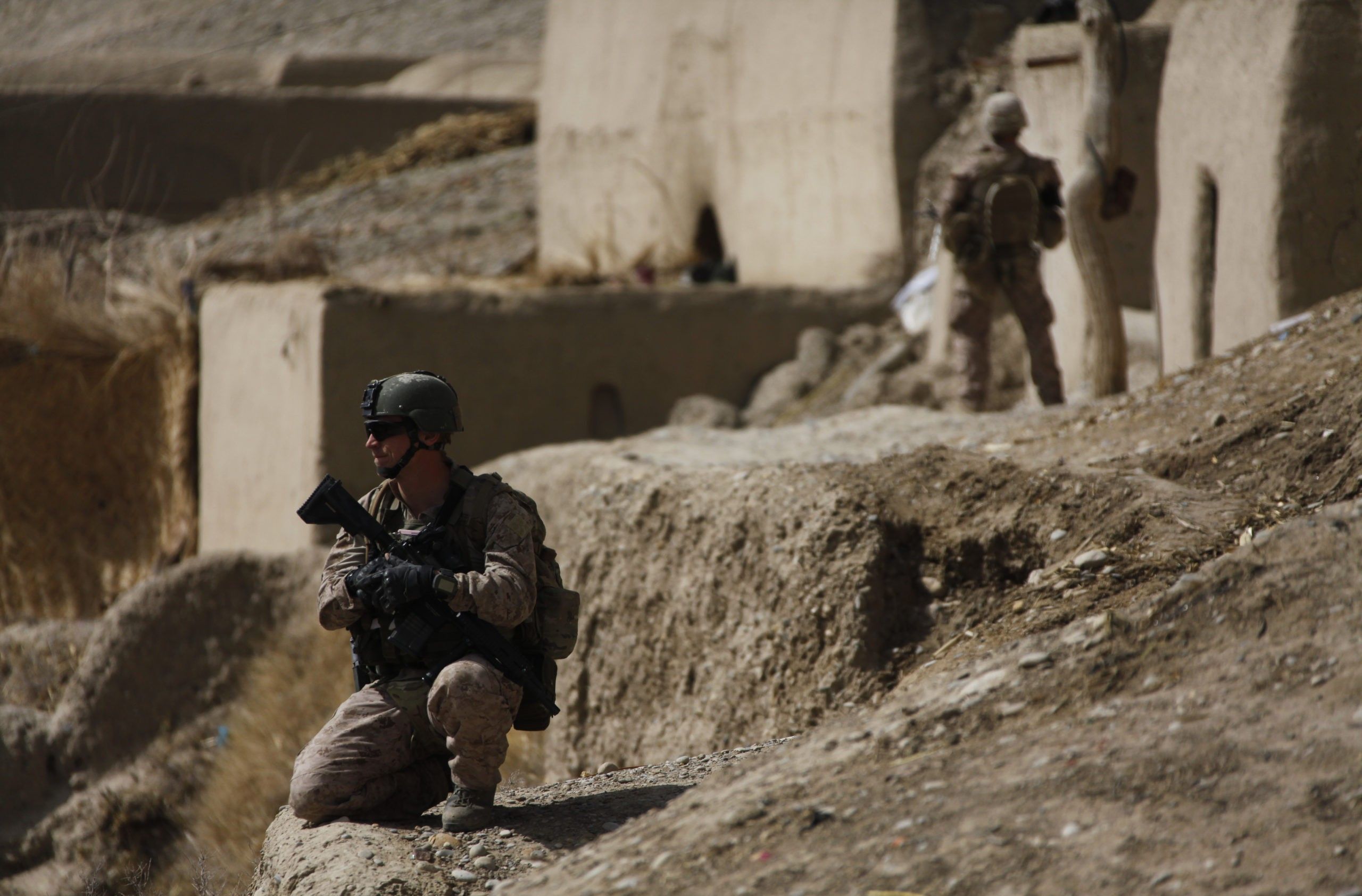
The United States wasted up to $29 billion dollars during its two-decade long effort to transform Afghanistan into a stable and democratic state, according to a major new report from the Special Inspector General for Afghanistan Reconstruction (SIGAR).
The wasted funds account for roughly a fifth of the $148 billion that the U.S. spent on reconstructing Afghanistan — a sum greater than what Washington spent to rebuild Europe after World War II, in inflation-adjusted terms. Among the most wasteful projects were a $7.2 billion effort to eliminate opium production in the country as well as a $4.7 billion program that tried and failed to build local state capacity.
The report marks the final update from SIGAR, which will officially close up shop early next year. Over its 17 years of existence, the office used its uniquely focused mandate to ferret out cases of waste and fraud while making recommendations about how to avoid further abuses. According to the report, its efforts led to 171 criminal convictions while saving taxpayers as much as $2.5 billion.
SIGAR was among the most influential critics of America’s nation-building efforts abroad. Its work revealed not just individual instances of waste but also the more fundamental problems that plagued Washington’s reconstruction efforts. “Over two decades, the United States invested billions of dollars and incurred thousands of casualties in a mission that promised to bring stability and democracy to Afghanistan, yet ultimately delivered neither,” the final report says. “The rapid collapse of the Afghan government in August 2021 laid bare the fragility that had been concealed by years of confident assertions of progress.”
The office pointed out “contradictions” in the U.S. approach in Afghanistan, arguing that “the relentless pursuit of reconstruction resulted in perpetual Afghan government dependency, fueled corruption, and in some cases strengthened the very insurgency it sought to undermine.”
It is unclear whether Washington has fully grappled with the critiques put forward by SIGAR over the past 17 years. Congress chose not to create a special inspector general for Ukraine aid, for example, opting instead to coordinate oversight through the office of the Pentagon’s inspector general.
Former SIGAR John Sopko argued that this approach would be insufficient for properly tracking the $187 billion that the U.S. has given Ukraine. “Just look at the amount of money we're spending,” Sopko told RS in 2023. “When you pour that much money in, even if it's the most noble cause in the world, you can't help but waste a lot.”