

The Iraqi army captain who assassinated King Faisal II and his family in 1958 claimed, “All I did was remember Palestine, and the trigger on the machine-gun just set itself off.”
Although Iraqi historians refute this assertion and maintain the officer was a delusional madman, in the days leading up to the massacre of the royal family, the Iraqi opposition had been emboldened by growing anti-Israel sentiment and a perception that the Iraqi monarchy leaned too heavily toward Western nations which enabled Israeli aggression toward Arab states.
Six decades later, the Palestinian question still enrages the “Arab Street.” The war in Gaza raises concerns of violent regional spillover and Iraq would not be not immune from the consequences. Unlike the Houthis in Yemen and Hezbollah in Lebanon, however, it is unlikely that armed conflict will come to Iraq as sympathy for the Palestinians will not trump war fatigue.
Yet, there are reasons to fear the indirect costs of war. Chief among those concerns revolve around neighboring Iran being involved in a wider conflict, but no less significant could be the effects on the internal politics of Iraq, its economy, and its international relations. Much will depend on the skills of Prime Minister Mohammed Shia Al-Sudani to balance the pressure from his political opponents and the armed militias.
Internal politics
All politics are local, and in Iraq they are often armed. Unlike the dictatorships, dynasties, and monarchies surrounding it, Iraq remains a parliamentary democracy, generally responsive to public sentiment but also coercion from armed militias outside of government control.
Iraq’s recent history shows the best and worst of democracy, free speech, and the right to assemble. In October 2019, widespread street protests over corruption, unemployment, inadequate services, and poor living conditions brought down the government of Prime Minister Adil Abdul-Mahdi. The Tishreen (“October”) protesters demanded the resignation of Abdul-Mahdi, commitments to reform, and early elections. While authorities responded with a relatively heavy hand, the government fell within two months.
Abdul-Mahdi’s replacement, Mustafa al Kadhimi, enjoyed a full term in office but the process of replacing him with the current prime minister, Mohammed Shia Al-Sudani came after Iraq went through the longest period without a formal government in its modern history. Among other factors, his appointment was fiercely opposed by the powerful rabble-rousing Shia leader Muqtada al-Sadr when Sadr was unable to form a government. Sadr’s party resigned en masse from Parliament but not before his followers stormed the Council of Representatives in July 2022 twice, and occupied the Presidential Palace the following month. The departure of the Sadrists from the palace led to a deadly firefight in the Green Zone which soon spread to Iraq’s southern provinces.
Against this backdrop of violence and turmoil, the Sudani government came to power in October 2022 fully understanding the need to remain sensitive to public opinion and well armed political opponents.
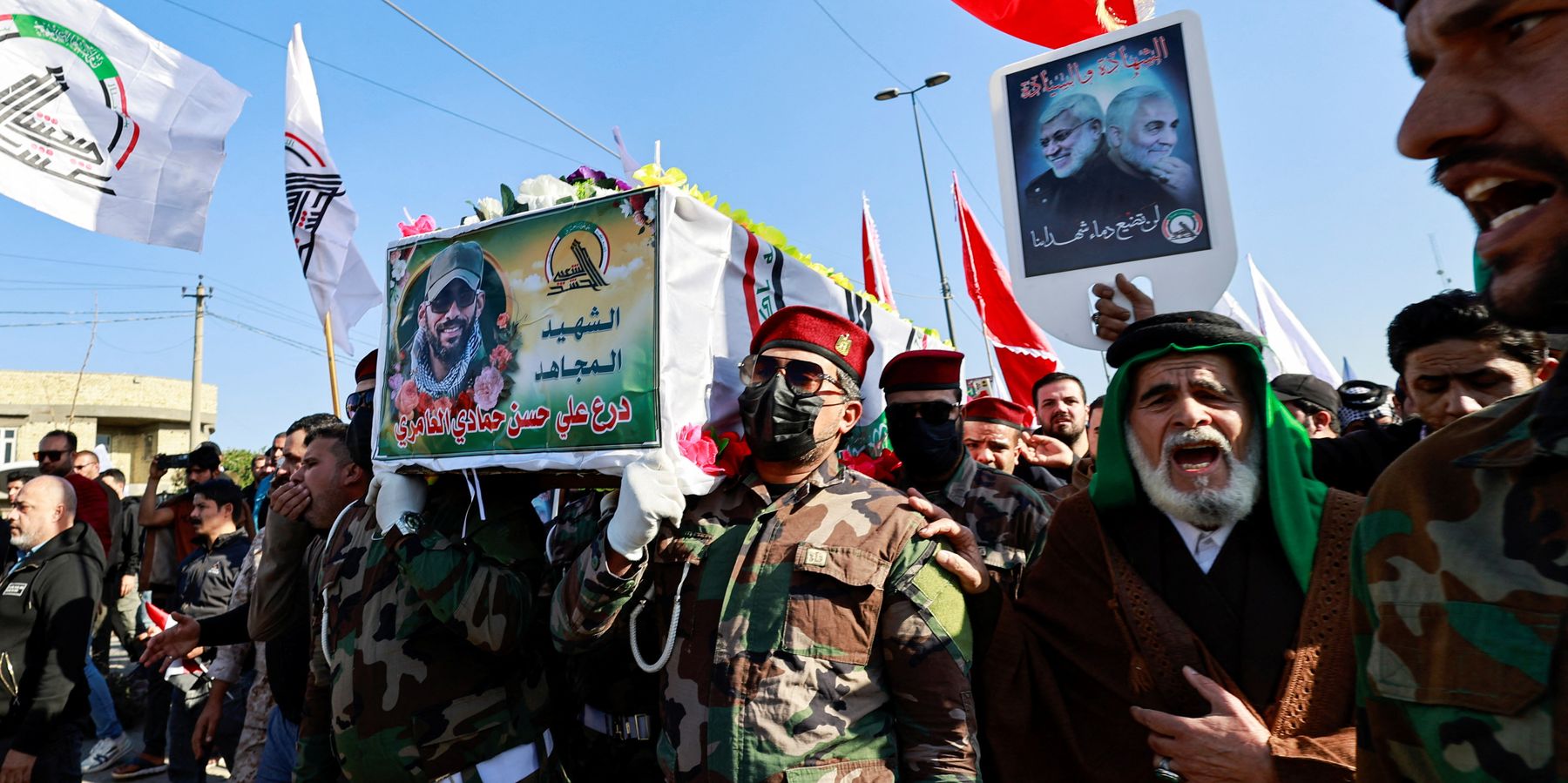
The Sudani government also remains under pressure from militias, a delicate balancing act for a country beholden to the accomplishments of these groups in the fight against Daesh, or ISIS. These militias enjoy quasi-political influence on the Iraqi body politic and are closely tied to Iran.
Sudani’s political opponents have been closely watching for a misstep (common to all opposition parties worldwide), not least Sadr, who has already called on his supporters to join “peaceful” demonstrations in protest of Israel’s war on Gaza. Rarely are Sadrist demonstrations peaceful as shown by the sit-ins in 2021 and the violent attacks into the protected Green Zone in 2022.
Against this backdrop, Sudani maintains a careful reading of internal politics. While he may not be ousted by demonstrations like Abdul-Mahdi or fend off assassination attempts as did Khadimi, participating in internal politics remains a risky business in Iraq; so is international diplomacy.
External relations
While Prime Minister Sudani has demonstrated strong skills in managing Iraq’s internal politics, external relations with Iran and the United States could provide the missteps his opponents seek. Despite strong condemnation of the attacks into Gaza, Iran-backed militias have significantly ramped up their drone and rocket attacks on U.S. military bases in Iraq and Syria.
In response, a parade of U.S. officials from CIA Director William Burns to Secretary of State Antony Blinken (adorned in body armor) have visited Iraq since October 7 persuading, cajoling, and warning Sudani of the consequences of continued attacks on U.S. personnel. Sudani issued stern warnings that Iraqi territory should not be used as a proxy battlefield, and that continued attacks by these groups may provoke U.S. action against Iran even in the absence of proof that these attacks were “explicitly ordered” by Tehran. Arresting a small number of suspects in the attacks has, for the moment, kept the diplomatic situation somewhat calm.
Sudani seems to have found a way to acquiesce to Washington’s demands while placating Iran and the militias. Keen on maintaining positive relations with both Iran and the U.S., while remaining attentive and in tune to sentiments on the street, Sudani cannot risk being perceived as cowering to Western pressures at a time when public opinion is overwhelmingly in support of Gaza. But that balancing act will require continued statesmanship to uphold Iraq’s sovereignty without being labeled by detractors as a puppet of any hegemon, whether Iran or the U.S. A tipping point, however, may be if the war in Gaza continues.
The recent outcry against the December 25 airstrikes by the U.S. military in response to a rocket attack which seriously injured an American soldier is the most recent example. Not only did Sudani call the rocket attack an act of terrorism, but also condemned the American strike as a serious violation of Iraqi sovereignty and announced that “the Iraqi government is heading towards ending the presence of international coalition forces.”
Economic effects
While Iraq’s economy has shown some signs of recovery in recent months — 25 percent of Iraqis reportedly live below the poverty line — unemployment is forecasted to reach 40 percent, and climate change has contributed to water scarcity. There is little appetite for yet another war in Iraq when average Iraqis are battling to get by.
In the event the Gaza conflict expands, Iraqis could be affected by events such as the Houthi attacks in the Red Sea. Blocking maritime traffic through the Suez Canal and rerouting traffic around the Cape of Good Hope in Africa could affect the relatively modest inflation rate in Iraq at a time when the Iraqi dinar has also gone through a significant depreciation. While the economic situation in Iraq is far better than regional neighbors such as Iran, Turkey, and Egypt, expectations from consumers used to relatively stable prices are high and even a small amount of economic turbulence on top of anger at the situation in Gaza could challenge the Sudani government.
As former Iraqi Energy Minister Luay Al Khateeb puts it, “If the Gaza war engulfs Iran, this will lead to major consequences on Iraq’s political and economic stability. The ramifications will force Iran to prioritize its needs to meet local demand on power sector and gas supplies and cut natural gas electricity exports to Iraq.”
Iraq currently imports electricity and gas from Iran that total close to 40 percent of its power supply.
“Iran’s force majeure cuts will compromise Iraq’s national grid to disable 50 percent of Iraq’s service sectors and investment projects, affecting the country’s revenue; [it will have a] negative impact on GDP and will most certainly ignite unprecedented populous protests against the government and the political system at large,” says Al Khateeb. “For Iraq to avoid such a situation, a quick short term resolution will come at a major cost to compensate for the losses by importing expensive diesel and securing more financial allocation for power generation maintenance that will eventually increase the budget deficit beyond control.”
Iraq’s former Deputy Prime Minister and Finance Minister Dr Ali Allawi concurs.
“A war certainly would lead to Iranian cutbacks of gas supplied to Iraq,” he says, adding, “It would also be used to pressure Iraq to drop its public neutrality between the U.S. and Iran. The Iraqi public is decidedly in favor of Palestine, and the Gaza war has made the Iranian connection less contentious than before.”
While international actors seek to contain the violence inside of Israel and Gaza, regional actors seem intent on expanding the war well beyond those borders. Hezbollah in Lebanon, the Houthis in Yemen and Iran-backed militias seem hell-bent on spreading the flames. The United States blames Iran as the source of regional provocations and even if inaccurate, the U.S. has put its forces on war footing, sending aircraft carriers and increased intelligence and other combat capabilities into the region, ostensibly to deter and contain the conflict — moves that inadvertently increase the dangers.of that very conflagration either by mistake, miscalculation, or misstep.
The recent American-led maritime mission, Operation Prosperity Guardian, will increase the number of international warships in the Red Sea and should a Houthi missile sink a commercial tanker or a U.S. warship, the responses and counter-responses may make the war in Gaza seem minor.
The Middle East has not seen this level of instability in decades and Iraq is not immune from that instability. Even if, to date, it has not been directly affected by the Gaza war or a wider regional conflict, Iraq it is already feeling its indirect effects through increased tensions between the U.S. and Iran, large scale street protests in support of Palestine, Iranian -backed militias attacking U.S. personnel, domestic political opponents, and impacts on the Iraqi economy. While Prime Minister Sudani has deftly managed those challenges to date, it remains problematic whether he, or Iraq, can weather the storms blowing in from Gaza for much longer.
- US strikes in Iraq show risk of escalation to wider war ›
- Will US troops be drawn into the Israel-Gaza war? ›
- The US needs to talk to Iran ›
- Can the US and Iraq move beyond military ties? | Responsible Statecraft ›
- Iraq's new prime minister faces 'mission impossible' over Iran | Responsible Statecraft ›