

Eleven months after returning to the White House, the Trump administration believes it has finally found a way to resolve the four-year old war in Ukraine. Its formula is seemingly simple: land for security guarantees.
Under the current plan—or what is publicly known about it—Ukraine would cede the 20 percent of Donetsk that it currently controls to Russia in return for a package of security guarantees including an “Article 5-style” commitment from the United States, a European “reassurance force” inside post-war Ukraine, and peacetime Ukrainian military of 800,000 personnel.
Despite optimism from U.S. officials, this proposal is unlikely to be the one that ends the conflict.
There is a better path for Ukraine, one that will leave the country more secure and more confident in that security over the long run, without crossing Russian redlines or requiring expansive commitments from the United States: armed un-alignment. I will explain.
The current proposal on the table crosses clear Russian redlines by planning for European forces inside Ukraine and tying Ukraine into a de facto military alliance with the United States, but those aren’t the biggest obstacles. The more significant problem is that the deal is unpopular among Ukrainians too — not because it offers too little, but (as I heard in Kyiv earlier this month) because it offers so much as to be unbelievable.
U.S. negotiators should embrace Ukraine’s own pragmatism. Rather than basing a deal on security promises it cannot credibly keep, Washington should instead help Kyiv prepare for a future in which it will need to be largely self-sufficient and capable of deterring and defending against potential aggression without direct Western assistance.
Back in August, Vice President J.D. Vance explained the remaining barriers to peace this way: “the Ukrainians want security guarantees. The Russians want a certain amount of territory.” This oversimplifies the complex disagreements between Ukraine and Russia, but the Trump Administration has doubled down on this framework as the best path to a settlement.
The United States continues to encourage Ukraine to relinquish the portion of Donetsk still under its control, arguing that this land is likely to be lost to Russia anyway if the war drags on. On the ground in Kyiv, however, such a concession is a political impossibility.
Even if Ukraine’s negotiating team were to give into U.S. pressure, substantial roadblocks would remain. The country’s parliament would almost certainly reject a unilateral withdrawal from Ukrainian-held Donetsk, and the public would never accept such a compromise in any case. It’s not even clear how such a plan would be implemented, especially if Ukraine’s soldiers refuse to abandon their hard-fought positions along the strategically valuable “fortress belt”.
The White House hopes that the promises of U.S.-backed security guarantees will ultimately persuade Kyiv to accept Russia’s territorial demands. But in Ukraine, haunted by the memory of the Budapest Memorandum, there is deep skepticism about the feasibility and reliability of the promises on offer.
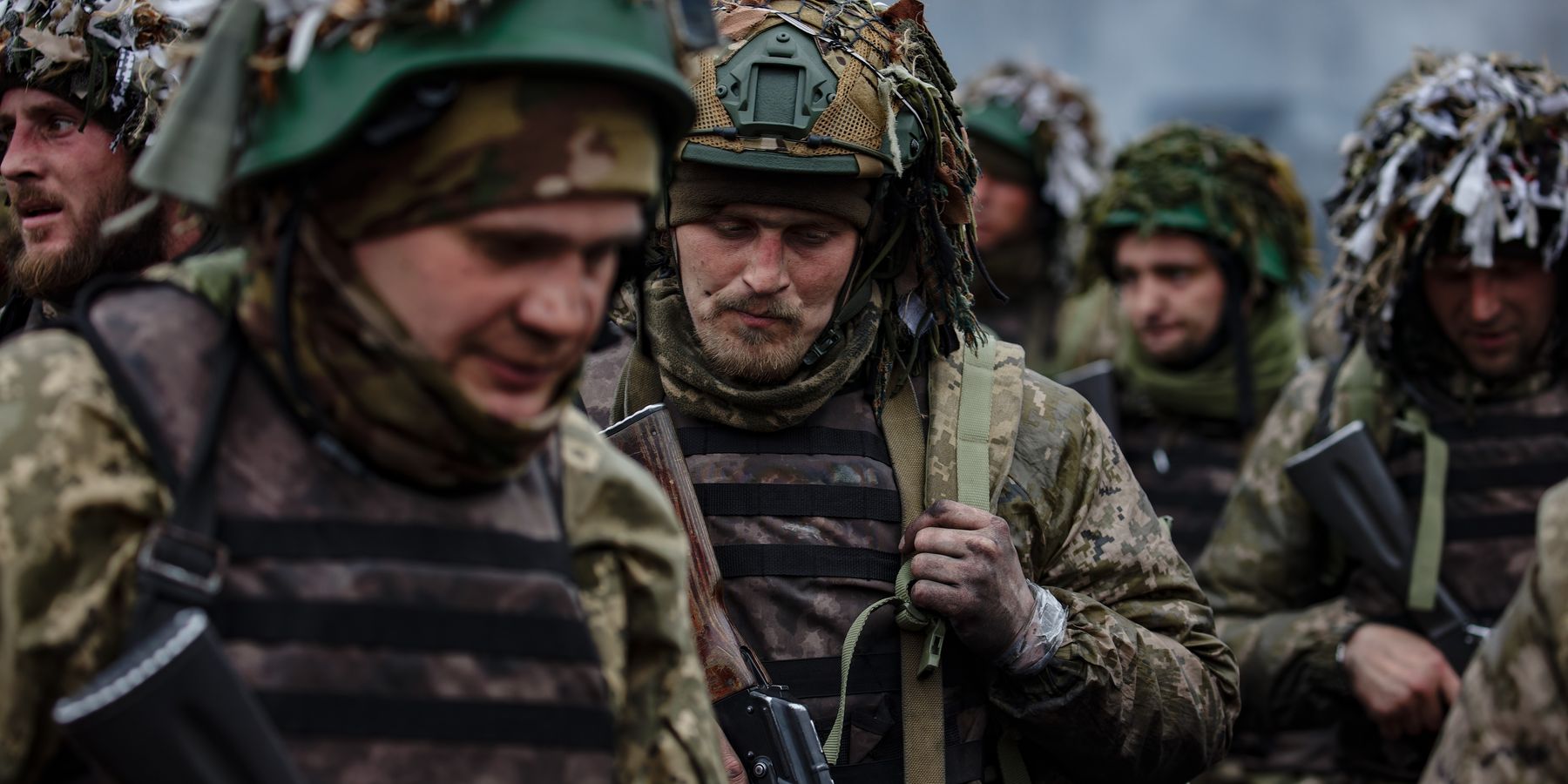
At this point, most in Kyiv have come to the unhappy realization that in the future only Ukraine will fight for Ukraine.
Few in Ukraine have any expectation that the United States would make good on an Article 5-style commitment, even if one were agreed to. After all, successive presidents have made clear that they do not assess fighting for Ukraine to be in U.S. interests. Similarly, talk of a European reassurance force that would be based inside Ukraine after the war is generally dismissed as rhetorical flourish that won’t amount to anything substantive.
The supposed future 800,000-person Ukrainian military provides little comfort to most in Kyiv because it is widely recognized to be unachievable. There is simply no way that Ukraine can recruit, sustain, and finance a peacetime military of that size, given demographic and resource constraints, even assuming that Europe will foot the bill in the short-term.
Something on the order of 300,000 to 400,000 is assessed to the likely upper bound of Ukraine’s post-war military by those with enough information to make a prediction. Kyiv rejects the idea that external caps would be placed on its defense capabilities, but the issue is political rather than one about military capacity.
Through the eyes of Ukrainians, then, the deal on the table offers the worst of all worlds: unacceptable concessions and non-credible promises that sound good but won’t leave Ukraine secure.
As I explain in this new Defense Priorities paper, armed non-alignment (or what some call “armed neutrality”) has long been seen as one of the more feasible options for meeting Ukraine’s security needs, even before the war started in 2022. Critics of this approach dismiss the model as a “neutering” of Ukraine’s military that leaves the country isolated and alone.
But this is inaccurate. As a non-aligned state, Ukraine would be outside of formal military alliances and could not host foreign soldiers, but it would be able to have defense partnerships, including for training with European countries outside of the NATO context. It could be a member of the European Union and have some defense industrial base integration with other member states. It could also purchase many types of weapons from countries like the United States, Germany, or South Korea.
An armed non-aligned Ukraine would also be prepared to defend itself. According to my analysis, with a peacetime military about 250,000 (far below the current accepted cap) and a reserve force of slightly larger size, Ukraine would have enough soldiers to secure and protect its remaining territory.
Ukraine’s own defense industrial base could likely meet most of its military’s needs, including for drones at all ranges; armored vehicles; towed, self-propelled, and rocket artillery systems; and some types of ammunition and long-range missiles. It would need some assistance from the United States and Europe, at least in the near term, to build stockpiles of air defense interceptors, short-range precision munitions, and artillery rockets. It should not need more combat aircraft or tanks than it has today.
Armed with mostly defensive capabilities and legally bound to its non-aligned status, a defense force with these parameters should not excite Russian security concerns. It would not pose an offensive threat to Russia or be able to re-take Russian occupied territory.
Such a force would, however, be sufficient to deny Russia future slices of Ukrainian land and dissuade Russian President Vladimir Putin from incurring the costs of restarting his aggression. Still, this is likely a post-war Ukraine that Russia could accept, as part of an overarching deal that addressed its other political objectives.
Armed non-alignment would be a good post-war outcome for Ukraine but achieving it would likely require an alternate set of peace terms to those currently on the table. For starters, some means of formalizing Ukraine’s non-aligned status would be required. Caps on Ukraine’s military should not be necessary, as structural factors will restrict its size naturally. On the other hand, recognizing this, Ukraine might choose to self-impose limits on the size of its military force in return for compromises from Russia in other areas.
More importantly, under armed non-alignment, Ukraine will need a different kind of security guarantee, one that does not require foreign forces inside Ukraine or tie Ukraine into new military alliances.
One option would be for the United States and Europe to offer peacetime commitments of military and economic assistance for a set period of time or up to a specific dollar amount to help build Ukraine’s military, including especially munitions, air defense, and investments in Ukraine’s defense industrial base. This commitment might be accompanied by a promise of surge military aid if war resumes and the creation of strategic weapons stockpiles outside Ukraine that Kyiv would receive in the event of renewed aggression.
Security guarantees of this type would be narrower than those currently under discussion, but they would be more credible because they match what the United States and Europe have already done for Ukraine over the past four years. If they can be ratified by relevant legislatures and made legally binding, they would also be preferable to many Ukrainians than broader promises that sound good in principle but are empty bluffs in practice.
Finally, questions of territory might be reserved until the end, when most other issues have been addressed. If control over Donetsk is the last sticking point, both sides might be more willing to compromise.
President Trump and his team have been working hard to negotiate peace in Ukraine. But their current approach misunderstands political and military realities inside the country. Adopting armed non-alignment as the model for Ukraine’s post-war security won’t resolve all these challenges, but it would be a crucial first step in the right direction.