

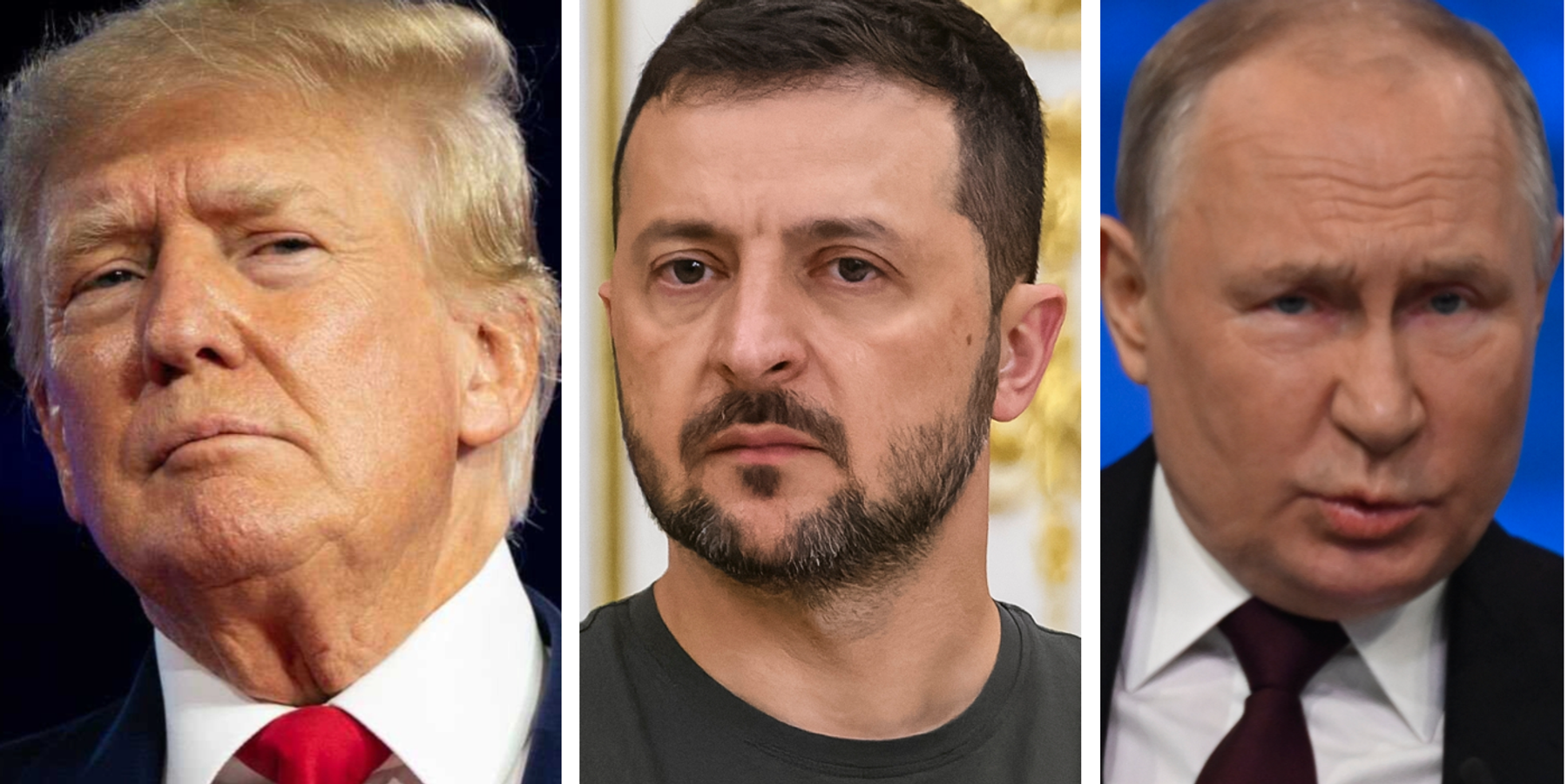
The Trump administration has reportedly taken an essential step towards a peace settlement in Ukraine. It has stopped calling for an unconditional early ceasefire — which the Russians have always rejected — and instead offered concrete and detailed terms to Moscow.
If as reported these terms include recognition of the Russian annexation of Crimea and the Donbas, this makes excellent sense. It has been obvious since the failure of the Ukrainian counter-offensive in 2023 that Ukraine cannot recover these territories either by force or through negotiation.
Far better to draw a line under this issue rather than allow it to fester — especially since it is clear that most of the population of Crimea and much of that of the Donbas do not want to return to Ukraine.
Swapping the remainder of Ukrainian-held Donbas for Russian-held territory elsewhere, as Trump has apparently proposed, would be deeply painful for Kyiv, and has already been rejected by President Zelensky. He is also encouraging European leaders to reject it. However, Russia has already captured most of the region and is now very close to taking the key town of Pokrovsk.
If the war continues, it is reasonable to assume that Russia will take the rest of the Donbas in the year to come. If Ukraine rejects this deal, and Trump ends U.S. aid to Ukraine, Russia will likely take very much more. However painful, accepting this part of the deal is therefore the wise and patriotic choice for Ukraine — though only if Russia moderates other demands.
Crucial issues still remain unanswered. Russia has always categorically demanded Ukrainian neutrality. Will Moscow be satisfied with a mere statement by Trump that NATO membership for Ukraine is permanently excluded? Or will it demand that the Ukrainian parliament re-install the commitment to neutrality that formed part of the Ukrainian constitution before 2014?
Will Russia demand that NATO formally rescind the proposal for long-term Ukrainian NATO membership announced by NATO in 2008? If so, to push this through would take huge pressure on Ukraine and Europe by the Trump administration.
Meanwhile, Russia will need drastically to scale back its demands for Ukrainian "denazification" and demilitarization", which in their extreme form would mean Ukrainian regime change and disarmament — which no government in Kyiv could or should accept.
If compromise can be reached on these issues, then the Russian, Ukrainian, and European governments would all be extremely foolish to reject a deal.
If Russia chooses to snub Trump, it would commit itself to the search for complete victory, which may be unattainable. It would also lose a unique opportunity to restore decent relations with the United States moving forward.
If Ukraine rejects the terms, it would most probably forfeit future U.S. military and financial aid, and be forced to rely on far more limited help from Europe. Even if Ukraine could continue to retreat slowly rather than collapsing, no future peace deal would bring better terms. In both Russia and Ukraine, opinion polls show majorities of the population anxious for an early peace.
As to the European governments, if they block a peace settlement they will commit themselves to support Ukraine indefinitely without the U.S. — something that their own populations are increasingly opposed to.
There is no perfect settlement to end this war. The one now apparently taking shape does, however, look about right in terms of what could realistically be achieved. For the sake of the tens or hundreds of thousands of Ukrainians and Russians who will die if the war continues, all parties have a duty to abandon maximalist dreams.
- Trump vs. Medvedev: When talking tough is plain turkey ›
- What can we expect from a Trump-Putin meeting? ›
- Trouble in Russian economy means Putin really needs Alaska talks too | Responsible Statecraft ›
- On Ukraine war, Euro leaders begin to make concessions — to reality | Responsible Statecraft ›
- Trump's latest line on Ukraine isn't a 'shift,' it's a hand-off | Responsible Statecraft ›
- Ukraine's own pragmatism demands 'armed un-alignment' | Responsible Statecraft ›