

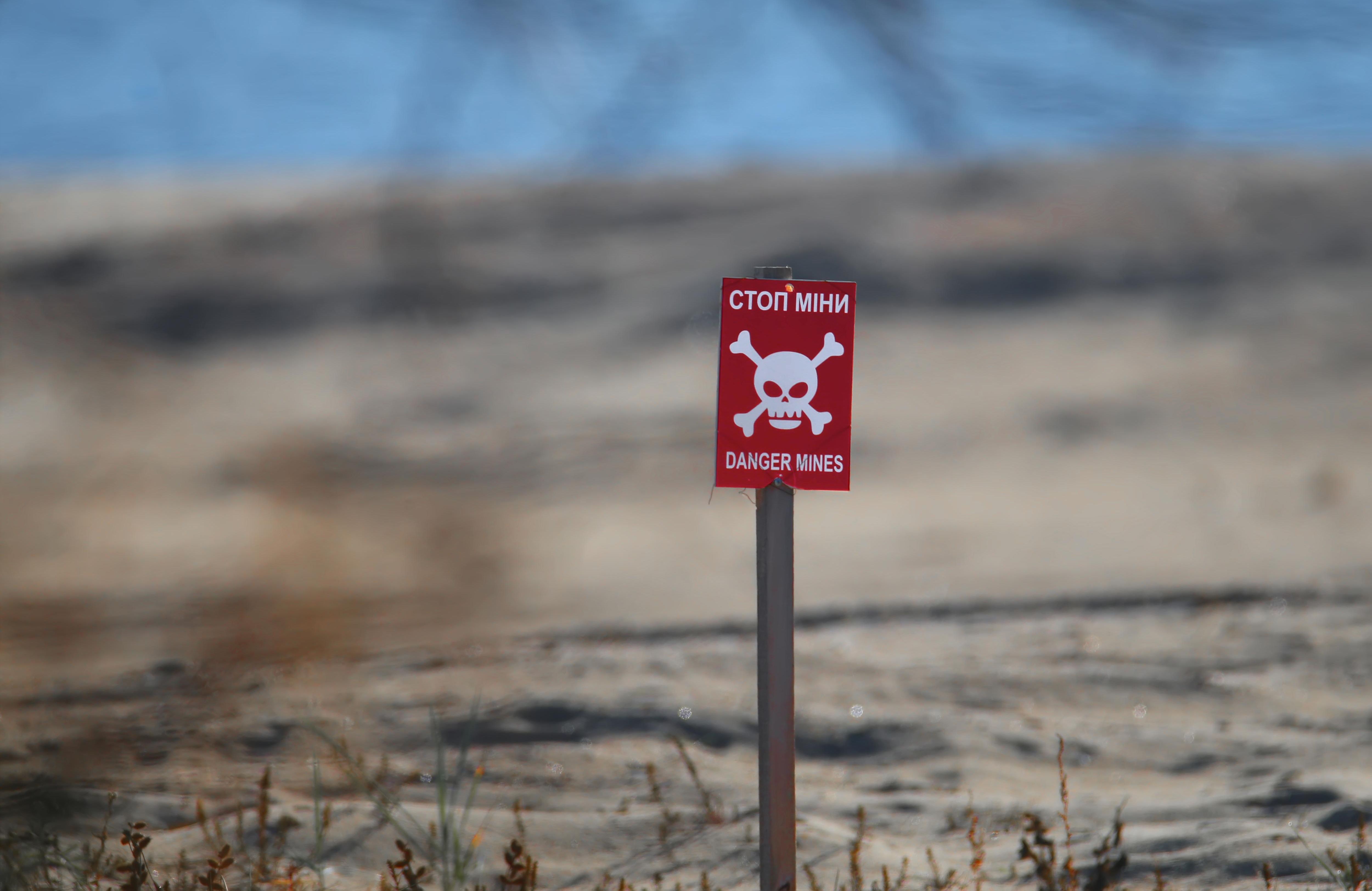
Earlier this month in Geneva, delegates to the Antipersonnel Mine Ban Treaty’s 22nd Meeting of States Parties confronted the most severe crisis in the convention’s nearly three-decade history. That crisis was driven by an unprecedented convergence of coordinated withdrawals by five European states and Ukraine’s attempt to “suspend” its treaty obligations amid an ongoing armed conflict.
What unfolded was not only a test of the resilience of one of the world’s most successful humanitarian disarmament treaties, but also a critical moment for the broader system of international norms designed to protect civilians during and after war. Against a background of heightened tensions resulting from the war in Ukraine and unusual divisions among the traditional convention champions, the countries involved made decisions that will have long-term implications.
A short history of norm erosion
Since its adoption in 1997, the Mine Ban Treaty has symbolized what determined multilateral action can achieve. The treaty’s comprehensive prohibition on antipersonnel (AP) mines and its other comprehensive provisions established a new gold standard for humanitarian disarmament. Its impact is indisputable: millions of mines destroyed, vast areas of land returned to safe use, and countless lives and limbs saved. But the treaty now faces threats on a scale few imagined possible. And because the convention has served as a model for other humanitarian disarmament instruments and is an integral part of international humanitarian law (IHL), these developments carry risks that go far beyond the convention itself.
The crisis began in mid-2024 when Lithuania, fearing Russian aggression, decided to leave the Convention on Cluster Munitions. Walking away from a treaty governing warfare just when conflict appeared on the horizon was an unprecedented and short-sighted move. Yet the response from its allies was muted, teaching other countries exactly the wrong lesson. With the precedent set and the political price low, it was perhaps inevitable that others would follow suit. Indeed, several months later, five European countries — Estonia, Finland, Latvia, Lithuania, and Poland — announced simultaneous withdrawals from the Mine Ban Treaty, again blaming Russian aggression against Ukraine.
It is clear that the security situation has evolved in Europe. But AP mines are known to cause massive human suffering due to their indiscriminate and inhumane nature, and nothing about the current security situation changes this fact. Abandoning the treaty and returning to antipersonnel mines will not deter an attack, especially by a cruel and determined enemy like Russia. Instead, laying mines in their soil will put at risk the very lives they were intended to protect. Research from the 2025 Landmine Monitor shows the 90% of recorded casualties are civilians, and almost 50% are children.
Moreover, by walking away from the legal commitments that protect civilians just when they would need to be applied, they are undermining not just the conventions in question, but the entire body of laws protecting civilians in conflict, precisely when the rules-based order is already under immense strain. The move also, paradoxically, diminishes the global values that these countries say they adhere to and claim sets them apart from Russia, particularly after Moscow’s illegal invasion of Ukraine.
But by far the most serious threat facing the Mine Ban Treaty today is Ukraine’s July 2025 announcement that it was suspending its obligations under the Mine Ban Treaty. Its notification to the United Nations referred to the 1969 Vienna Convention on the Laws of Treaties, which includes rules for suspension and withdrawals. While withdrawals are damaging and disloyal to the humanitarian norm, states have the legal right to withdraw under Article 20. But the Mine Ban Treaty clearly does not permit suspension. The very idea is illogical, absurd, and extraordinarily dangerous for the convention and the broader fabric of IHL.
Suspending the ban on mines during armed conflict goes directly against the object and purpose of the treaty. The treaty was designed to apply to armed conflict, as Article 1 explicitly bans the use, production, stockpiling, and transfer of AP mines “under any circumstances.” It was also intended to prevent states from leaving during war. Some argue that a declaration of suspension would amount to a state reserving the right to use these weapons in exceptional circumstances. But such reservations are also barred by the treaty as it prohibitions apply “under any circumstances”. Finally, during the negotiations in 1997, a proposal to allow suspension during conflicts with non-party states was soundly rejected.
Ukraine’s action is not merely legally flawed, it represents an existential threat to the integrity of all humanitarian law conventions. If a state can suspend its IHL obligations during wartime, then every convention establishing rules of war is fundamentally undermined. The Geneva Conventions, the conventions on chemical and biological weapons would all be vulnerable to the same logic. When times get tough, global norms need no longer apply.Salvaging the norms
Recognizing this danger, since October many countries — including Austria, Australia, Belgium, Colombia, France, Ireland, New Zealand, Norway, Switzerland, Norway, New Zealand, and the United Kingdom — sent the United Nations Secretary General a variety of formal objections or other communications signaling their opposition to Ukraine’s suspension. Under Article 65 of the Vienna Convention, these notifications should halt the suspension’s validity.
Yet more action was needed to stop the suspension precedent from being set. In a letter to Mine Ban Treaty States Parties dated July 29, 2025, the U.N. under secretary general for disarmament affairs noted that “any dispute or objection regarding the decision of Ukraine to suspend the operation of the Convention is to be settled among the Parties to the [Mine Ban] Convention.” Instead of clarifying the legal situation itself, the U.N. placed the burden on the members of the Mine Ban Treaty,
Attention thus shifted to the convention in Geneva earlier this month, where treaty defenders pushed for language in the meeting’s final report affirming that suspension was not permitted. The goal was not to condemn Ukraine or its actions, but to ensure that any other state looking to this first-ever IHL suspension would see that suspension was not an option.
Fortunately, reason prevailed, and decisive language was adopted. The MSP Final Report stated, “The Mine Ban Treaty does not allow suspension of its operation and consequently its obligations” and referred to Ukraine as a State Party. In other words, Ukraine’s attempted suspension was invalidated, and it remains bound by the convention. The decision was backed by statements opposing suspension from dozens of countries from around the world.
While Ukraine must continue to fully respect its obligations under the Convention, compliance has already posed a challenge for Ukraine. Thus, other States Parties will need to be vigilant in both discouraging Ukraine from using and/or producing antipersonnel mines and in ensuring any reports of non-compliance are closely examined. While Russia, a non–State Party to the Convention, remains the primary perpetrator of antipersonnel mine use in Ukraine — causing unspeakable suffering and devastation — Ukrainian forces are believed to have used antipersonnel mines in the fall of 2022, and there are now growing indications of continued use as well as reports of production by Ukrainian companies and individuals.
This picture is further complicated by the United States’ announcement in late 2024 of the transfer of its stockpiled antipersonnel mines to Ukraine, the current status of which remains unclear.
Any use and/or production of such mines by Ukraine would constitute a clear violation of the Convention and would need to be addressed by States Parties.
Looking ahead
A united response protected the treaty and signaled that the erosion of humanitarian norms will not be tolerated. Thanks to vigorous diplomacy and engagement by committed states and civil society, the Geneva meeting ultimately upheld the treaty’s core principles with unambiguous language in a decisive win for the protection of civilians.
The crises facing the Mine Ban Treaty this year went far beyond any one weapon, one country, or one conflict. They represented the choices states need to make now about the kind of international system they want to uphold, one based on rules, mutual restraint, and the protection of civilians or one where norms apply only in times of peace and can be discarded when they are most needed.