Shifting justifications for a war are never a good sign, and they strongly suggest that the war in question was not warranted.
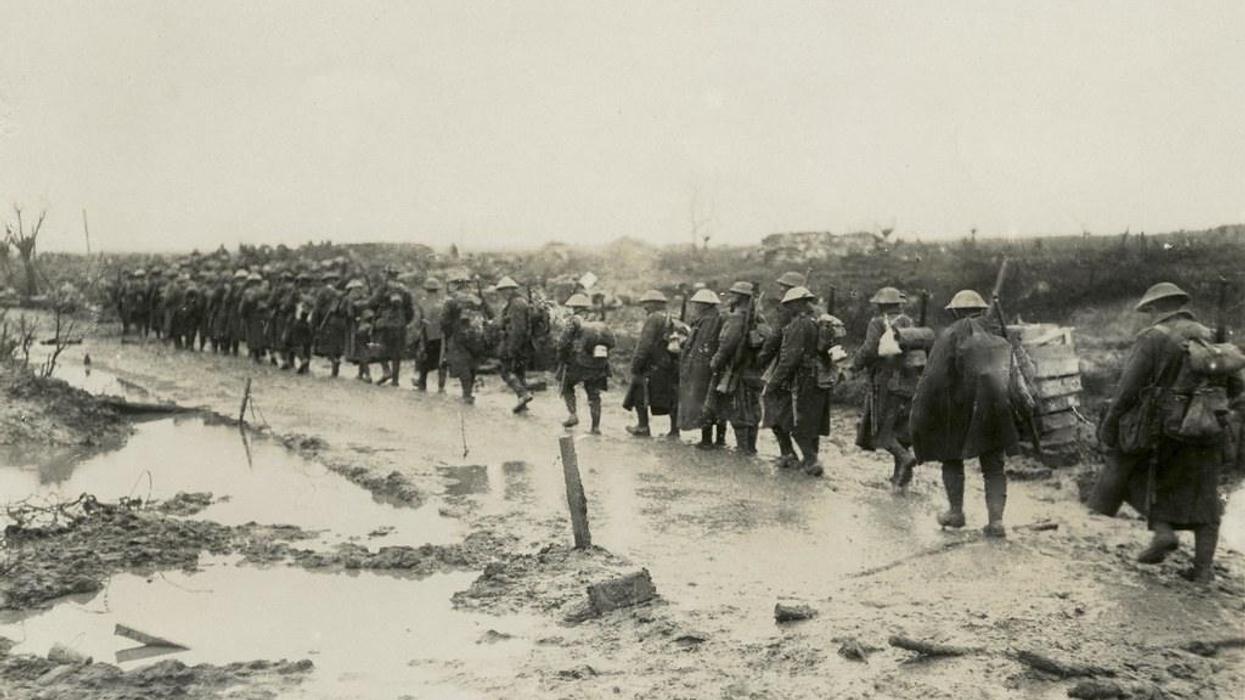
In the Vietnam War, the principal public rationale of saving South Vietnam from communism got replaced in the minds of the warmakers — especially after losing hope of winning the contest in Vietnam — by the belief that the United States had to keep fighting to preserve its credibility. In the Iraq War, when President George W. Bush’s prewar argument about weapons of mass destruction fell apart, he shifted to a rationale centered on bringing freedom and democracy to Iraq.
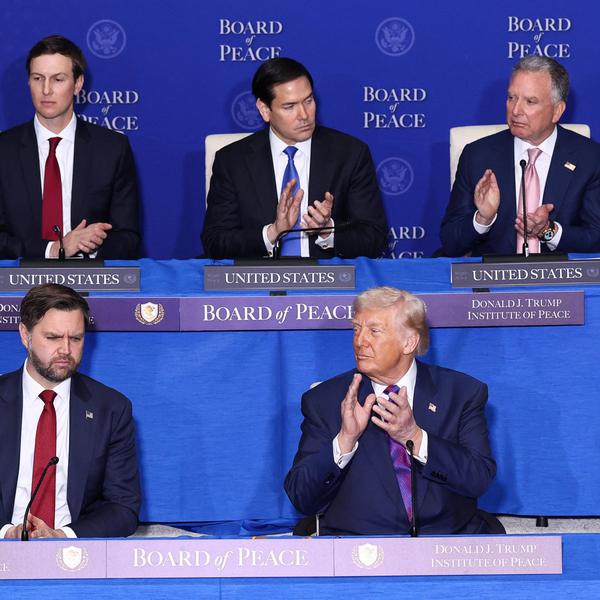
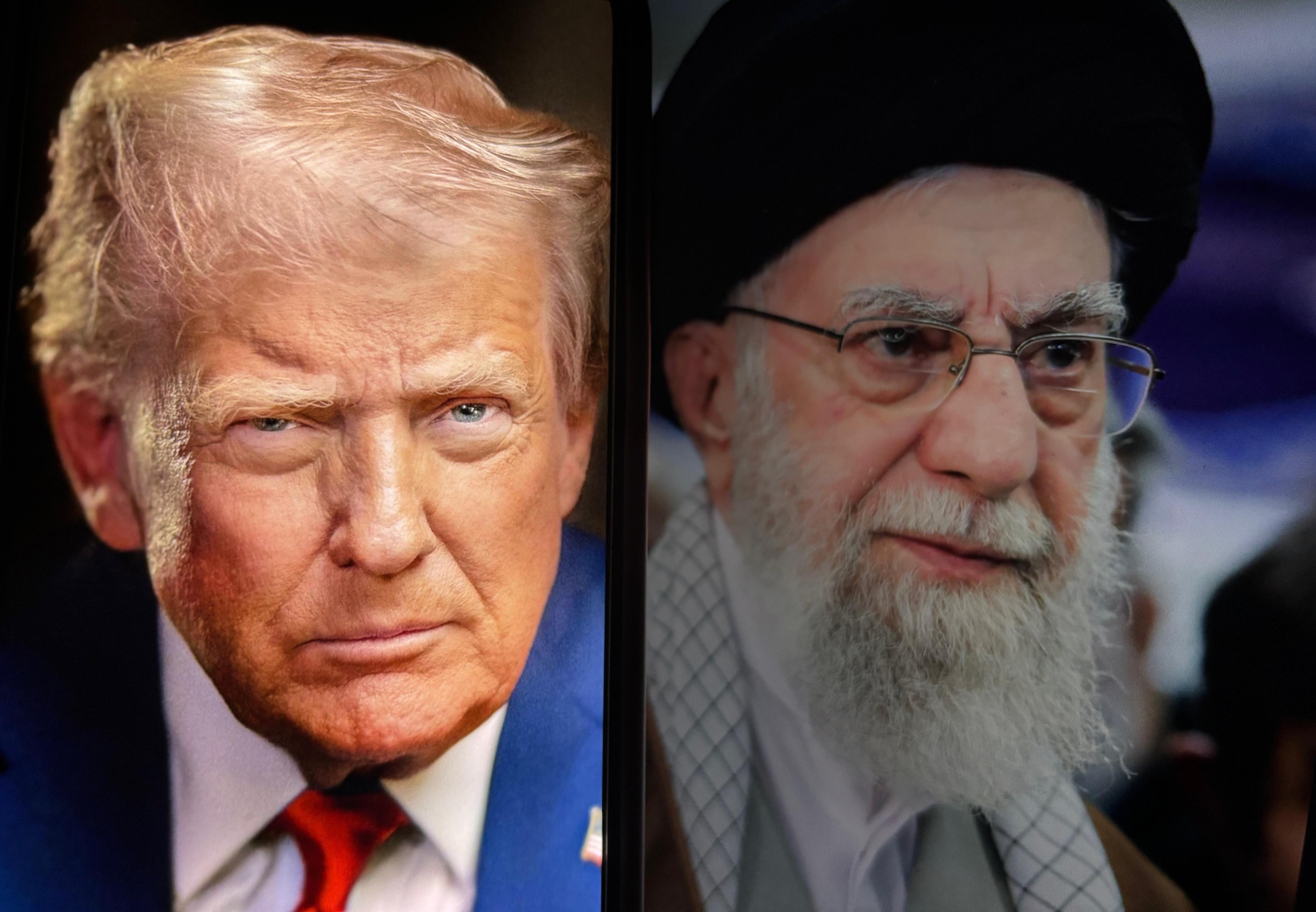
Now, with President Donald Trump threatening a new armed attack on Iran amid a buildup of U.S. forces in the region, the Washington Post’s headline writers aptly describe the rationale for any such attack as being “in flux” and, for the online version of the same article, ask, “what’s the mission?”
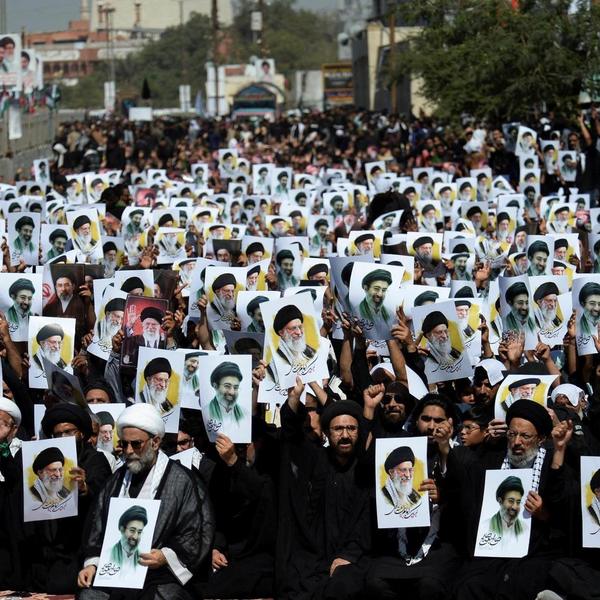
A related question about the latest threat to attack Iran is: “why now?” The initial peg for Trump talking up the subject during the past month was the mass protest in Iran that began in Tehran’s Grand Bazaar in late December and rapidly spread through Iranian cities during the next couple of weeks. Trump urged Iranians to “keep protesting” and promised that “help is on the way.” This rhetoric led to widespread expectations, not least of all inside Iran, that U.S. military action was imminent.
No such action materialized, and perhaps a valid reason it did not is the difficulty in identifying targets for military attack that would be more likely to help the protesters than to hurt them. If a regime is gunning down innocent citizens in the street, there is no target deck an outside military power can devise that would distinguish the gunners from the innocents on that street.
A brutal crackdown by the Iranian regime that has quelled the protests leaves a couple of implications. One is a sense of betrayal among Iranians whom Trump encouraged to risk their lives by protesting without delivering any help that supposedly was “on the way.”
The other implication is that, without an ongoing protest, the link between any U.S. military action and favorable political change inside Iran is even more tenuous than it would have been a month ago. Iranians — like Americans or any other nationalities — can distinguish between their domestic grievances and external aggression. Another Israeli or U.S. attack out of the blue risks helping the Iranian regime politically by enabling it to appeal to patriotic and nationalist sentiment. Statements from such prominent reformist leaders as former Prime Minister Mir-Hossein Mousavi and former parliament speaker Mehdi Karroubi are simultaneously calling for sweeping constitutional change and explicitly rejecting foreign intervention, including military intervention.
An alternative view is that with the Iranian regime at least as weak as it has been for years, an armed attack from outside might constitute just enough extra pressure to precipitate the regime’s collapse. But the idea that the Islamic Republic is just one nudge away from falling has been voiced many times before, including during previous rounds of protests.
Moreover, the operative word is “collapse,” with all that implies regarding uncertainty about what comes next. Secretary of State Marco Rubio appeared to recognize that uncertainty when asked in a Senate hearing last week about what would happen if the Iranian regime were to fall and he replied, “That’s an open question.” The Iranian opposition lacks a unified leadership and structure ready to take power comparable to the movement led by Ayatollah Ruhollah Khomeini that toppled the shah in 1979.
Regime decapitation to oust current Supreme Leader Ali Khamenei would be even less likely to yield a regime responsive to U.S. wishes than the ouster of President Nicolás Maduro in Venezuela. A more probable successor regime in Iran would be some kind of military dictatorship dominated by the Islamic Revolutionary Guard Corps (IRGC). Regime change in Iran is a classic case of needing to be careful what one wishes for.
Trump has been vague about what Iran would need to accept to avoid being attacked, but there appear to be three issues at play. One is a demand for Iran to end all enrichment of uranium. But Iran is not enriching uranium now and does not appear to have done any enrichment since the Israeli and U.S. attacks last June. If this issue is to make a difference in determining whether the U.S. attacks Iran, it means war or peace would hinge on a demand that makes no practical difference, at least in the short term.
A formal commitment by Iran to forgo enrichment forever conceivably could have value over the long term, but history shows that expecting such a commitment is not realistic. Moreover, to place importance on such a commitment is a tacit admission that Iran is better at adhering to its obligations on such things than the United States is, given Trump’s reneging on an earlier nuclear agreement despite Iran observing its terms.
A second issue involves limiting the range and number of Iran’s ballistic missiles. There is a strong case to be made for a region-wide agreement limiting missiles in the Middle East, but neither the Trump administration nor anyone else has explained why Iran should be singled out for such restrictions while no one else in the region is, or why one should expect Iranian policymakers to accept such disparate treatment. Iran considers its missile capability to be a critical deterrent against the missile and other aerial attack capabilities of adversaries. A deterrent — to be used in response to being attacked — is how Tehran has used its missiles, as in responding to the U.S. killing of prominent IRGC leader Qasem Soleimani in 2020 and to Israel’s unprovoked aerial attack on Iran last June.
The Israeli government would, of course, like to see Iran’s retaliatory capability crippled. This would leave Israel — the Middle Eastern state that has started more wars and attacked more states than any other country in the region — freer to indulge in more offensive operations without having to worry about even the amount of retaliation that Iran mustered last year. Those operations may include attacks that, like the one in June, drag in the United States. This sort of Israeli freedom of action is not in U.S. interests.
The third reported U.S. demand is that Iran cease all support to groups in the region it considers allies, including the Houthis in Yemen, Hezbollah in Lebanon, and Hamas in Palestine. Despite the habitual application of the label “proxy” to such groups, they are separate actors with their own agendas, as illustrated by how the Houthis acted against Iranian advice in capturing the Yemeni capital of Sanaa.
As with uranium enrichment, Iranian support to these groups is a “problem” that is being solved without new Iranian commitments. Iran’s severe economic difficulties, coupled with popular demands within Iran to devote scarce resources to domestic programs rather than foreign endeavors, are already making it difficult for Iran to sustain its support to regional allies.
As with the missile issue, a demand to end such support as part of an agreement disregards how much that support is a response to aggression or predations of other governments. Aid to the Houthis, for example, became of significant interest to Iran only after Saudi Arabia launched a large-scale offensive against Yemen that was the most important factor in turning that country into a humanitarian disaster. The Iranian-supported establishment of Hezbollah and the group’s early rapid growth were a direct response to Israel’s invasion of Lebanon in 1982. The nature and methods of Hamas, like those of many other Palestinian resistance groups, have been responses to Israeli subjugation of Palestinians.
Also like the missile issue, any such demand disregards the outside support that other governments give to parties to some of the same conflicts in the Middle East. This includes, of course, the voluminous U.S. aid to Israel. Iran is being told it cannot have a full regional policy while others do. It is unrealistic to expect any Iranian leader to agree to that.
None of these issues, individually or collectively, constitutes a casus belli. The answer to the question “why now?” is to be found less in those issues than in domestic politics, including the motivations of diverting attention from political troubles and being able to claim some accomplishment regarding Iran that is bigger or better than what a predecessor achieved.
Claimable accomplishments that serve not just such domestic political needs but also the U.S. national interest are possible through diplomacy with Iran. President Trump is correct when he says that Iran wants a deal, given that Iran’s bad economic situation is an incentive to negotiate agreements that would provide at least partial relief from sanctions. Feasible diplomacy would not entail Iranian capitulation to a laundry list of U.S. demands but instead a step-by-step approach that might start with an updated nuclear agreement, which could build confidence on both sides for coming to terms on other issues.
The Trump administration’s saber-rattling is not building such confidence but instead is having the opposite effect. The Iranian regime’s lethal response to the recent popular protests shows that it believes the regime’s survival depends on not showing any weakness in the face of pressures either domestic or foreign. Iranian Foreign Minister Abbas Araghchi said last week that Iran would negotiate directly with the United States only if Trump stops threatening a military attack against Iran. Araghchi also ruled out any unilateral limitations on Iranian missiles, which he described as essential for Iran’s security.
A new U.S. attack on Iran, besides being an act of aggression contrary to the United Nations Charter and international law, would only exacerbate rather than resolve any of the issues that have been raised as possible rationales for war.
A U.S. attack would disadvantage Iranian oppositionists by associating them with an assault against the Iranian nation. It would strengthen the position of those within the regime who argue that Iran should seek a nuclear weapon. It would raise, not lower, the importance Tehran places on its alliances with nonstate groups in the region. And Iran would use its missiles to retaliate in ways that probably would hurt U.S. interests more than its response last June did.
- ‘Locked and loaded’: Trump threatens to attack Iran ›
- Polls: Americans don't support Trump's war on Iran ›
- Military tankers for Iran attack deploying near Iraq War levels | Responsible Statecraft ›
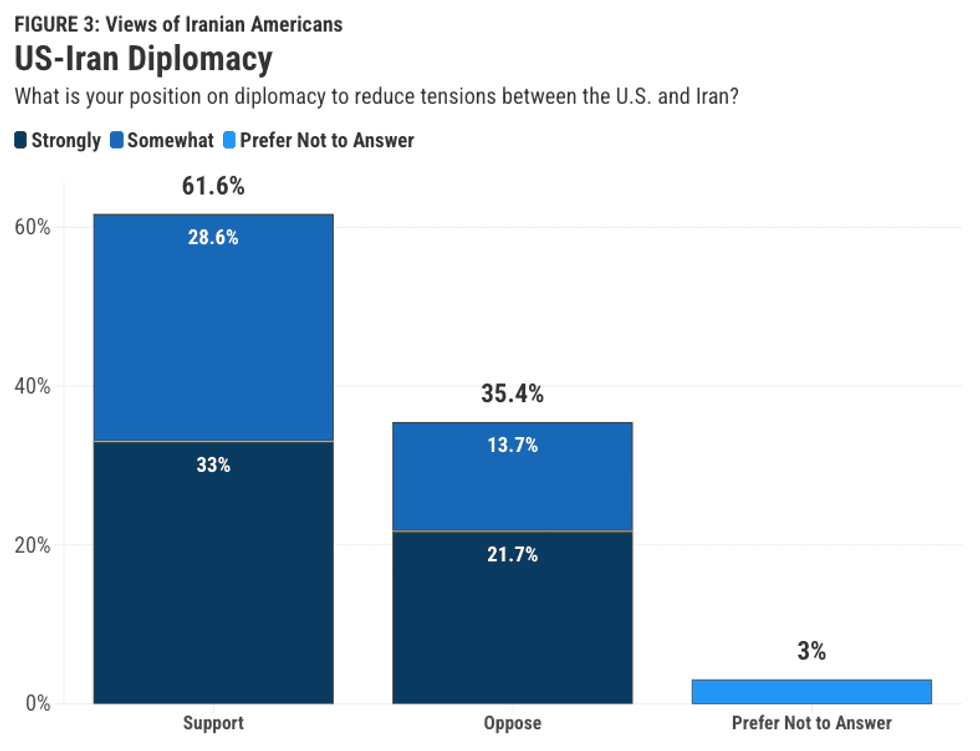 Screengrab via niacouncil.org
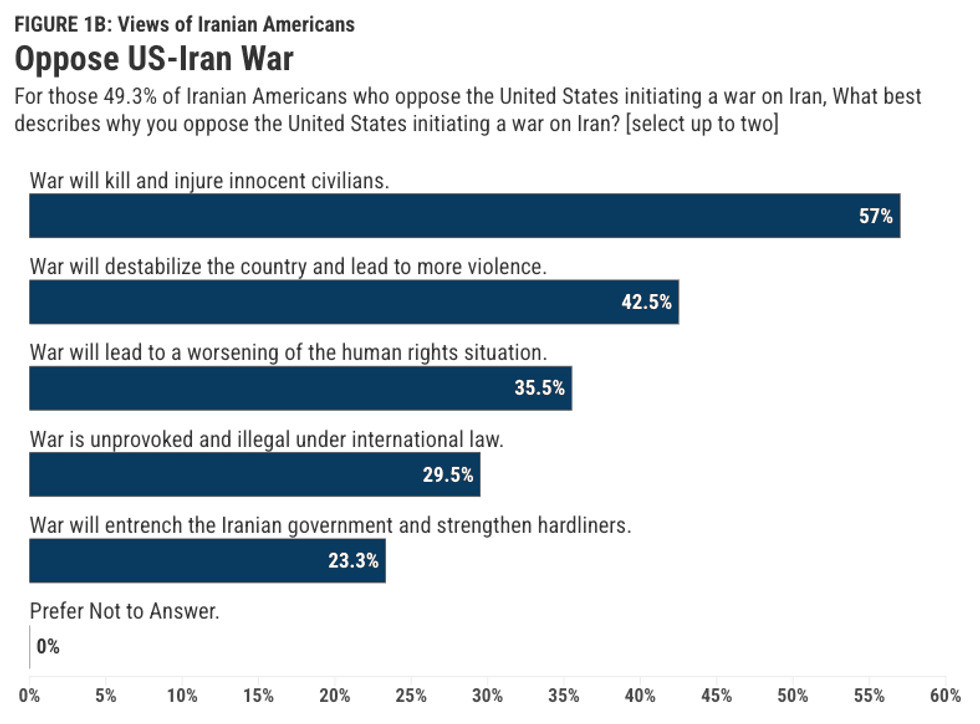 Screengrab via niacouncil.org